

by Ruth Tobias
Bill Foley knows a good thing when he sees it: The growth of the Foley Family Wines portfolio over the past 27 years to include such esteemed properties as Sonoma County’s Chalk Hill Estate Vineyards and Winery, Chalone Vineyard in Monterey County, and The Four Graces in Oregon’s Willamette Valley is ample proof of that. But making acquisitions isn’t his only gift—he also knows what to do with a good thing once he has it. Case in point: cult Napa Valley producer Merus.
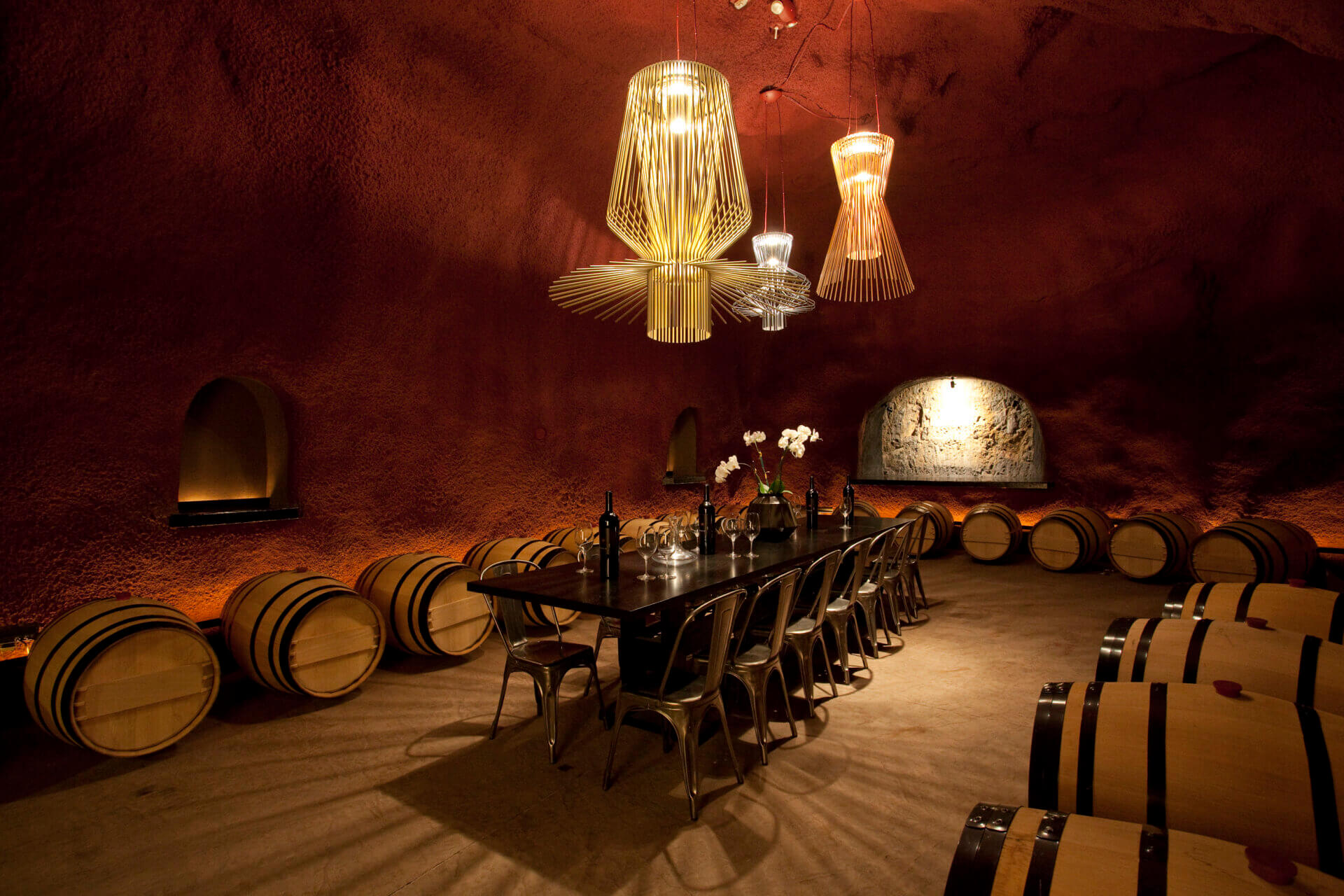
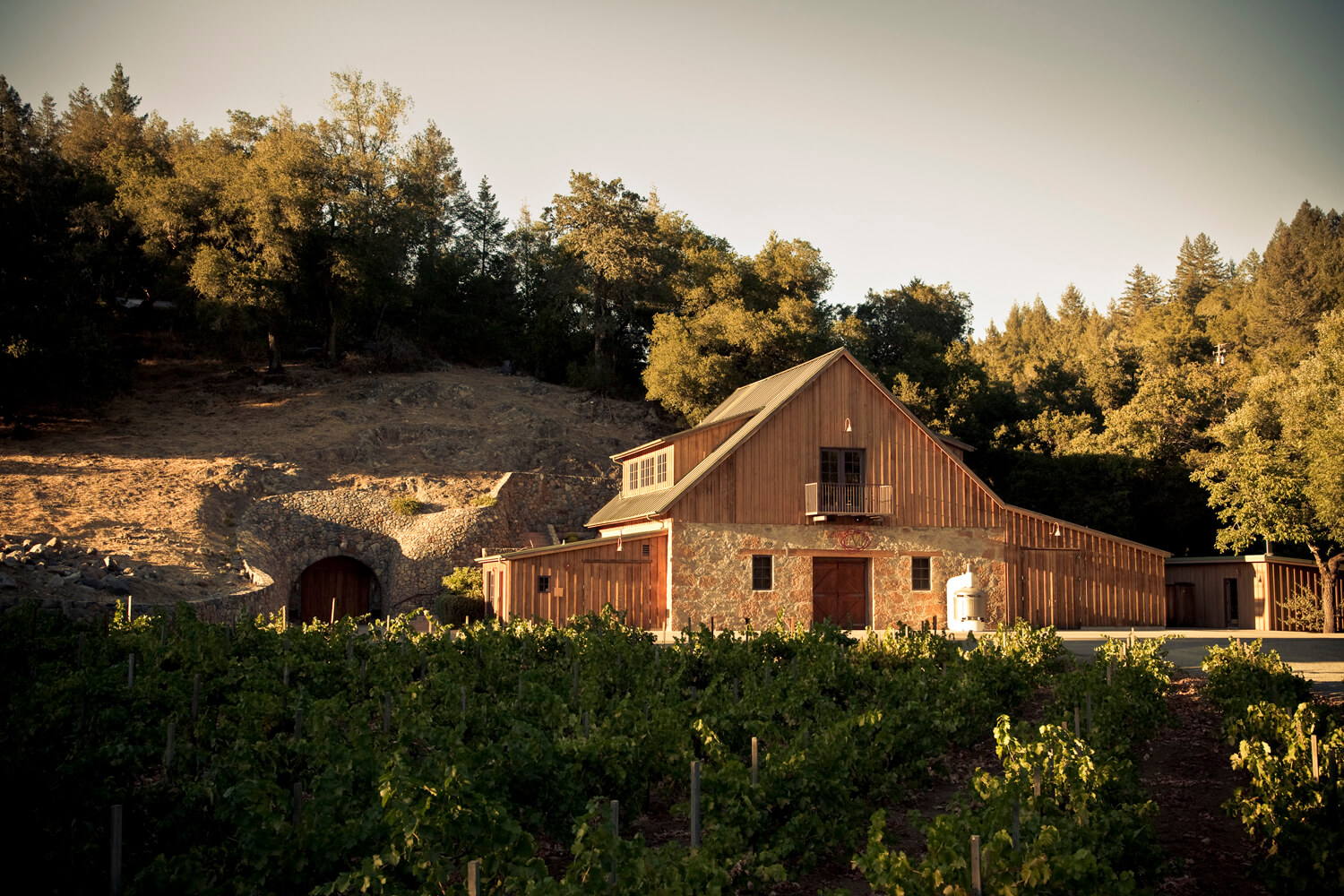
When Foley purchased Merus in 2007, it was a diamond in the rough, operated—albeit to much early acclaim—by founders Erika Gottl and Mark Herold out of their garage. His vision was to find it a home commensurate with its growing status. That he did in the form of the original Rossini Winery & Ranch, established in the late 19th century in St. Helena, which he promptly went about renovating. The 63-acre site now boasts a state-of-the-art winemaking facility with custom-designed equipment as well as two tasting salons—one of them located within Merus’ underground caves, totaling 7,000 square feet in area.

Finding the right person to oversee the venture was also crucial, of course, and Foley achieved that too with the appointment of Michael Beaulac as winemaker in 2022. Certainly the Vermont native had the credentials to build on Merus’ reputation for luxury Cabernet Sauvignon: A 35-year industry veteran, he began his career with Murphy-Goode in 1989 before going on to work for Merry Edwards’ now-defunct Domaine Laurier; Markham Vineyards, where he served as head winemaker; Pine Ridge Vineyards, where he held the positions of both general manager and winemaker; and finally Foley Family Wines, for which he was making wine for both Chalk Hill and Roth Estate, also in Healdsburg, when Foley tapped him to take the helm at Merus. (Beaulac also oversees winemaking for Napa’s Foley Johnson Winery in Rutherford, which produces luxury Bordeaux-style wines.)
But Beaulac possessed more than pedigree: He also had a clear sense of the direction in which to take Merus, whose name in Latin means “pure” or “unadulterated.” “The style that we’re going for, I like to say that it’s all about volume—how does it go into your mouth, how does it feel?” he explains. “And when I say volume, I don’t really mean tannin—that’s part of it, but it’s [about] matching the tannin to how much color you have and getting that richness and the depth from that. I want [the wine] to be inky-dark, I want it to be seamless—for Napa Cab I think that’s what’s expected, and that’s what I like to drink. Balance is always crucial: balance in the vineyard, balance in the bottle. I want something that you can sip and have a glass of or that you can enjoy with your meal.”
To that end, Beaulac has re-envisioned Merus’ flagship wine as a multi-AVA blend rather than a single-vineyard designate from Coombsville. “The vineyard that we had been purchasing from was getting a little old and not producing the way we wanted it to,” he says. “So I searched out the best growing areas that I liked the wine from,” many of them conveniently being Foley Family properties. Cabernet grapes from Shadybrook in Coombsville, for example, “typically have a lot of color. It’s a cooler region, [so the wine] tends to hold fruit characteristics [and] not to be very tannic,” he notes, adding that Stagecoach Vineyard in Atlas Peak “is kind of the flip-flop of that: Those wines do have some tannin [and] tend to be really intense.” From Ink Grade Estate Vineyard atop the Vaca Mountains in the Howell Mountain appellation, which “is maybe one of my favorite AVAs,” comes small-clustered, small-berried fruit that yields “very big” wines compared to the more elegant expressions from Silverado Vineyard in the famed Stags Leap District. And Cabernet from Three Minutes by Tractor in Mt. Veeder contributes both tannins and savory herbal characteristics. As for blending grapes, Beaulac sources Merlot from Mt. George Vineyard at the base of the inactive Mt. George volcano in Coombsville, which lends freshness along with blueberry notes, as well as Malbec from Larkmead in Calistoga for added color without excess tannin.
The lots are vinified and aged separately before the blend is assembled by a tight-knit team that includes winemaker assistant Sierra Zeiter, whom Beaulac calls “phenomenal.” They’re “on the same page” about the finished wine, he adds, which should continue Merus’ “excellent track record [of] wines that can age; I think that’s a sign of a world-class wine, which is what we’re trying to make. But I want it to be very drinkable right now [as well]. It’s all about the elegance, the depth, the volume.”
Continuing to refine the profile of what’s already a top-of-the-line wine is a delicate business, but Beaulac’s clearly up for the challenge—and then some. Hinting at a growing portfolio, Beaulac said, “We want to elevate Merus even further. Expect great things.” Where Bill Foley and his team are concerned, that goes without saying.
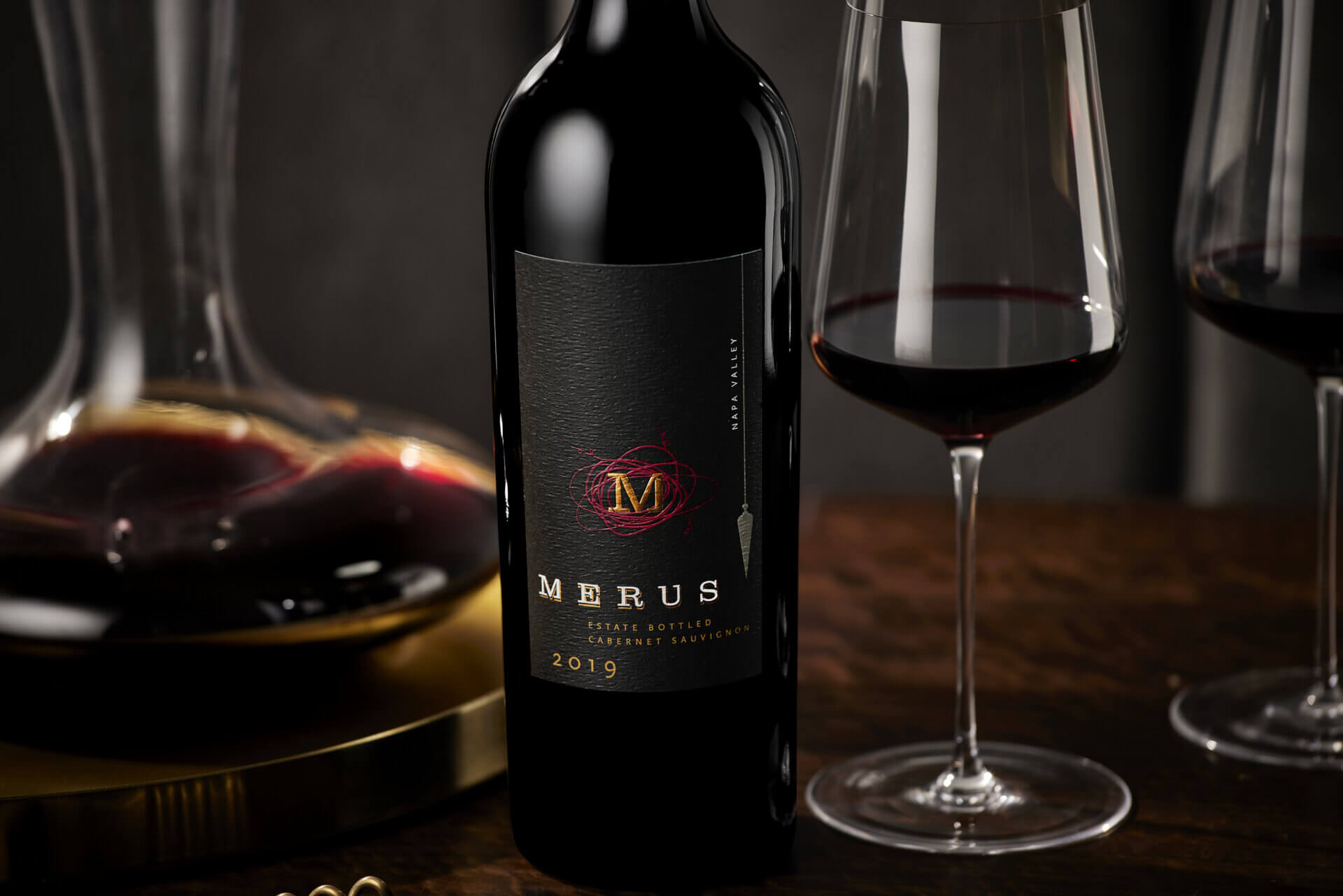
Merus 2019 Cabernet Sauvignon, Napa Valley ($225) Dense and creamy, with intense character. Blackberry, coffee, and slate entertain the palate, while the wine’s structural components energize it. Balanced and athletic, it gleams with a steady flow of blue fruit, augmented by dried violets and meaty, iron-driven soil notes. A serious wine for the ages. 98
—Meridith May
Merus 2021 Cabernet Sauvignon, Napa Valley ($225) Violets and iridescent boysenberry are profound flavors alongside dark chocolate and pecan. Grainy tannins leave a suede patina on the creamy palate. Sophisticated, with balletic motion. 99 —M.M.
FOLEY FAMILY WINES