

by Emily Johnston Collins
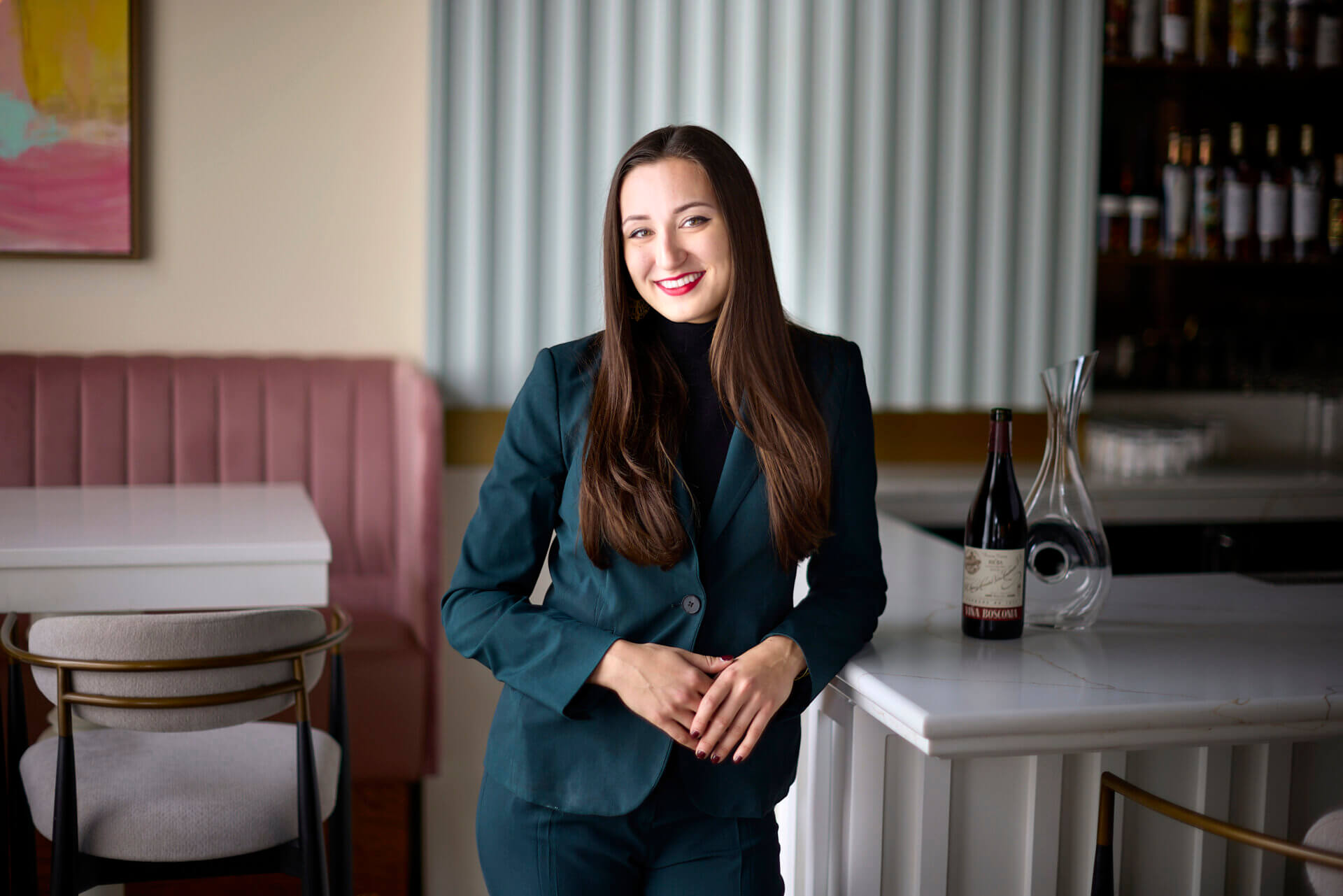
When I trained as a sommelier in Italy, I studied regional wines and their traditional food pairings. Now, as wine director at Burmese restaurant The Dutchess in Ojai, California, I am no longer guided by European custom and instead rely on my own creativity when it comes to building a wine program. Curious to compare my list with that of another restaurant offering South Asian cuisine, I spoke with Tia Polite, wine director at chef Sujan Sarkar’s Michelin-starred Indienne in Chicago.
Polite takes an artistic approach to her wine list, which is in fact organized according to art movements. Sprightly, approachable wines fall under the heading “Pop Art,” while softly structured, elegant bottlings comprise the “Impressionism” section. Bold and structured wines are listed under “Baroque,” and “Abstract Expressionism” contains some of Polite’s more eclectic selections—from grape-and-apple co-ferments to Croatian Babic´. In that way, she efficiently guides her guests around a collection that comes primarily from Europe, particularly France, and California but also represents South America, Australia, and the Pacific Northwest.
Polite explained to me that Sarkar’s cuisine combines the flavors of India with the techniques of the elite French chefs he trained under in London. “His menu,” she added, “is so playful and artistically presented, we have to have a wine list that matches.” Art also has a personal significance for the team: Both Polite and Sarkar have a background in painting, which she finds helps her communicate with guests who are intrigued by her list’s unconventional format. “I . . . like taking the guest’s guard down,” she says.
As I expected, textured whites and fruity, spiced reds feature prominently on her wine list, as they do my own. I was surprised, however, to find that we carry many of the same California Central Coast producers. She credits this to the typical elegance of wines from the region and to Sarkar’s connection to Central Coast winemaker Rajat Parr, who grew up in the same town in India as he did. Parr’s wines—which both Polite and I carry—could be considered a link between the Central Coast and South Asia, given that his style represents the former region while complementing of the flavors of the latter.
Despite the demands of her job at a relatively new restaurant—Indienne opened in September 2022—Polite has found time to continue her own wine education: She told me about working the 2023 harvest in Montalcino and discovering the charms of barrel-aged Rieslings in Germany. By a similar token, she aims to encourage her guests to explore: Her goal for the restaurant is to “sell more from the Abstract Expressionism page . . . the out-of-the-box wines.” I can’t wait to see how she channels her creativity through this section when I visit her at Indienne.