

THE CAMARADERIE THAT DEFINES THE
“NEXT GREAT AMERICAN WINE REGION” WAS ON FULL DISPLAY AT ITS ANNUAL CAB CAMP
story by Kate Newton | photos by Rafael Peterson
PERCHED
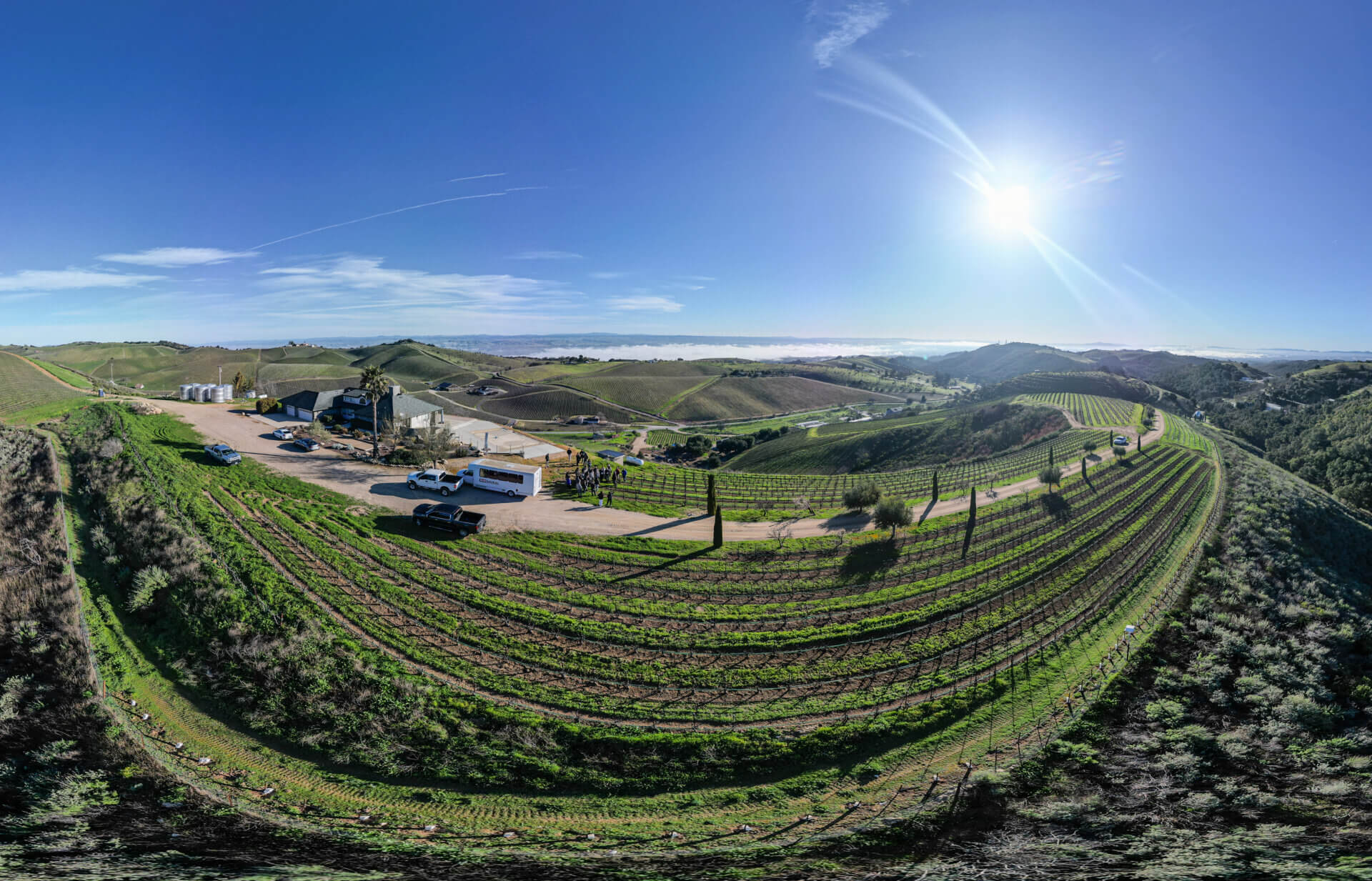
2,200 feet above sea level on DAOU Mountain at DAOU Vineyards—the highest-elevation winery on California’s Central Coast—the newest cohort of Paso Robles CAB Campers reminisced about the defining moments of the week on the last night of their trip. Cohosted by the Paso Robles CAB (Cabernet and Bordeaux) Collective (PRCC), The SOMM Journal, and SommFoundation, the annual gathering welcomes buyers and other professionals to delve into not only the region’s singular terroir but also the shared focus of its producers on distinguishing themselves as leaders in the global wine industry’s sustainability movement.
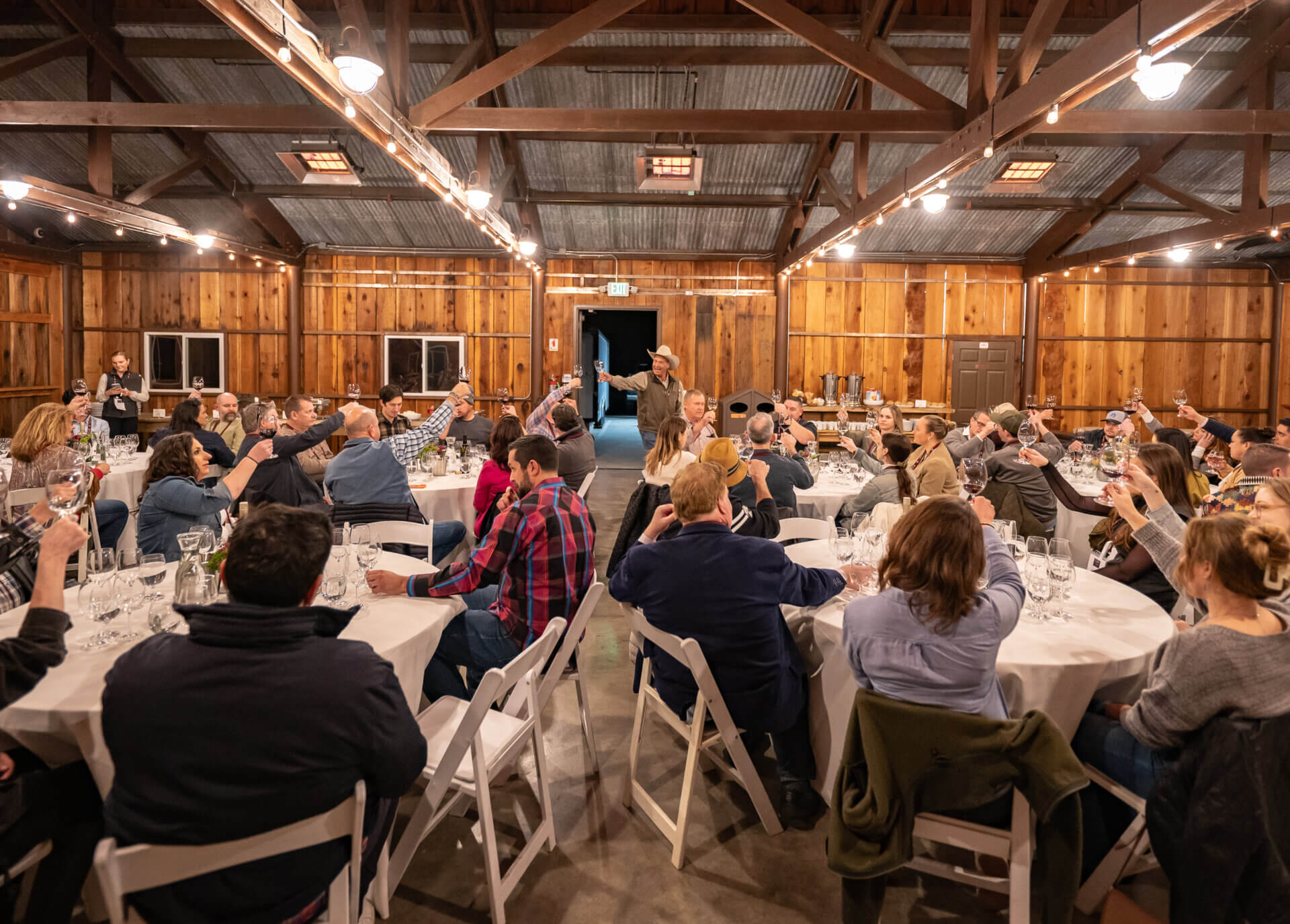
The word “collective,” referencing Paso Robles’ strong sense of community, was the common thread binding the reflections shared over glasses of wines like DAOU’s Soul of a Lion, which received the highest rating of a Cabernet Sauvignon from the Central Coast at the time of its release in 2010. It was a harbinger of the acclaim Paso has received in the years since for the wines it produces from the red Bordeaux grapes that served as the focus of the camp and thrive in the aforementioned terroir, defined in part by dramatic diurnal shifts and calcareous soils; of the region’s roughly 40,000 acres under vine, more than 60% is planted to these varieties. “Twenty-five, 30 years from now, you’re going to look back . . . and say, ‘I knew then that this [region] was going to take its place on the world stage,’” DAOU Vineyards’ former senior vice president of strategy and business development, Maeve Pesquera, told the group. Judging by their insightful introspection (for some of the campers’ thoughts, see the sidebar on page 80), that impression had certainly been cemented.
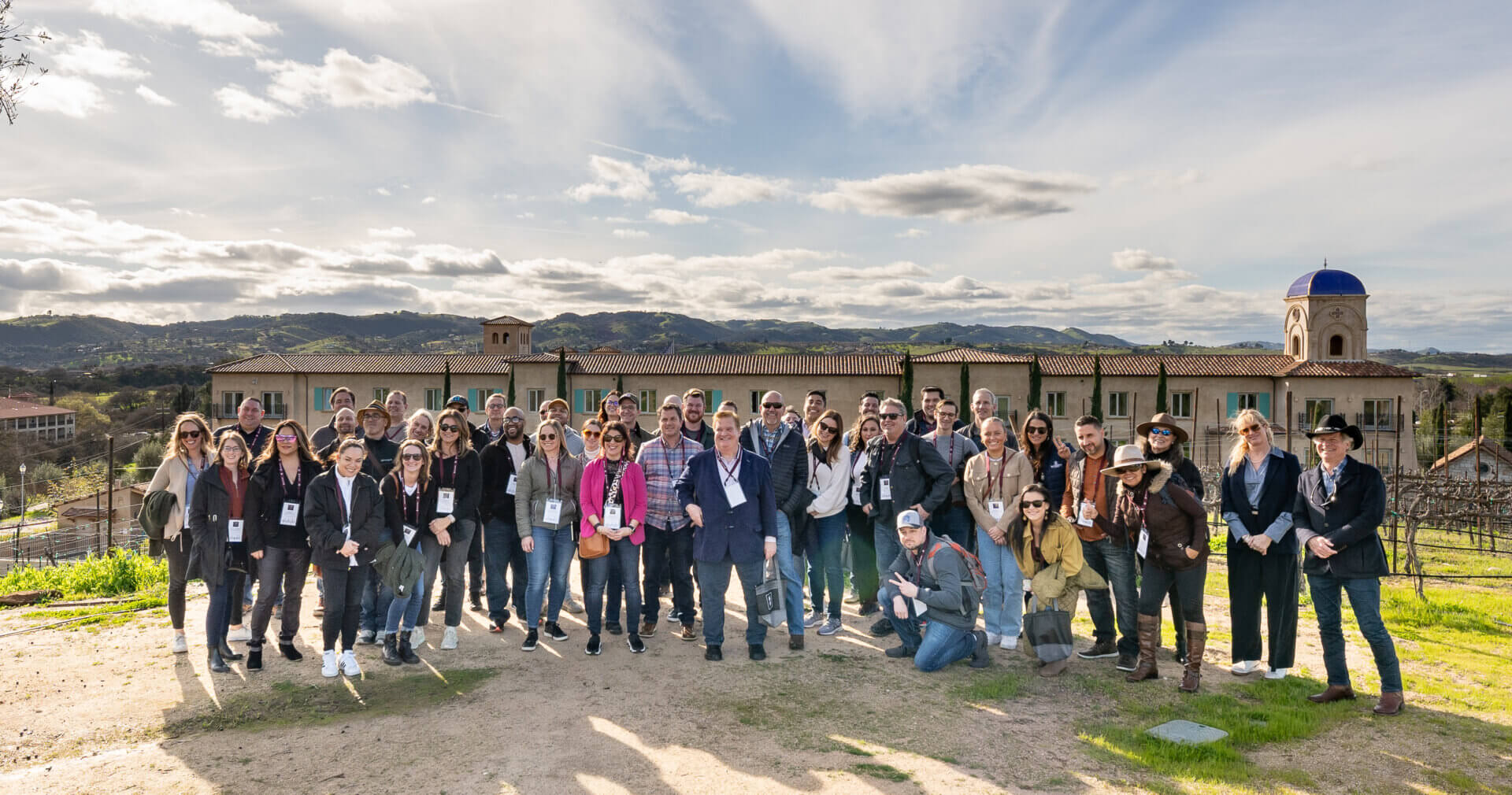
But to get a full picture of this journey to enological enlightenment, let’s turn back the clock to the beginning of the camp, when participants arrived at the Allegretto Vineyard Resort and were introduced to owner and PRCC secretary Doug Ayres. He and the team behind his label, Allegretto Wines, farm two estate properties—Allegretto Vineyard, planted on the grounds of the resort in the Estrella District, and Willow Creek Vineyard in the Willow Creek District AVA—largely in accordance with organic and biodynamic methods in addition to sourcing fruit from more of Paso Robles’ 11 sub-appellations.
On the topic of biodynamics, Ayres could perhaps best be described as an evangelist, espousing the importance of, in his words, working “in concert with the land and the cosmos above” by using natural insecticides like lavender and burying the compost preparation known as BD #500 in cow horns among the vines in observation of the biodynamic calendar; employing the herd of alpacas and sheep that live on the resort property to help trim weeds; and collaborating with the Josephine Porter Institute for Applied Biodynamics, which sends enology students from nearby schools such as Cuesta College to inspect the vineyards and gain hands-on experience.
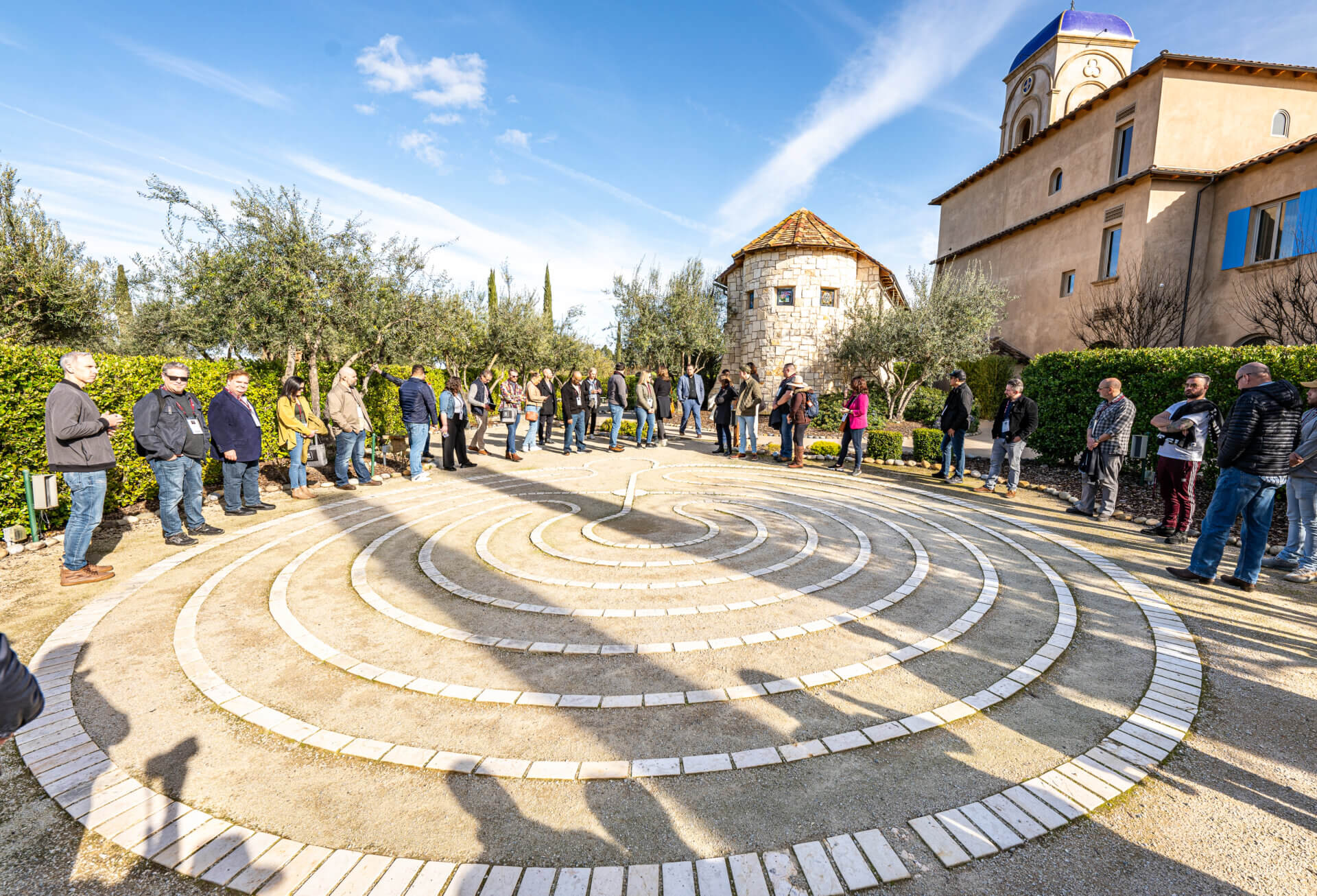
“The idea of self-sustainability is what we’re looking for, using everything around the property to our advantage,” said tasting room manager Rory Longley on a tour of the resort grounds, a veritable treasure trove of curated artworks and installations—including a 12-station “Star Trail Journey” that corresponds with the signs of the zodiac—meant to reflect the cultural teachings Ayres has gleaned from his travels around the world. “There’s not a spot . . . that hasn’t been used or that doesn’t have a purpose or meaning behind it.”
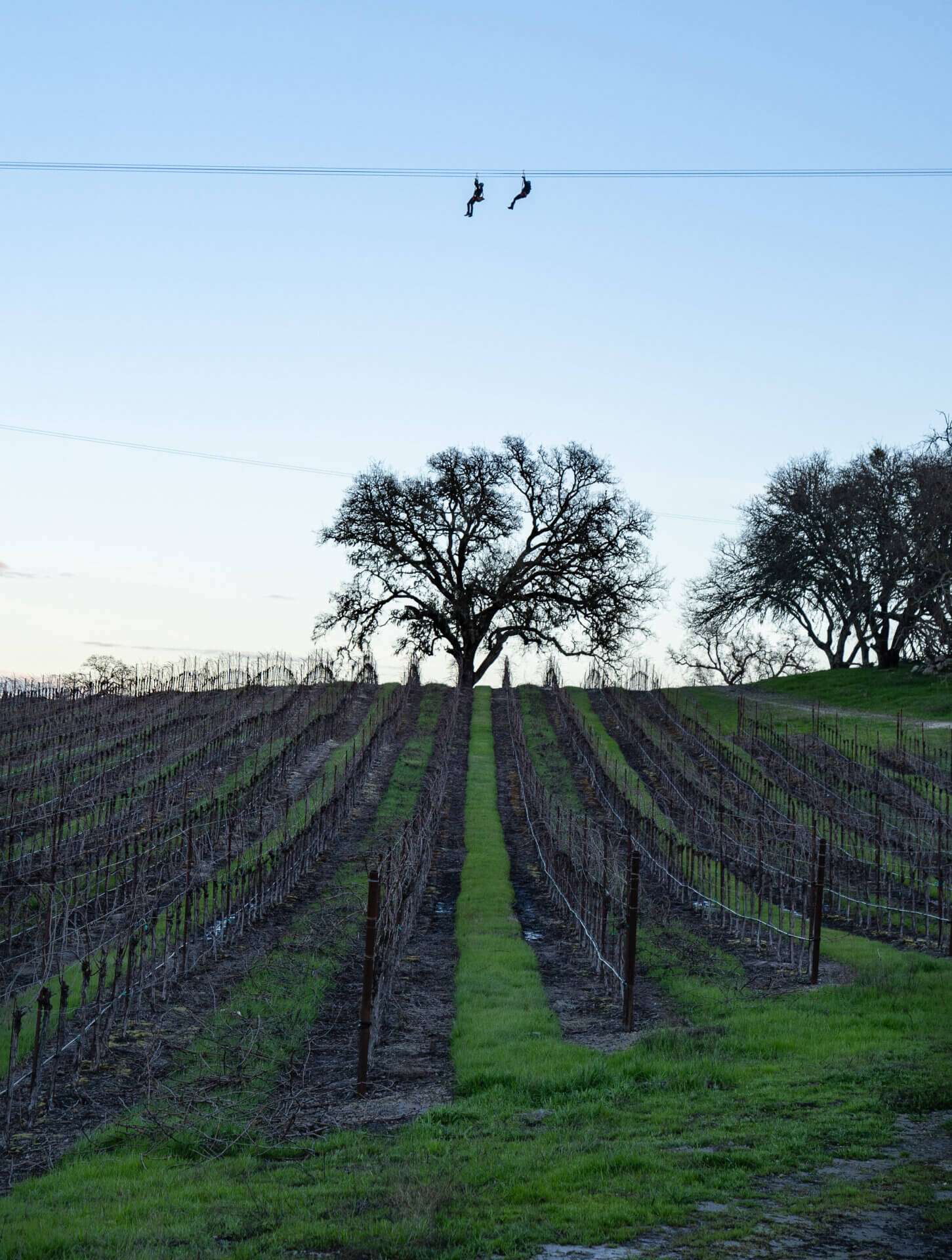
Further perspective was gained during the next stop on the itinerary, beginning with an exhilarating ziplining adventure in the Santa Margarita Ranch AVA, home to Ancient Peaks Winery’s 14,000-acre ranch of the same name (no less enlightening was a foraging tour for those who preferred to explore the natural beauty of the ranch at ground level). The visit culminated in a “Cowboy Cookout” in Ancient Peaks’ rustic Oyster Ridge Barn, where the group savored glasses of the winery’s own Cabernet Sauvignon–based blends alongside expressions from DAOU Vineyards and fellow Paso producers Opolo Vineyards and CV Wines. “We spend our time to let people know that the Cabernet here will compete with anywhere in the world. And I hope that after tasting the wine on your table and at the wineries you’ll visit on your stay here, you’ll agree with me,” Ancient Peaks co-owner and PRCC president Doug Filipponi told the campers. Added co-owner Karl Wittstrom of the region’s rising profile, “Paso Robles is kind of known as cowboy country . . . and a little bit of the Wild West. I think a lot of people are starting to change their opinion on that.”
Moving in Lockstep
As the sun rose over the first full day of camp, the group hit the road early, with half heading to Hope Family Wines and the other half to McPrice Myers Wines in the westside Adelaida District. After a quick stop in the barrel room for breakfast, founder Mac Myers led a caravan up to his estate vineyard, perched on a steep hillside with panoramic views that revitalized the still-sleepy campers—just in time for their glasses to be filled with a trio of McPrice Myers’ Cabernet Sauvignon–based blends from the 2021 vintage: Bull by the Horns, M, and Beautiful Earth. As they sipped, director of viticulture Aron Nevarez—whom Myers referred to as “a grape whisperer”—expounded on the evolution of the property, noting that his primary mission since joining McPrice Myers in 2015 has been to increase the health of the property’s five different soil types so that they’re conducive to farming a wide variety of grapes organically.
“In the dry season we get these powdery limestone soils that are really hard to manage, so that’s one of the reasons I’m focused on regenerating the soils . . . so that I don’t have to bring in any synthetic fertilizer to make the vineyard healthy,” he explained, noting that he creates his own compost from materials gathered on-site in addition to planting cover crops. “If you go anywhere in the Old World, there are vineyards that are 80, 100 years old. We don’t have that here because we don’t plan for that. The old way of farming in Paso was ‘In 15 years I’m going to cash in and replant’ . . . and that’s something I want to move away from. I want vineyards that are 30, 40, 50 years old and still producing good-quality fruit.” Nevarez added that he applies the same standard to the multigenerational growers McPrice Myers sources from: “I like to be there and present for every decision that’s being made.” His level of commitment clearly translates in the wines; when asked about the house style, Myers said that above all, “we want that sense of place. In Paso, we have incredible color, we have a long growing season so we can fully ripen every year for the most part, and we have incredible acidity. Those things, I think, should be hallmarks of any wine you make from Paso. . . . These wines don’t lack structure, but there’s an elegance to them.”
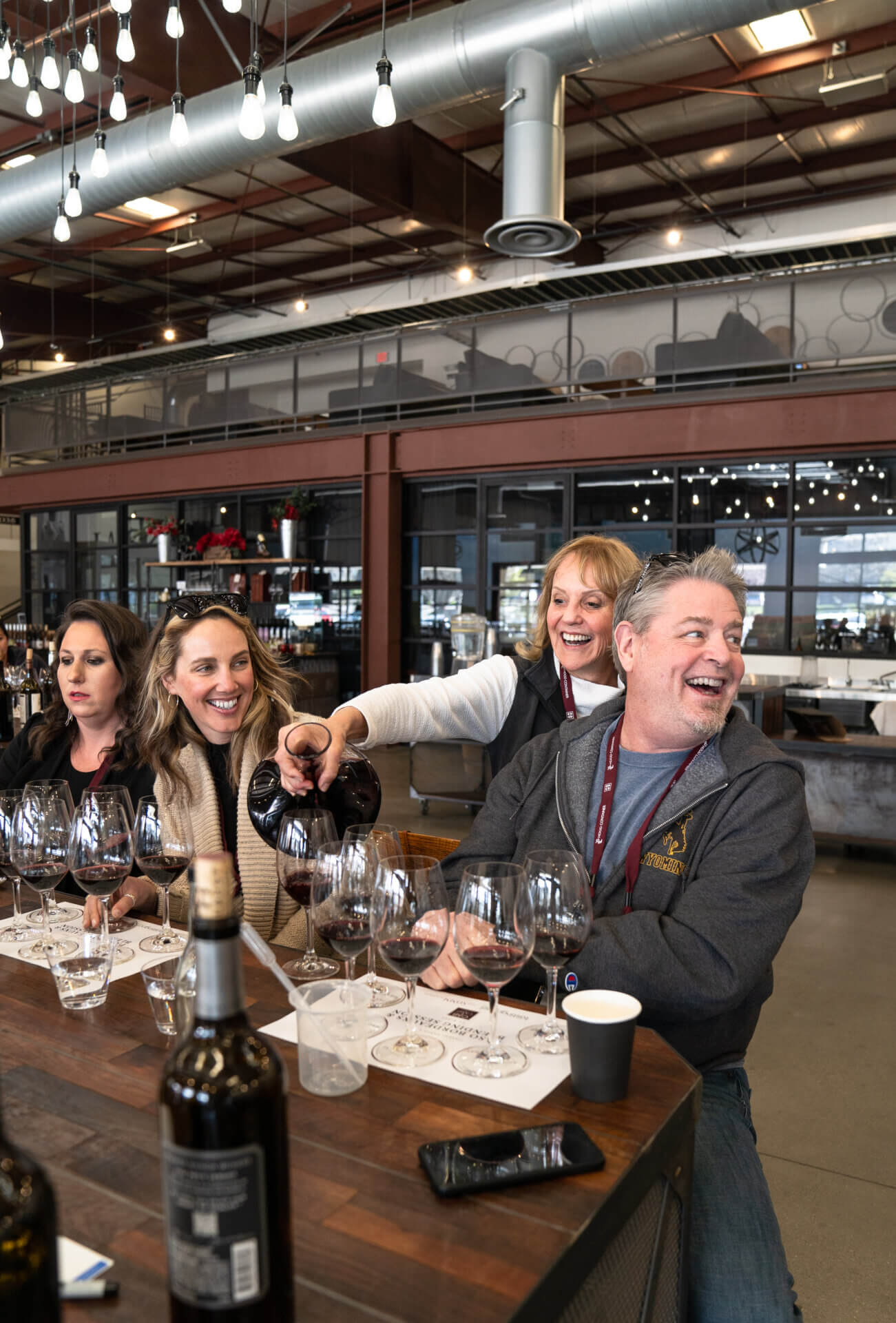
The throughline of structure carried over to LXV Wine, where owners Neeta and Kunal Mittal led the campers through a barrel trial workshop featuring their 2022 Meso by LXV Cabernet Sauvignon at the foot of their organically farmed Armaa.N estate vineyard in the Willow Creek District. Praising CAB Camp as “a great podium for small producers like us,” Neeta told the group that the aim of tasting the wine through the lens of a variety of barrel types, hailing from esteemed cooperages such as Tonnellerie Ô, Tonnellerie Darnajou, and Tonnellerie Bossuet, was to understand how “an oak cask is like a temple for [a] wine” that facilitates the expression of its terroir: “Cabs have a lot to say, and oak gives them that framework. It punctuates and elevates; it gives a pedestal for the fruit and the structure. . . . But oak should be a frame, not the art itself.”
The next stop was Robert Hall Winery in central Paso’s Geneseo District, which last year completed a three-year trial that transitioned a 43-acre section of its vineyards from sustainable to regenerative organic farming (for more on the trial and the winery’s regenerative farming practices, see the cover story of the April/May 2024 issue). Benefits such as carbon sequestration and water retention “are pretty significant; we’re seeing it in the soil, we’re seeing it in the canopy, and it’s coming across in the wines as well,” said managing director and head of sustainability Caine Thompson, noting that the additional 130 acres on the estate as well as another 700 acres of Robert Hall’s vineyard holdings around the state are in conversion in accordance with Regenerative Organic Certified (ROC) and California Certified Organic Farmers (CCOF).
Tasting a vertical of all three vintages from the trial was a fitting segue into the camp’s first panel discussion, “Sustainability: Organic, Biodynamic, Sustainable, and Regenerative Farming,” moderated by local wine writer and SOMM Journal contributor Mira Advani Honeycutt and featuring Thompson and five other panelists, each of whom shared a Cabernet Sauvignon–based wine from their respective producer. While the wineries tout a range of certifications, they remain in lockstep when it comes to their collective goal of, in Hope Family Wines director of vineyards Stasi Seay’s words, “making sure that the wine business in Paso Robles, which starts in the vineyard, is here in perpetuity. . . . I think that’s important for all of us: Our legacy as growers and producers is to leave this land better than how we found it.” Added Thompson, “We’re trying to show these examples of sustainability in practice . . . and having other growers learn from our failures so we can create change together—I think that’s what’s so powerful about Paso Robles and the CAB Collective.”
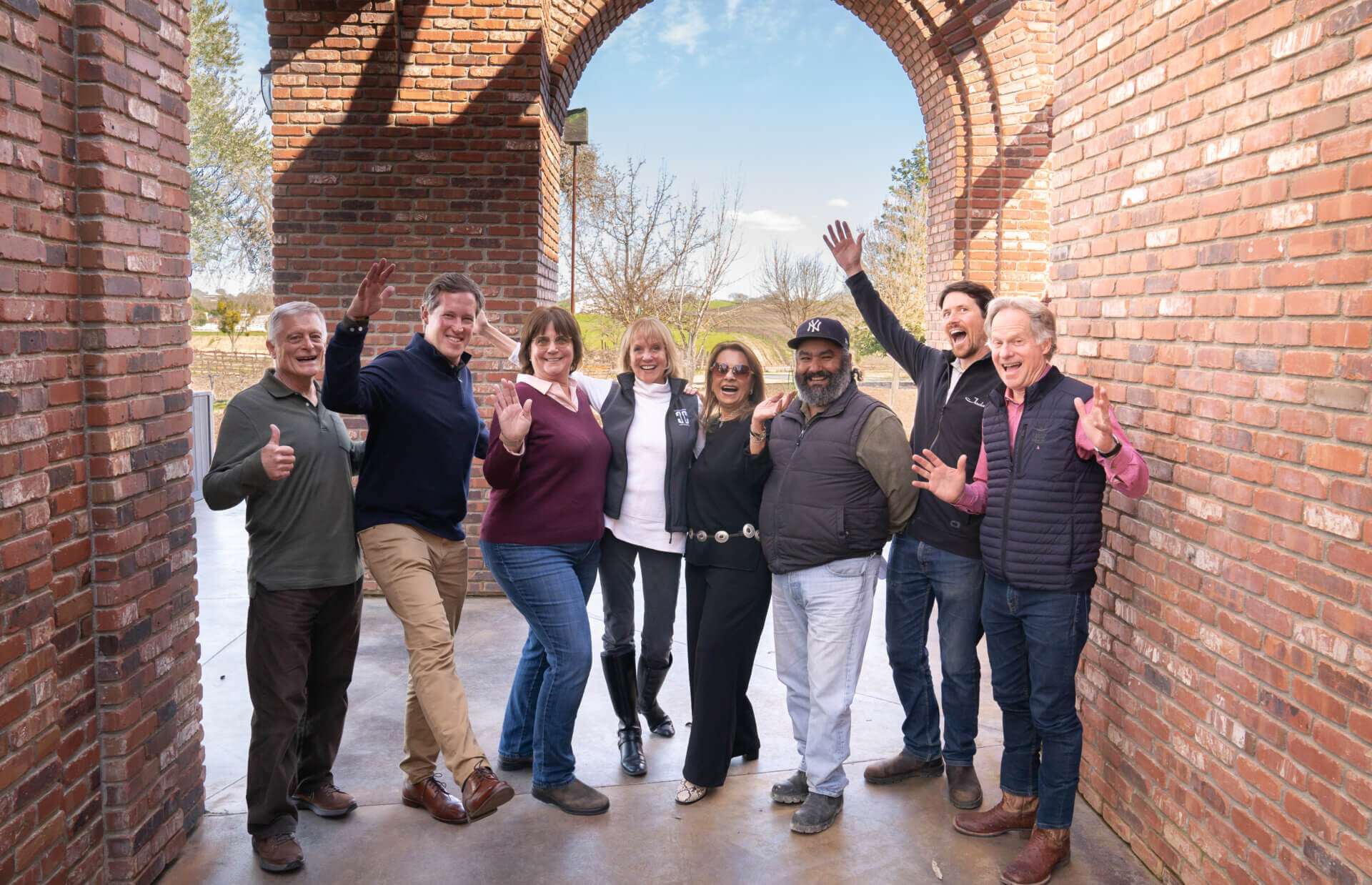
Another panel session awaited at the Continental Wine Collection tasting room, this one led by SOMM Journal contributor Cindy Rynning Lowe, featuring a quintet of local Bordeaux-varietal specialists. Among them was 25-year industry veteran and Ancient Peaks founding winemaker Mike Sinor, who noted that while “it was a bit of a roll of the dice” to plant Bordeaux grapes in the “quite cool” Santa Margarita AVA as it can be difficult to ensure adequate ripening, “the edge of ripeness is where you achieve greatness. . . . We’re always focused on Cabernet and pushing it up to the next level.” Taking the opportunity to give Cabernet Sauvignon’s parent grape Cabernet Franc its due, Continental vice president Justin Tooley noted that due to Paso Robles’ warm climate, the grapes lack the vegetal characteristics they often exhibit in cooler regions: “What you’re left with is this beautiful fruit expression, this development—and it’s versatile.”
The wines they presented proved similarly versatile when it came to the blending competition that followed, where the panelists, now changing hats to serve as judges of the campers’ creations, emphasized that “balance is key,” in the words of Hearst Ranch Winery sales director Scott Sanders. While they’d have to wait for the results (the following evening, Cameron Schimmel, marketing and beverage manager at The Fish Market & Top of the Market Restaurants in San Diego, California, would be announced as the winner), Vila Jarrell, general manager and sommelier at Bob’s Steak & Chop House in Tucson, Arizona, said her wine passed the ultimate test: “I would drink it!” she quipped with a laugh.
Channeling Paso’s Potential
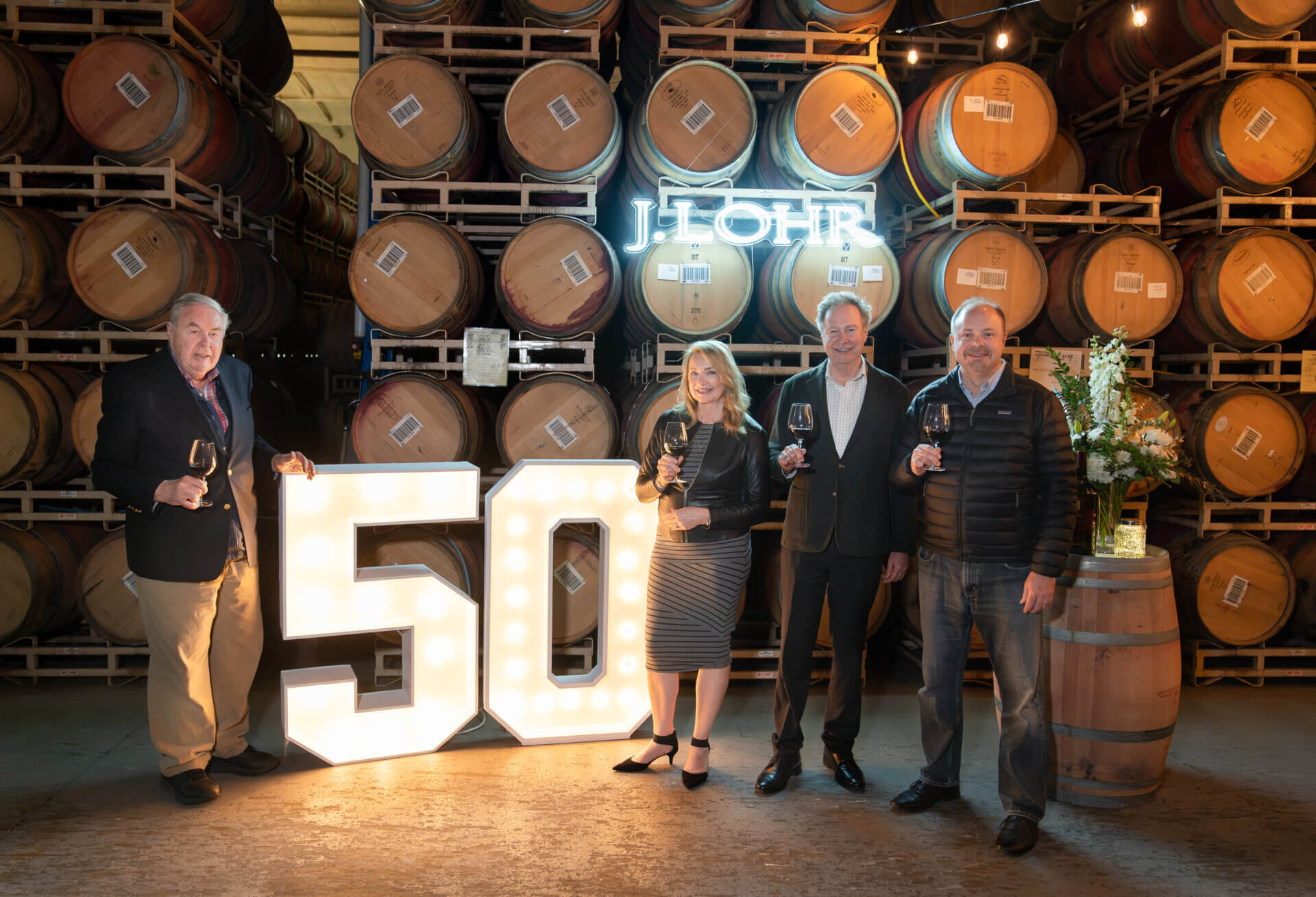
An evening at J. Lohr Vineyards & Wines doubled as a 50th anniversary celebration with Jerry, Cynthia, Steve, and Lawrence Lohr.
Pioneering Paso winery J. Lohr Vineyards & Wines was a prime location for a celebratory dinner on the second evening of camp given that it’s marking its 50th anniversary this year. But back when the business was still relatively nascent and looking to expand, recalled president/CEO Steve Lohr, his family realized “we didn’t want to be a little fish in the big pond that is Napa Valley” and, recognizing the potential of the then–little known Paso Robles, began planting grapes in the region in 1986. Their vineyard holdings have since grown to roughly 3,000 acres, yielding wines entirely produced and bottled at their winemaking facility—the largest of its kind in Paso. “As you can see, through careful, thoughtful expansion over the years, we’ve scaled up everything we’ve done in the vineyards and the wineries,” said Steve’s brother Lawrence, J. Lohr’s president/COO. “A major thread in the fabric of J. Lohr is continuous improvement and quality, quality, quality.”
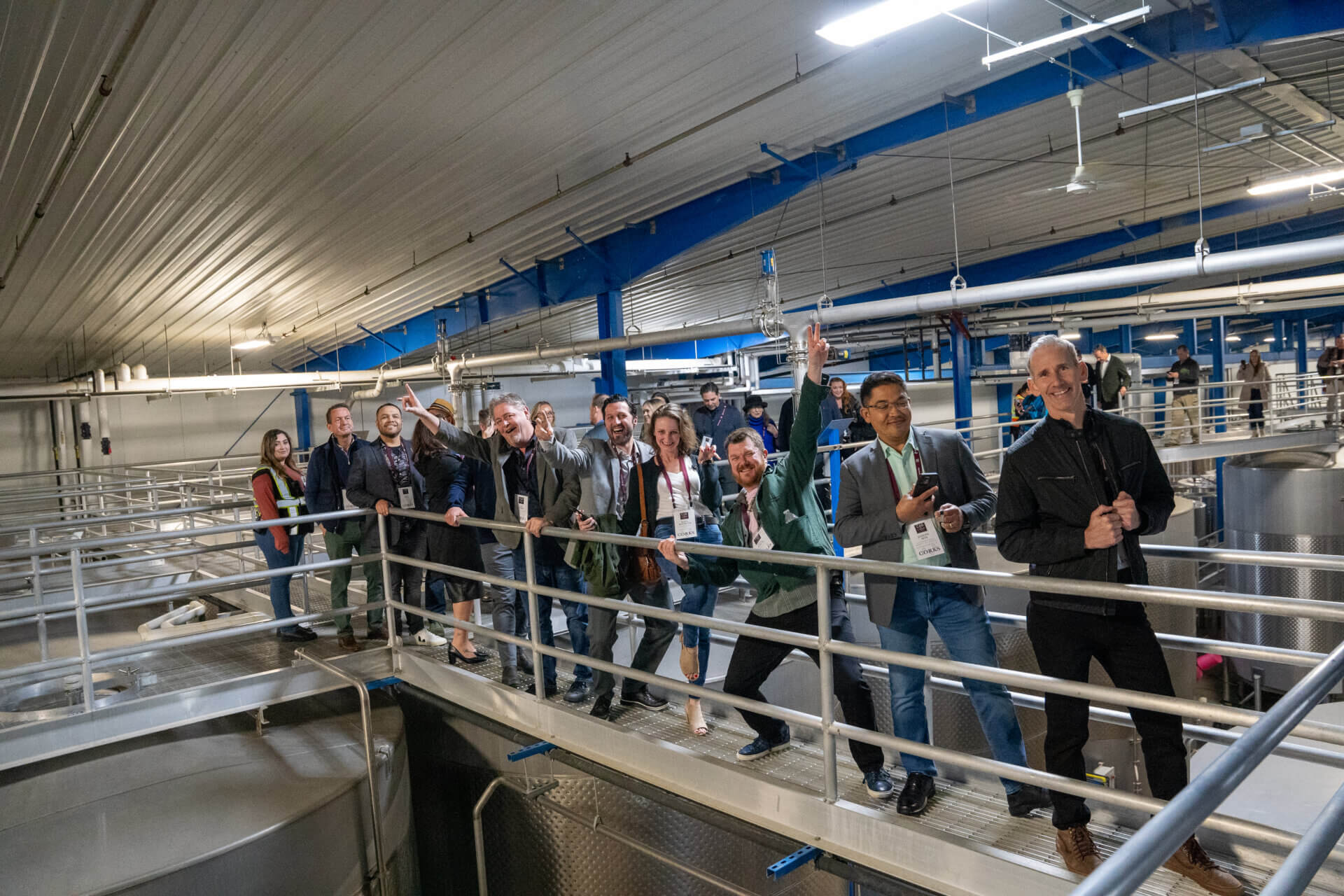
After a quick jaunt on the catwalk to see the winemaking process in action, the group ventured into one of J. Lohr’s massive barrel rooms, where Steve; his father, J. Lohr founder Jerry Lohr; and vice president of winemaking Steve Peck poured barrel samples of the winery’s Cabernet Sauvignon–based Cuvée PAU and reserve-level Hilltop Cabernet. The latter wine is “the big brother to Seven Oaks, which is the second-bestselling Cabernet in the country in the $10–$20 price range and the only one in that price range from Paso Robles in the top 20,” noted Peck, who summarized J. Lohr’s house style as “dense but soft.” Said style was well represented in the pair of Cabernets served with dinner, the 2019 Hilltop and 2020 Signature: “As you march up our price tier, from the under-$20 Seven Oaks Cabernet Sauvignon to the wonderful Hilltop and finally the Signature,” Peck added, “you’ll find that the wines get denser and darker. This is probably the darkest wine you’ll have all week, but it’s still soft—we work really hard in the vineyard and the winery [to achieve that].”
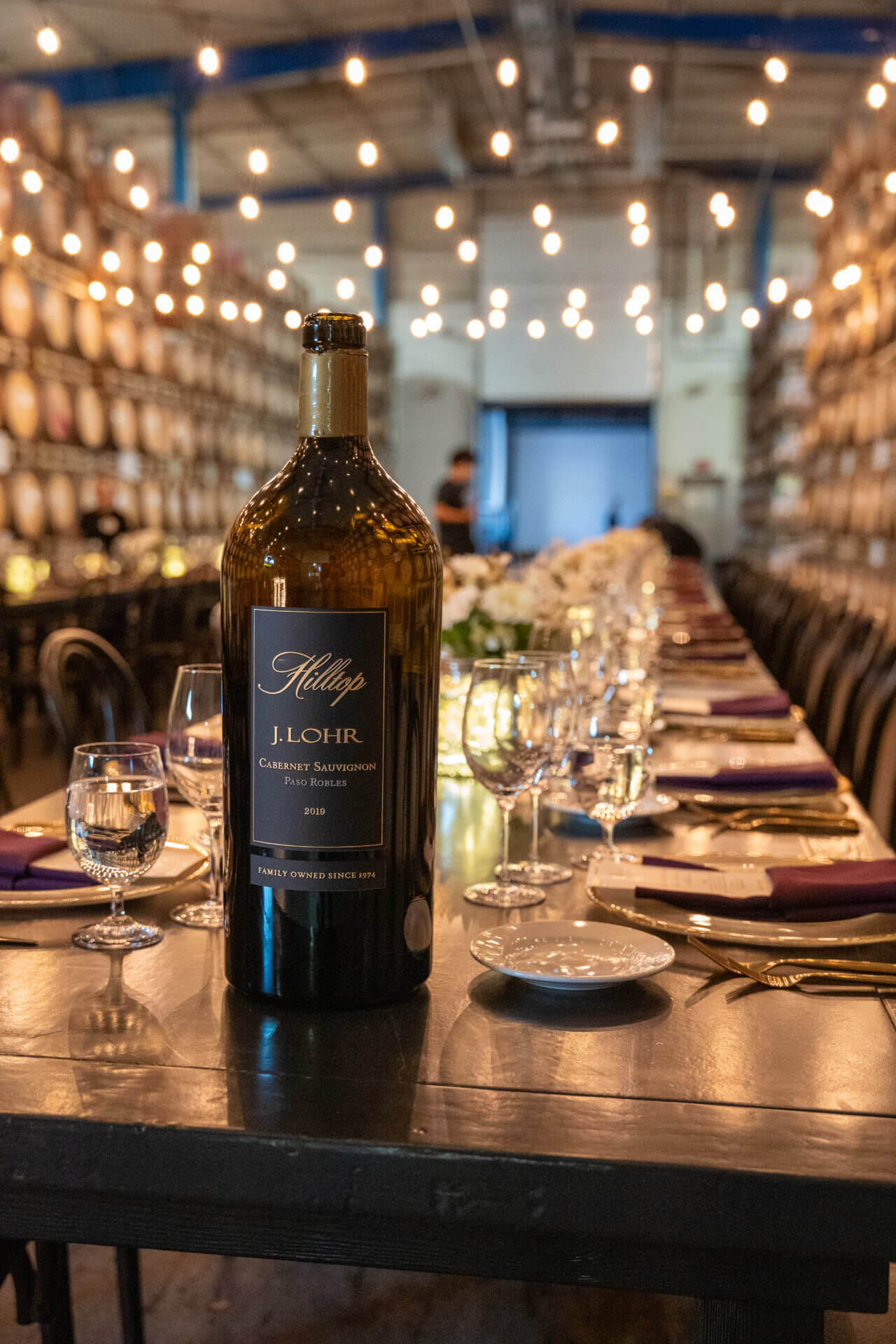
In her toast to the group, J. Lohr chief brand officer Cynthia Lohr reflected on her family winery’s role in the PRCC’s founding. “In 2012, our friends at DAOU pulled JUSTIN [Vineyards & Winery] and J. Lohr together and said, ‘What can we do to draw a spotlight on superior-quality, ageworthy Cabernet and Bordeaux?’ We put our heads together . . . and the CAB Collective was born,” she said. “Each year the [camp] keeps getting better and better—just look around at this room. If this isn’t the personification of what a collective can bring together—all of you but also our friends at Riboli, at DAOU, at LXV, Austin Hope, and everyone else you get to visit this week.” In his parting words, Steve Lohr also made it a point to credit his visitors for their efforts in featuring Paso wines on the wine lists and retail shelves of their businesses: “It’s not just about really high-quality Bordeaux here . . . but a level of hospitality and appreciation for all that you do that’s second to none. It’s because of you that we’re able to . . . have a community like what we’ve been able to develop here,” he said, adding, “We hope that you consider anything Paso Robles in your buying decisions . . . and just know that any of us here at J. Lohr are always available to help”—an offer that, given the congenial vibe of the evening, surely rang true with the campers.
Letting the Soil Speak
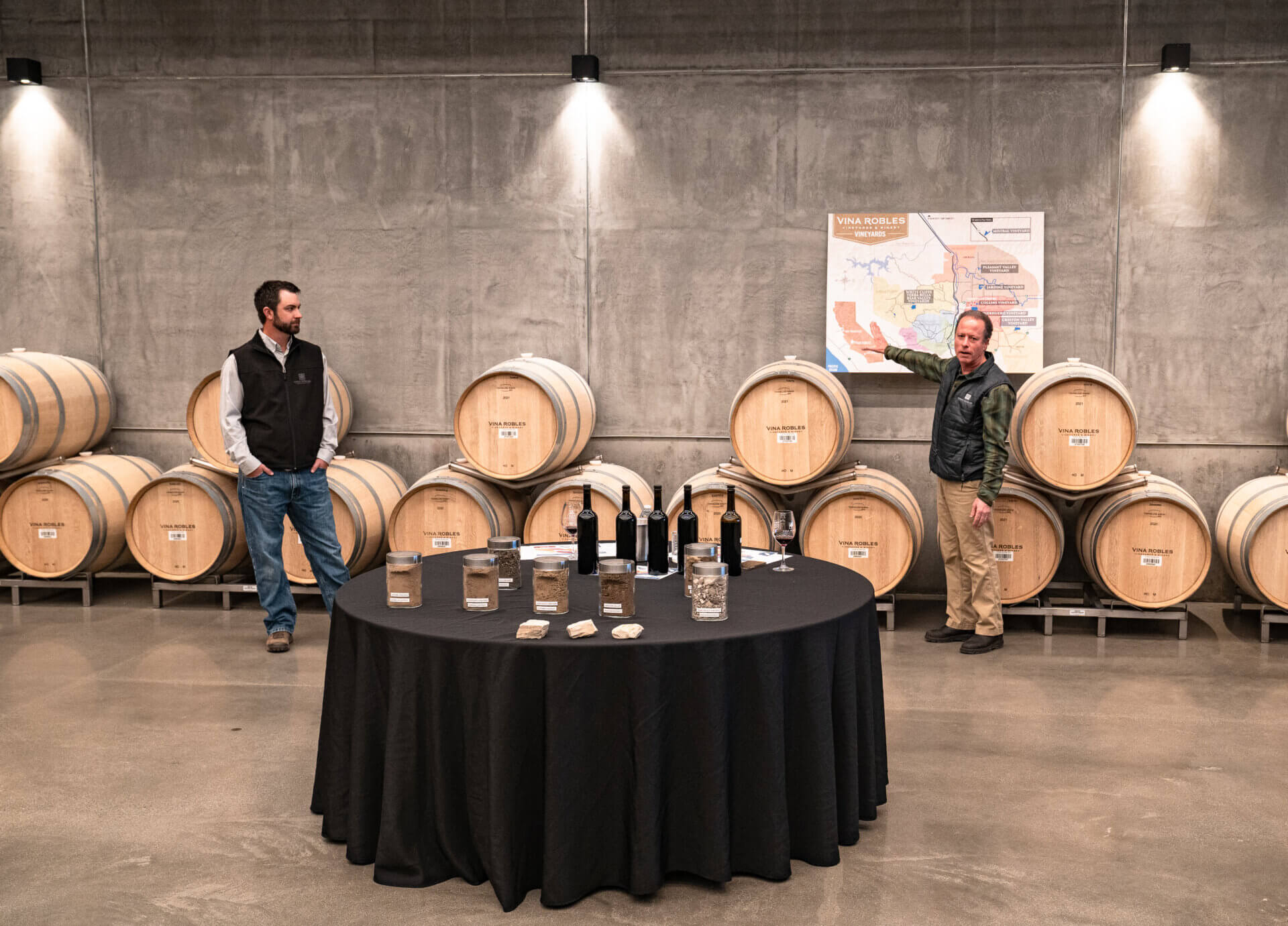
Embarking on the final day of the camp, half of the group headed to Castoro Cellars and the other half to Vina Robles Vineyards & Winery, a family-owned producer that owns roughly 1,200 acres in the region. In their spacious winery, an aptly named “Taste the Districts” workshop awaited, featuring five barrel samples of 2023 Cabernet from four different Sustainability In Practice (SIP)–certified vineyards: Jardine in the Estrella District; Huerheuro, which straddles the border of the Geneseo and El Pomar districts on the same property as the winery; Creston Valley in the Creston District; and Bear Valley in the Adelaida District. While the wines showed a range of fruit character and acidity levels due to their varying microclimates and soil profiles, the overarching Paso style bonded them: “We have no issues in Paso Robles with ripening fruit—any year is a good year here,” said winemaker Kevin Willenborg. “When you have that accumulation of sugar occurring, and we get that in spades here, you get that richness of flavor and ripeness and also color.”
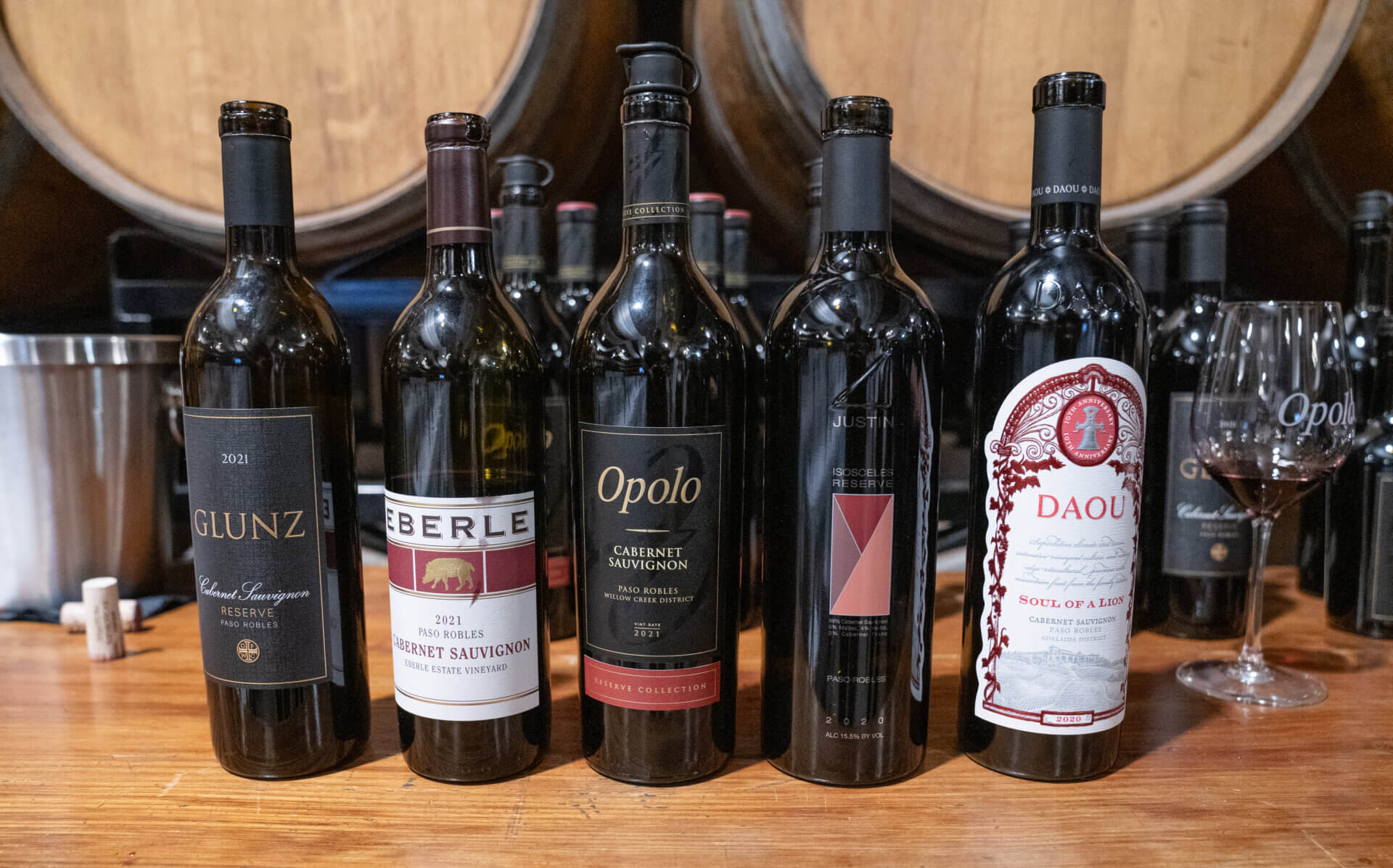
José Alberto Santos, VP of enology and viticulture, DAOU Vineyards; Scott Shirley, winemaker, JUSTIN Vineyards & Winery; Varinder Sahi, owner/winemaker, Copia Vineyards and Winery; James Schreiner, winemaker, Opolo Vineyards; Gary Eberle, proprietor, Eberle Winery; and Matthew Glunz, general manager/winemaker, Glunz Family Winery & Cellars, with moderator Cindy Rynning Lowe.
Another wide view of the region awaited at the top of Riboli Family Wines’ stunning Willow Creek Vineyard property, purchased in 2022; after driving through a lane of olive trees, the group was greeted by 360-degree views of the verdant hills and by assistant vineyard manager Six Puentes, who pointed out the nearby Templeton Gap and noted its moderating influence on the vines, particularly in the cool evenings. Still in development and in the process of organic conversion, the vineyard will supply a range of grapes for Riboli’s “up-and-coming” San Simeon label, including Cabernet Franc, Petit Verdot, and Cabernet Sauvignon.
The spotlight was fixed on the latter grape once again at the final panel of the camp, “Cab Is King,” at Opolo Vineyards. Joined by five other participants who discussed the nuances of their presented wines, JUSTIN Vineyards & Winery winemaker Scott Shirley summarized the theme well, recalling that “as I walked through a new vineyard site off Adelaida Road” while visiting JUSTIN owner Justin Baldwin in Paso over ten years ago, “I was amazed at the soils. It’s really just a sliver on the Central Coast that has the limestone necessary to maintain that acidity in the grapes, which is great for ageability, and then that diurnal shift that allows the vines to recover from the heat of the day—if I were a Cabernet Sauvignon vine, this is where I’d want to be planted.”
Fellow panelist Gary Eberle has himself been firmly planted in Paso since the late 1970s; in 1983, he not only helped to establish the Paso Robles AVA but was the first to list the Paso Robles appellation on a label. After the panel wrapped, he held court with the campers at his Eberle Winery, now the oldest continuously owned winery in Paso Robles, and praised the incoming 2023 vintage as one of the best in memory: “I always think the ’07s are the best wines we’ve made throughout the state, and I think the ’23 is going to equal or exceed them.” “He says that every vintage,” quipped winemaker Chris Eberle (no relation).
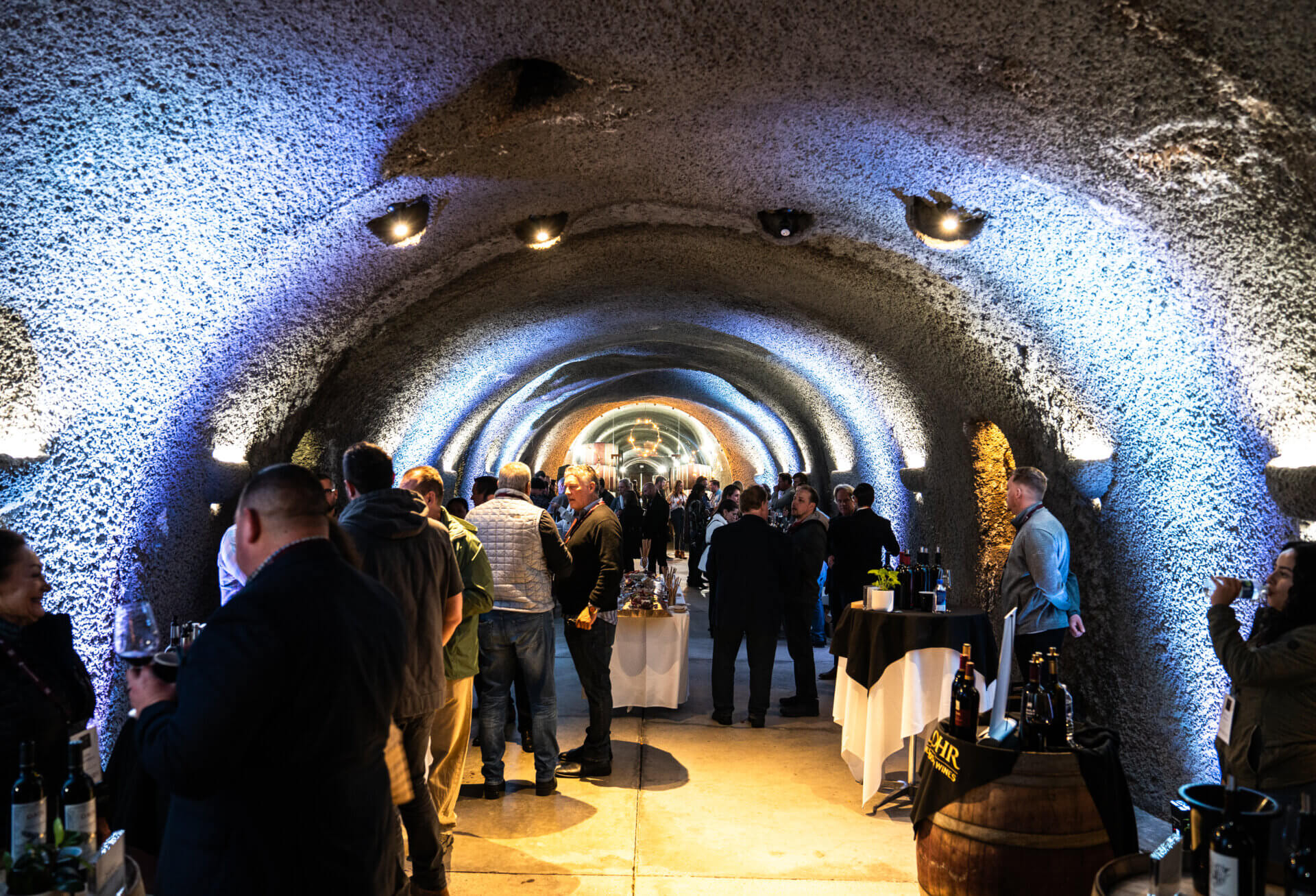
Awaiting the campers in Eberle’s caves was the crown jewel of the camp, the Grand Tasting, where participating wineries from throughout the week were joined by other producers, offering everyone a chance to both revisit favorites and delve into deeper exploration. There, Doug Ayres and Doug Filipponi took the chance to ruminate on the evolution of the camp over the years. “Nothing can compare with what you feel and taste and when you’re on-site, the sense of place. This is going to make an impact on all of these folks, and that’s our mission, to bring people from all over the country and the world if possible and have them feel what Paso Robles means to us,” said Filipponi. “It’s a fine line to walk, because we want people to feel comfortable and be engaged and realize that we’re all friendly hometown people. But we’re not country bumpkins either; we’re making world-class wines here in Paso Robles.” That brought up the topic of a world map on display at Ayres’ Allegretto resort, now covered with pushpins marking the locales from which its guests have traveled. “It just went up maybe five months ago. Each week I look at those pins—it’s a neat thing. I think there’s a magnetism that’s powerful here in Paso Robles, and people are tuning into that,” Ayres said, prompting Filipponi to note while gesturing around the room that “this is the fruit of all of our efforts. It takes a long time, but the recognition is finally showing up.”
Camper Commendations
It’s a beautiful place and everyone’s extremely passionate about what they do. . . . [The sense of community] is incredibly genuine and palpable.” —Cassandra Kessman, wine director, Blacksburg Wine Lab, Blacksburg, VA
For [the producers here] to be so dialed [into sustainable practices], it’s really impressive. They’re willing to do this because it’s better for the earth; it’s not necessarily the easiest choice, but they’re willing to make the hard choices.” —Kate McGrath, owner, The Railpenny Tavern, Brentwood, NH
The major takeaway I got was . . . how everyone helps each other out and has each other’s back. I love the love, that they all embrace each other. It helps me [in that] no matter what Paso wine we feature, I feel good about it.” —William Foster, general manager, PY Steakhouse at Casino del Sol, Tucson, AZ
Coming to recognize how much community there is here really speaks volumes about not only the wine that comes out of here but also the people who produce it. . . . I think it’s going to be important to translate that back to my team, who will in turn translate that back to our guests. Washington, D.C., is a very international city, and while there are a lot of appreciated wine regions that people ask for . . . I think there’s going to be a lot of gravitation toward Paso Robles. I already support it on my list, but there are so many different things where I’m like, ‘How can I [incorporate] this into my by-the-glass program to introduce people to it in a more approachable way?’” —Marc Rios, general manager, food and beverage outlets, Marriott International/Westin Washington D.C. Downtown Hotel, Washington, D.C.
When we’re tableside or training our teams, when we’re opening up someone’s eyes about Paso, they’re then going to tell ten, 20 more people and it’s just going to expand. Who needs $500 Napa Cab when you can have an outstanding $85, $90 Paso Cab? And I’m from Southern California—I can be here in three hours. . . . So now’s the time to come and explore.” —Christopher Moran, general manager, Club 33, The Walt Disney Company, Anaheim, CA
I’m trying to . . . broaden horizons and let people know that Napa, Bordeaux, and Italy aren’t the only areas. What I’ve learned in the last four days is a lifetime of learning of what most people expect in their operations. . . . I’m more excited to go back now because of the knowledge I’ve obtained.” —Peter Dones, general manager, Morton’s The Steakhouse 5th Avenue, New York, NY
A Denouement at DAOU
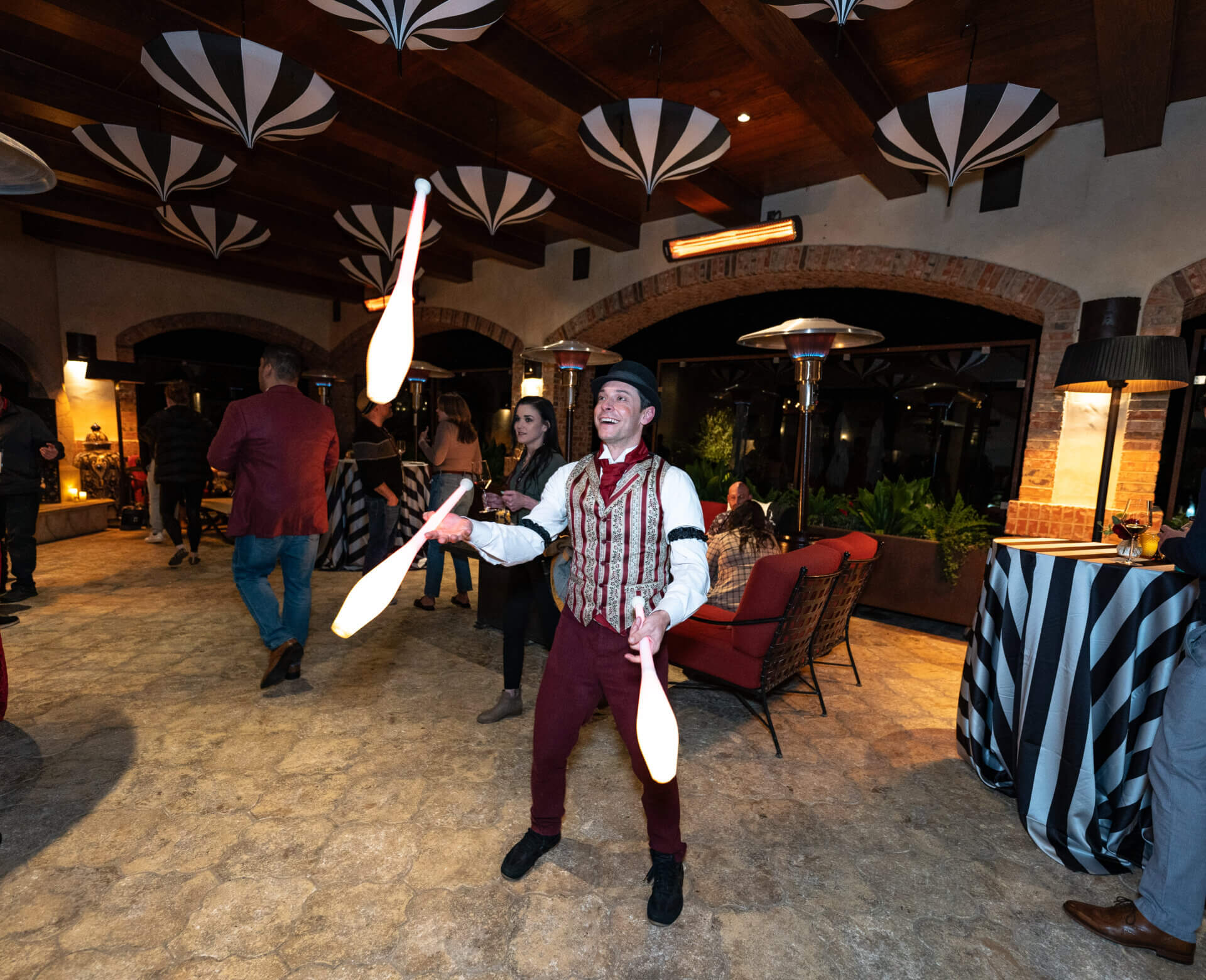
Having heard about its role in the founding of the PRCC and tasted its renowned wines over the course of the week, the group was more than familiar with DAOU Vineyards by the time they crossed its threshold in the Adelaida District for the grand finale of the camp (of course, many of them had already been featuring the winery’s bottlings at their businesses long before they set foot on Paso soil). A live band flanked by jugglers, mimes, and other performers awaited them alongside large-format bottles and back vintages of wines like Patrimony and Soul of a Lion: “Celebrating Daniel and Georges Daou’s time in France, we thought, what could be more fun than a little French theme? A few berets, a little juggling, and God knows what else is in store?” quipped Maeve Pesquera. The country, after all, was responsible for instilling a passion for wine in the brothers after they emigrated there from their native Lebanon during the Lebanese Civil War, setting off a search for prime terroir that led them to the pinnacle of what is now DAOU Mountain.

When Georges and Daniel settled here 17 years ago, Pesquera noted in her opening words to the group, “Paso was not known as a Cabernet region . . . and their idea of creating world-class Cabernet and Bordeaux wines was not a very popular one. When they stood here and planted a proverbial stake in the ground, people around town thought . . . ‘They’re not from here; they don’t belong here.’ Well, fast-forward to the release of the first vintage of Soul of the Lion, [which] has taken its place as one of the most popular luxury-level wines in the U.S. today. . . . To my fellow vendors here, cheers to you; together we are proving that this is the new frontier for Cabernet and Bordeaux varietals.”
Earlier that day at the Cab Is King panel, DAOU’s VP of enology and viticulture, José Alberto Santos, had credited DAOU Mountain’s terroir—defined by its elevation, proximity to the coast, and calcareous soil and limestone subsoil—for imparting the common thread of “earthiness and fresh acidity” in the producer’s wines, noting that the vineyard team’s goal is to “achieve complete vine balance” as well as “perfect physiological and phenolic maturation” in order to set their colleagues up for success in the winery and prove, in Pesquera’s words, “that this terroir in Paso Robles really can create wines that stand toe to toe with the best in the world.”
DAOU in particular has a more high-profile position on the world wine stage than ever: Last year, it was purchased by Australia’s Treasury Wine Estates for nearly $1 billion. Pesquera herself had just returned from an international trip with a cohort of other local producers to “bring the message of Paso to life” in Japan and Korea, where she recalled “standing in front of this group of 80 Japanese somms and almost crying before I started speaking. I thought, ‘Look at little Paso. Look where we are—we’re right where we deserve to be as a region.’ It doesn’t matter how many cases you’re making; our wines are quality across the board.” And as she and her peers bid farewell to this round of “top-notch” campers, they were already looking forward to welcoming the next: “Every year people are clamoring to come on this trip, and that’s exciting,” she said. “We are watching the birth of the next great American wine region. It’s so humbling, so thrilling, to me that I get to be here to participate in a small way in that. It’s an opportunity of a lifetime and an honor to bring it to life.”