

EXPLORING THE ECOLOGY OF WINE
by Chris Howard
“I feel with sustained pleasure that love has returned to the space of viticulture—a love characterized by humility in the face of the living, by the desire to respect it . . . and by the wish to maintain or increase the prodigious social ties that wine is capable of fostering in our societies.” With this opening remark by veteran enologist Georges Truc, day two of the second annual Vignoble et Biodiversité (Vineyards and Biodiversity) colloquium began.
At this gathering of winegrowers, researchers, policymakers, and other wine professionals, held at the Palais des Papes in Avignon, France, in January, experts in agroforestry presented on the hitherto overlooked role of trees in viticulture, which includes providing habitats for wildlife, improving soil health, and regulating vineyard microclimates by offering shade and wind protection—all while sequestering carbon. Botanists, mycologists, and ecologists spoke on the vital collaborations between soil fungi, bacteria, insects, cover crops, rumens, and vines. Agronomists and historians traced the shift from medieval viticulture, in which vines were integrated into natural landscapes, to the modern era of petro-dependent monocrops, noting how recent developments signal a return to biodiversity-based practices.
Fascinating as each presentation was, the power of the conference lay in their synthesis, reflecting Truc’s zeitdiagnostik that “love is back” in viticulture. But what does that mean exactly? I suggest that it is akin to biophilia.
Biophilia: The Forces of Attraction
The term biophilia was coined by psychoanalyst and social philosopher Erich Fromm, who defined it as “the passionate love of life and of all that is alive.” Celebrated Harvard biologist E.O. Wilson further developed the concept, exploring how the human affinity for other living things is genetic, based on the “innate urge to affiliate.” After all, we ourselves are biodiverse by nature. Only 10% of our DNA is specifically human; the rest is the same stuff trees, bats, and kelp are made of. Our skin is covered with trillions of bacteria, fungi, viruses, archaea, and phages, while our gut microbiome is a teeming multitude without which we could not metabolize food, think, or survive. We abuse biodiversity at our own peril, Wilson writes: “If natural diversity is the wellspring of human intelligence, then the systematic destruction inherent in contemporary technology and economics is a war against the very sources of mind. It is impossible to unravel natural diversity without undermining human intelligence as well.”
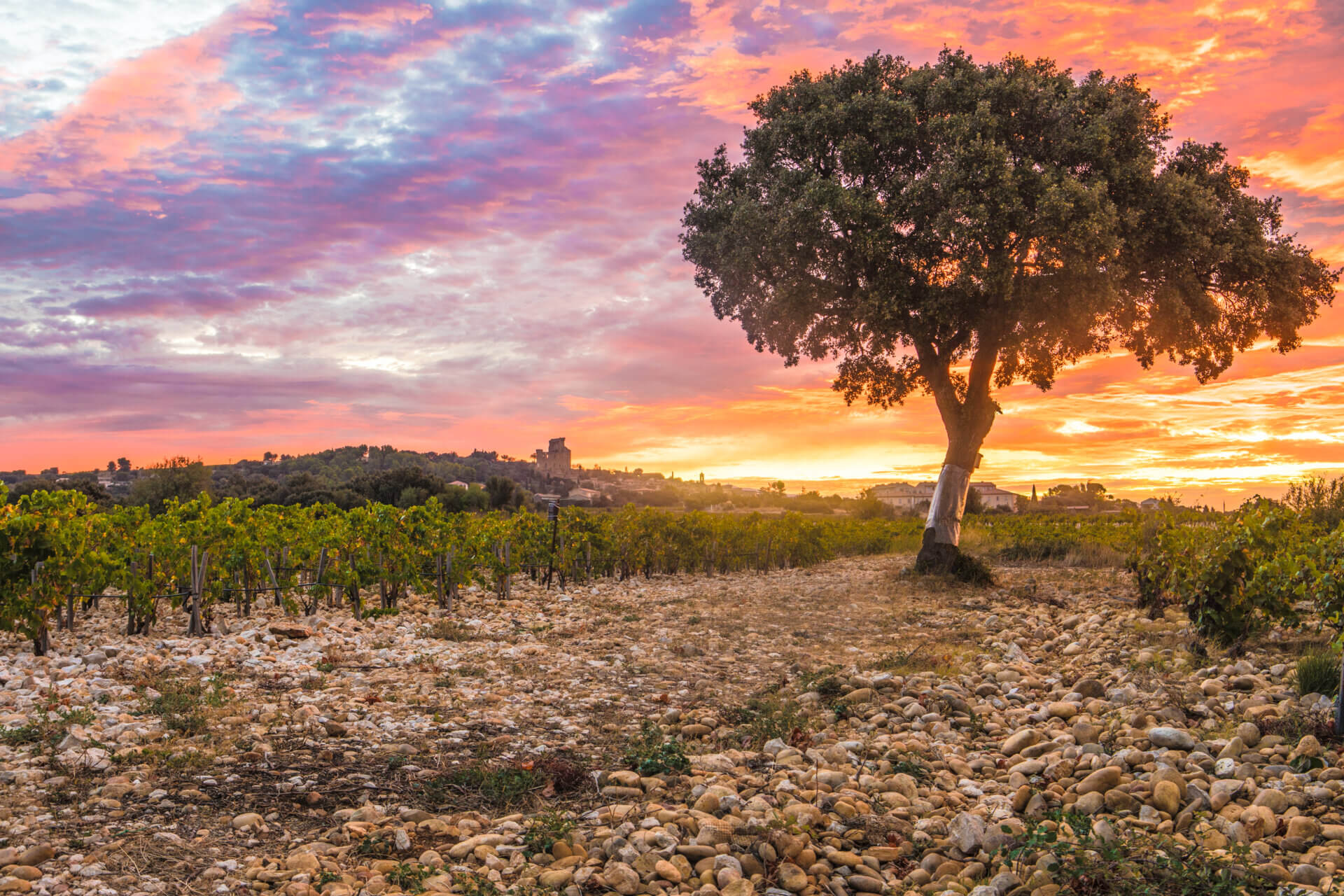
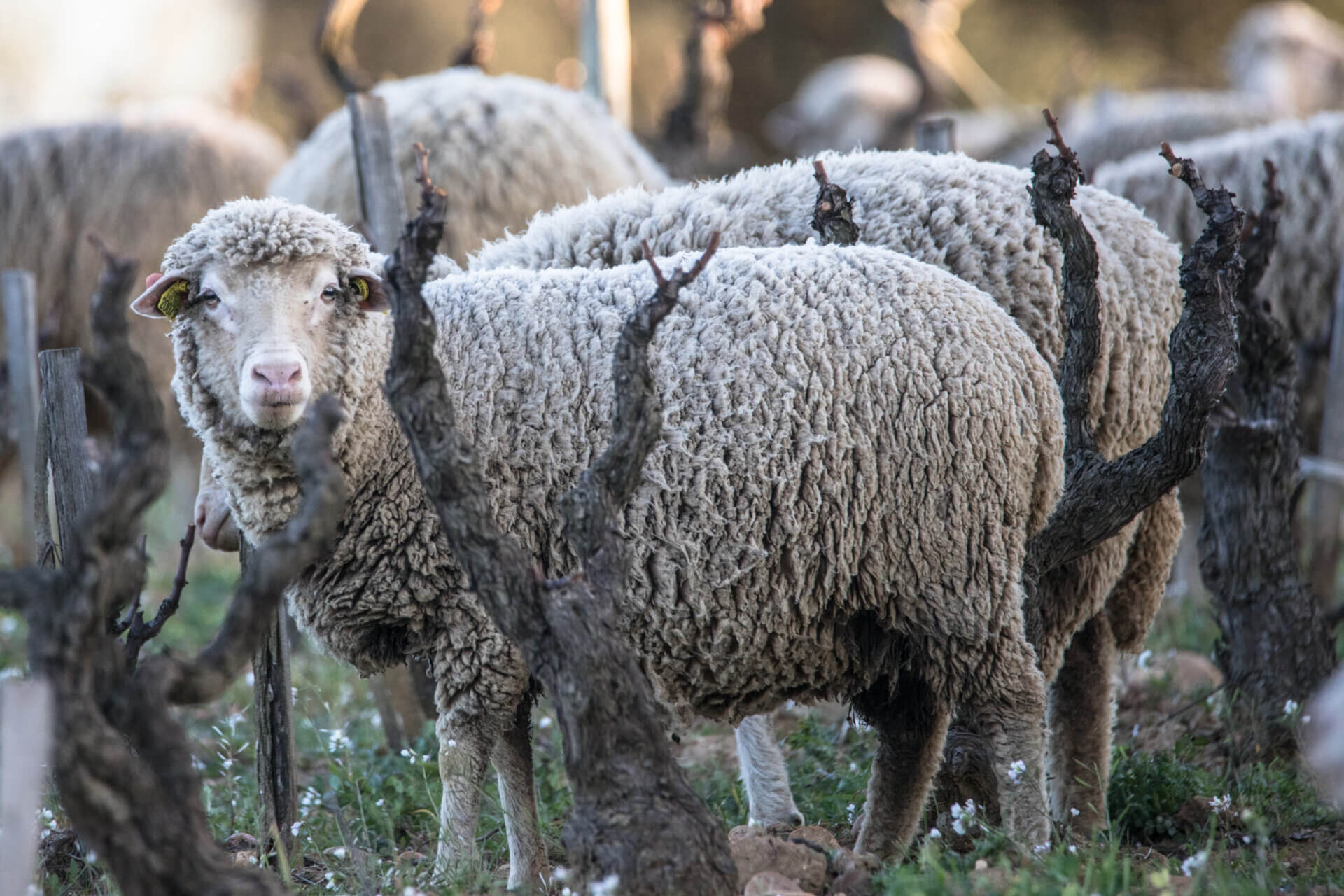
Luckily, there are signs of growing intelligence on this matter, including among winegrowers who are steadily turning away from the extractive, unloving, industrial model of the mid- to late 20th century and toward a regenerative one in which vineyards contribute to wider ecosystems. The day before the conference, I had a chance to visit some vignerons in Châteauneuf-du-Pape, where I found biophilic initiatives well underway. Across the arid region, there is a big push to plant native trees, shrubs, and cover crops in and around the vineyards while integrating animals such as sheep, pigs, and chickens to weed and fertilise. Beehives and bird and bat houses dot the landscape, and the presence of mycorrhizal networks, worms, and insects is embraced.
Biodiversity, in which species coexist in relationships of mutual dependency and competition, is now being understood and accepted as a source of ecological vitality rather than a hindrance. In addition to increasing carbon sequestration, restoring and fostering biodiversity improves soil fertility while reducing erosion and nutrient runoff. It allows for natural biological pest control and pollination, minimizing the need for external inputs. While its primary aim is to improve ecosystem health, it benefits farmers, rural communities, and consumers alike.
Such regenerative efforts abound today, from Uruguay to Oregon, and for good reason. Industrial agriculture is a main driver of the rapid collapse of biodiversity; conversely, healthy, living soil is the basis for all life on Earth due to its capacity to sustain and enhance plant and animal life and health and to regenerate water and air quality. Humus is the lifeline of terrestrial life forms.
Appreciating Relationships
When we refer to biophilia as “an innate urge to affiliate,” we are essentially talking about relationships. A long-standing problem raised at the conference concerns the fact that we have difficulty appreciating ecological relationships because they are largely invisible. The world consists of delicate interdependencies that we do not physically see, and because we do not see them, we tend to break them.
The answer to the question “What is wine?” is not “The stuff in my glass.” Wine is about relationships. These relationships are formed between the generations who plant and tend vineyards; co-domesticating humans and plants; respirating leaves and sunlight; sugar and yeasts; the oak forest and the cooperage that together make the barrels; the sand that makes the bottles and the oceans upon which they’re transported; the villages, towns, and cities that engage in production and trade; and, finally, the friends and family who drink wine together. Eric Asimov, who like some other prominent critics has been championing an expanded conception of wine quality that encompasses ecological stewardship, has written that the greatest thing that wine has given him is a connection to nature that as an urban dweller he would not have experienced otherwise: “Nothing in wine has affected me so profoundly as observing the intimate relationship that enlightened farmers have with the land that they tend. What I’ve learned from them has shaped my outlook in many important facets of my life, from the foods and wines I buy to the clothes I wear to how I think about climate change and political issues. It’s also made clear to me how little we know about the natural world, particularly the complex and intricate links that govern the well-being of a healthy ecosystem, from the network of microbial life in the soil to the diversity of plant life and [that of] animal life all the way up to the apex predator.”
If love has returned to the space of viticulture, it is because we are rediscovering the pattern that connects the living world. The love Georges Truc has observed arises from the almost lost sense of unity between the biosphere and humanity, which binds and reassures us all through an affirmation of beauty. But this love grows in direct relation and proportion to the destruction that threatens our very capacity to continue living on a planet we are transforming. The poet Friedrich Hölderlin captures our situation in the line: “But where the danger is, also grows the saving power.”
In the Anthropocene age, we are waking up to the fact that if we are not generating organic matter, we are losing it. Protecting and promoting biodiversity is simply a matter of survival and intelligence. The good news is that biophilia is already part of our programming; it just needs to be activated. We can express our love of life as well as wine with our dollars, supporting only those winegrowers who are on the path of ecology. We can contemplate and enjoy the wine in our glass as a crystallization of relationships in the fragile web of life.