story and photos by Deborah Parker Wong
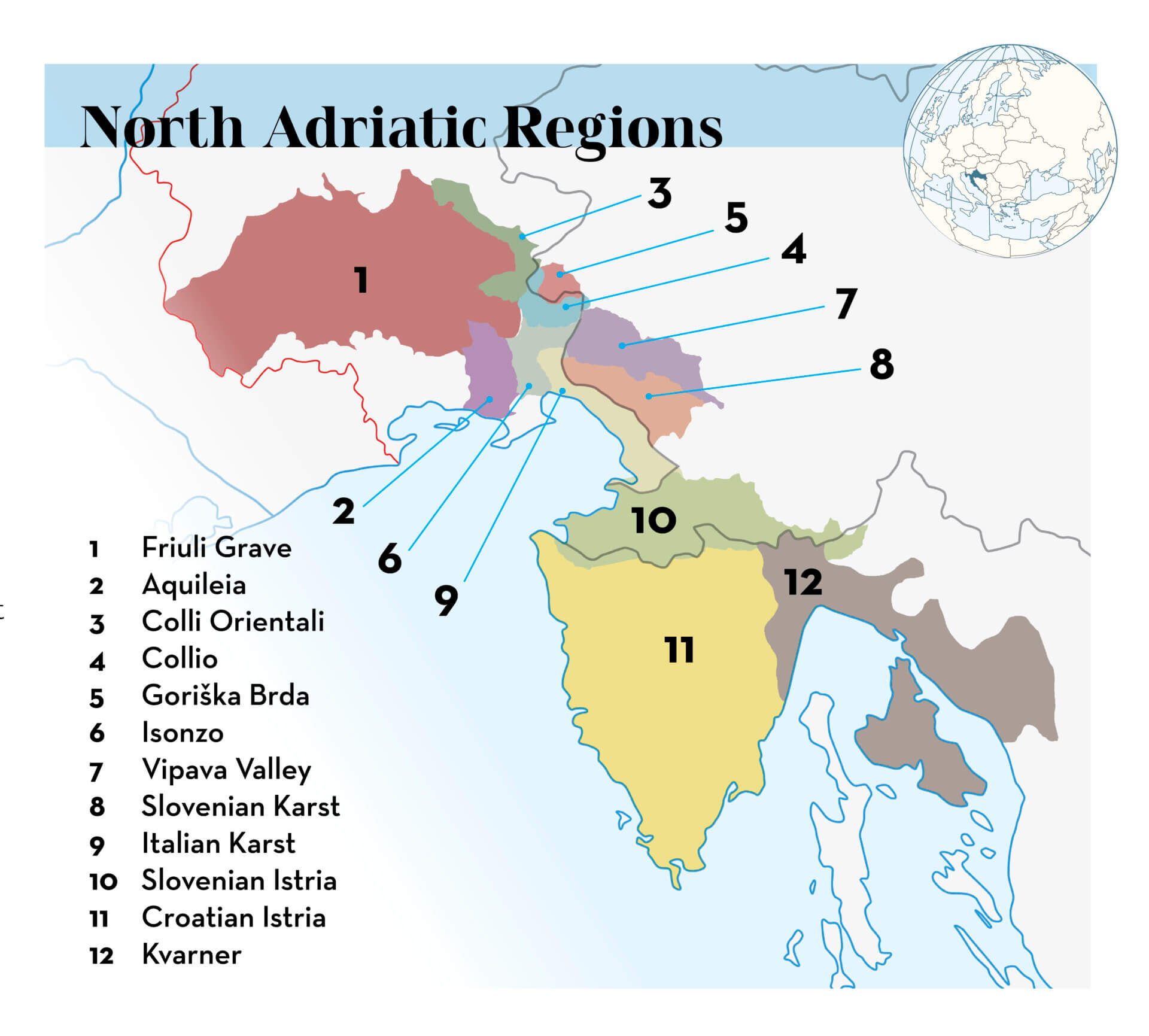
Standing in Transalpine Square in the town center of Nova Gorica, Slovenia, with one foot in Slovenia and the other in Italy, I marked the beginning of a journey across the borders of three countries and through 12 winegrowing subregions that are defined by author Paul Balke as the North Adriatic.
In 2025, Nova Gorica and Gorizia, a town in Italy’s Friuli–Venezia Giulia region just across the border, are being reunited as the European Union’s first borderless European Capital of Culture. It’s a poignant moment in the history of Gorizia, which at the end of World War II was abruptly split between post-Mussolini Italy and then-Communist Yugoslavia. Reuniting the communities demonstrates the positive impact that cross-border governance has on the growth of European suburbs, which are essential pieces of the EU mosaic.
In the wine world, cross-border collaboration is relatively rare. Only one example comes to mind: The producers of Grenache in Roussillon, France, and Garnacha in northwestern Spain have joined forces across the Pyrenees to co-promote their variety. While most regions are looking inward to further differentiate their terroirs, Balke and the producers who participate in and support his research defining the North Adriatic as a region have adopted a broader vision that transcends political borders and explores historical, geographical, and cultural ties. The North Adriatic links the subregions of Colli Orientali, Collio, Friuli Grave, Isonzo, and Aquileia in Friuli–Venezia Giulia with Goriška Brda, Vipava Valley, and Karst in western Slovenia and Istria and Kvarner in Croatia.
In her review of Balke’s book North Adriatic: Friuli Venezia Giulia, West Slovenia, Istria and Kvarner, Dr. Caroline Gilby, MW, cites a compelling example of their unity: “Balke analyzes the dramatic effect of imposed political division on Goriška Brda and Collio (in Slovenia and Italy respectively). He explains that this had been one region for hundreds of years, with names meaning ‘hills’ in both languages. As a region, its growers self-organized as early as 1872, an echo of today’s current cross-border initiatives.”
The North Adriatic Terroir
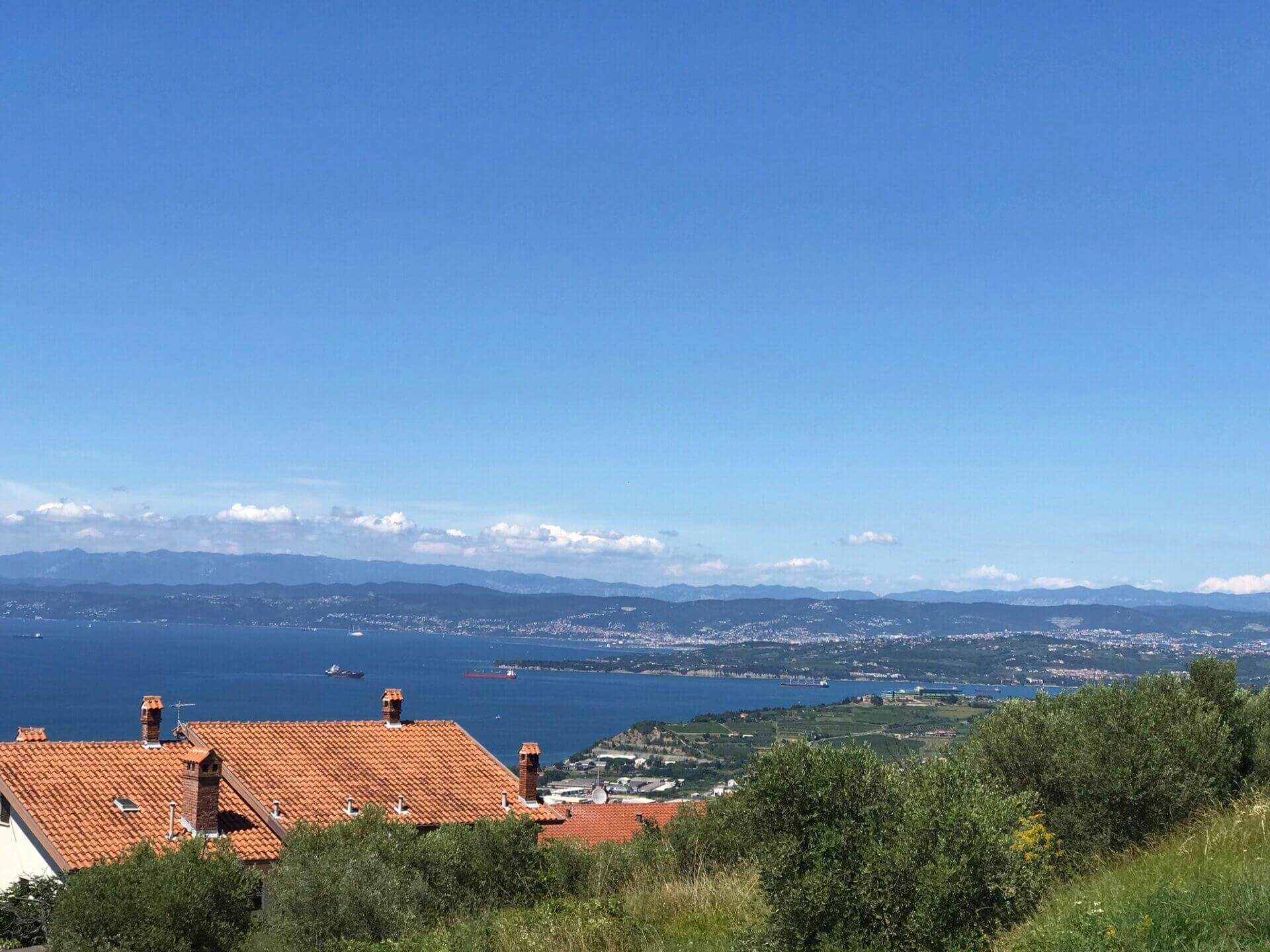
The natural factors that unify the North Adriatic are many. First and foremost is the confluence of Alpine and Mediterranean climates. The proximity of the Adriatic Sea to the surrounding Alps produces a continuous exchange of warm and fresh air currents known as the escursioni termiche. The moderating influence of the sea produces warmer winters and cooler summers while the surrounding Julian Alps to the east and Carnic Alps and Dolomites to the west trap moist, humid air, and the prevalence of the bora (or burja in Slovenian), mistral, and sirocco winds can be felt throughout.
The climate of the North Adriatic, considered to be the northernmost reach of the Mediterranean, is classified as sub-Mediterranean but ranges from Alpine-continental in the north to full Mediterranean in the southern part of Coastal Istria (the warmest subregion in the North Adriatic), with mesoclimates particular to each of the subregions of Colli Orientali, Collio, Goriška Brda, Isonzo, Friuli Grave, Aquileia, Karst (also known as Kras in Slovenian and Carso in Italian), Vipava Valley, Istria, and Kvarner.
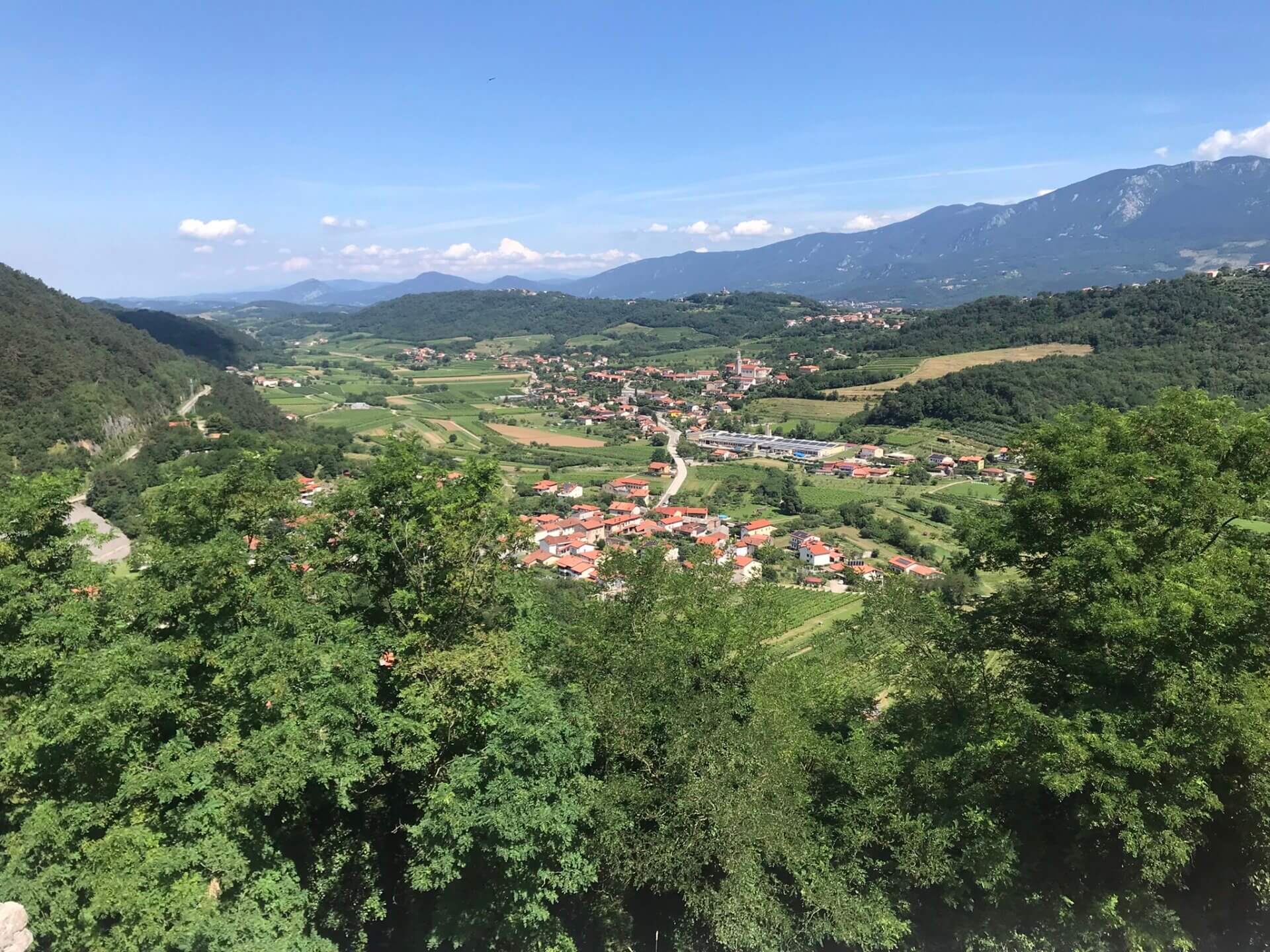
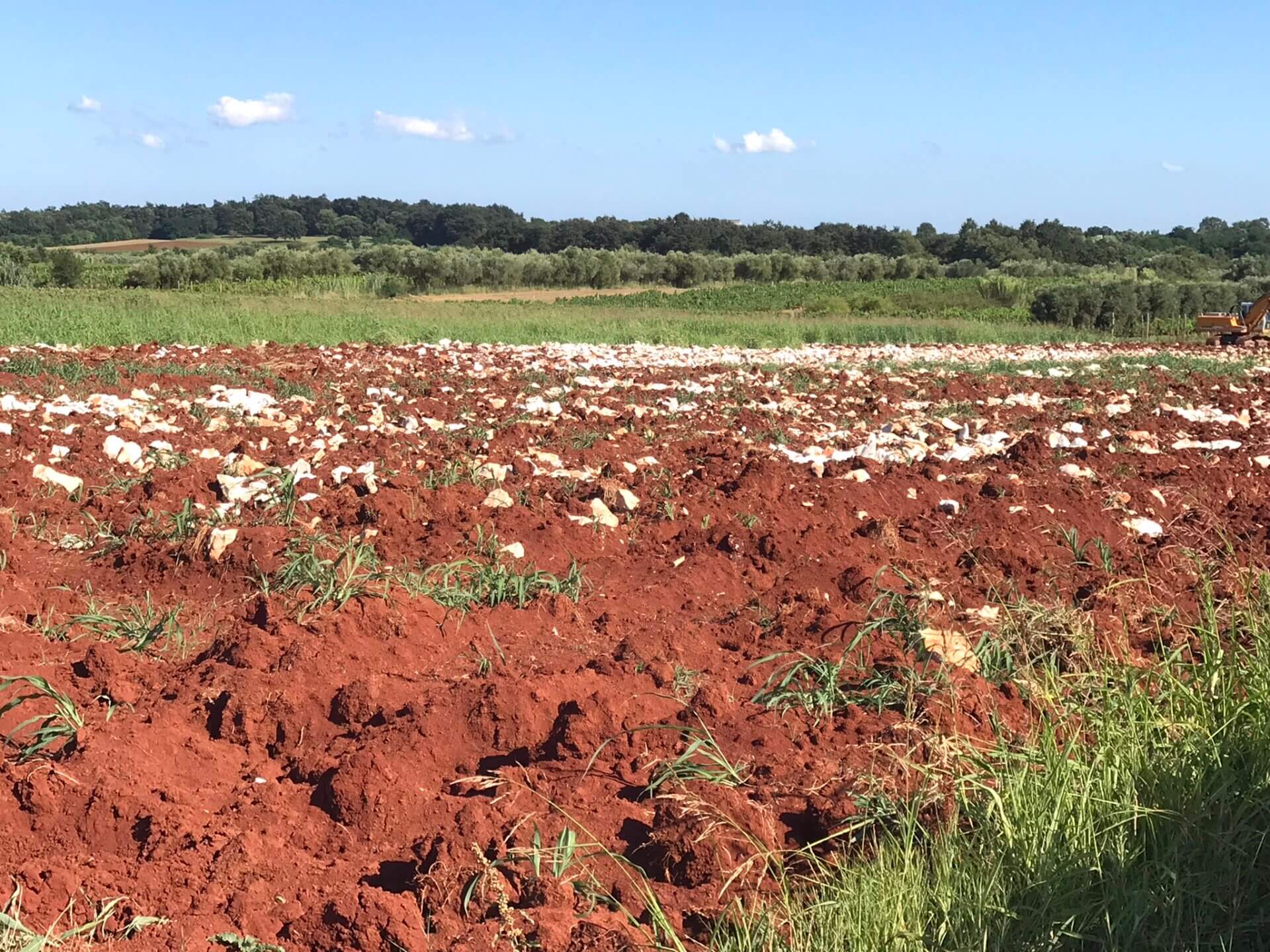
According to Balke, the identical origins and structures of the soils here, which are divided into flat plains, hills, and mountains, make them a significant theme in the concept of North Adriatic terroir. An ancient sea covered the entire region and over time eroded the limestone ridge of the Karst Plateau, depositing sedimentation that formed the hills of Colli Orientalli, Collio, Goriška Brda, and Vipava Valley and the soils that reach further south to Istria.
Rich in chalk with many variations including white/gray, red, and black, flysch emerges as the unifying soil type in Friuli, western Slovenia, and Istria, where it goes by many names, including ponca, opok,and Flysch de Cormòns. Karstic soils of Dolomitic limestone appear inland as part of the Karst Plateau that extends into northeastern Italy and southwestern Slovenia.
Unifying Grape Varieties
With Italian/Slavic names and Slovenian and Croatian synonyms, almost all of the grape varieties found in the North Adriatic are planted throughout the region; few of them are confined to one subregion. The list is not definitive, but the dominant white variety is Malvasia Istriana and the red variety is Refosco dal Peduncolo Rosso.
Varietal themes emerged during the tastings I attended with producers of each subregion, which were organized by Balke in summer 2024; these producers poured stellar examples of both mainstream and positively rare grapes as summarized here:
Friuli Grave: 17,000 hectares under vine. Friulano, Pinot Grigio, Sauvignon Blanc, Chardonnay, Refosco, Cabernet Sauvignon, Merlot. For a list of producers, visit docfriuligrave.com.
Aquileia: 410 hectares under vine. Cabernet Franc, Cabernet Sauvignon, Chardonnay, Friulano, Malvasia Istriana, Pinot Blanc, Pinot Grigio, Refosco, Sauvignon, Verduzzo. For a list of producers, visit viniaquileia.it.
Colli Orientali: 2,300 hectares under vine. Friulano, Malvasia Istriana, Pigato, Pignolo, Pinot Grigio, Refosco dal Peduncolo Rosso, Ribolla Giallo, Sauvignon Blanc, Schioppettino, Tazzelenghe. For a list of producers, visit colliorientali.com.
Goriška Brda: 1,878 hectares under vine. Chardonnay, Cabernet Franc, Cabernet Sauvignon, Merlot, Ribolla Gialla.
Collio: 1,300 hectares under vine. Friulano, Malvasia, Pinot Bianco, Pinot Grigio, Pinot Nero, Ribolla Gialla, Sauvignon Blanc. For a list of producers, visit collio.it.
Karst: 41 hectares in Italy, 603 hectares in Slovenia. Chardonnay, Glera, Malvasia, Vitovska, Traminer, Refosco, Teran. For a list of producers, visit carsovinokras.it.
Vipava Valley: 2,500 hectares under vine. Zelen, Pinela, Klarnica, Polsjakica, Sauvignon Blanc, Chardonnay, Pinot Noir, Merlot, Cabernet, Refosco.
Slovenian Istria: With 40 kilometers of coastline, this subregion has about 1,800 hectares under vine. Malvasia, Muscat Blanc à Petit Grains, Pinot Gris, Pinot Noir, Refosco, Teran, Friulano, Zelèn. For a list of producers, visit govipwines.com.
Croatian Istria: 3,010 hectares under vine. Istria became part of Croatia in 1991. Cabernet Franc, Chardonnay, Malvasia, Merlot, Muscat, Pinot Grigio, Refosco, Teran, Sauvignon Blanc, Sémillon. For a list of producers, visit vinistra.com.
Kvarner: With 190 hectares under vine, the region has 36 native grape varieties. Cabernet Franc, Friulano, Malvasia, Pinot Grigio, Ribolla Gialla/Jarbola, Sansigot, Žlahtina. For a list of producers, visit kvarner.wine.
In short, the North Adriatic is a treasure trove of indigenous grape varieties, many of which have never traveled beyond the borders of their home terroir. Producers here are showcasing their wines with the hopes of gaining a wider audience for these rare varieties. For more information, see deborahparkerwong.com/2025/02/25/north-adriatic-producer-guide.
Unifying Wine Styles
A decline in sweet-wine consumption in the North Adriatic has led to a growing interest in traditional-method sparkling wines. While many producers are using classic varieties like Chardonnay and Pinot Noir, Istrian Malvasia has shown tremendous potential across the North Adriatic region. The still white blends that have been a historic hallmark of the region are ceding to monovarietal wines, but the superb quality of Collio Bianco is undeniable.
Ramato or skin-contact Pinot Grigio wine is a historic style in Friuli–Venezia Giulia and can be found in many of the subregions. Collio pioneers Gravner and Radikon have ushered in a new era for orange wine there, as the style has now been approved by the Consorzio Tutela Vini Collio. According to Decanter, labels will likely read vino da uve macerate, meaning “wine from macerated grapes.” The new category stipulates at least seven days of fermentative maceration with strict criteria for color and limits volatile acidity to that allowed for red wines—up to 1.2 mg per liter. Balke points to the likelihood of a special DOC designation for Oslavia as well (an alternative name might be Ribolla di Oslavia).
Balke’s book details the rich history and culture of a region that has been repeatedly divided and scarred by wars but remains deeply connected through winegrowing.