

RECAPPING 2024’S ALEXANDER VALLEY CABERNET ACADEMY
by Jessie Birschbach Photo Credit: All photos by CW HOWARD PHOTO
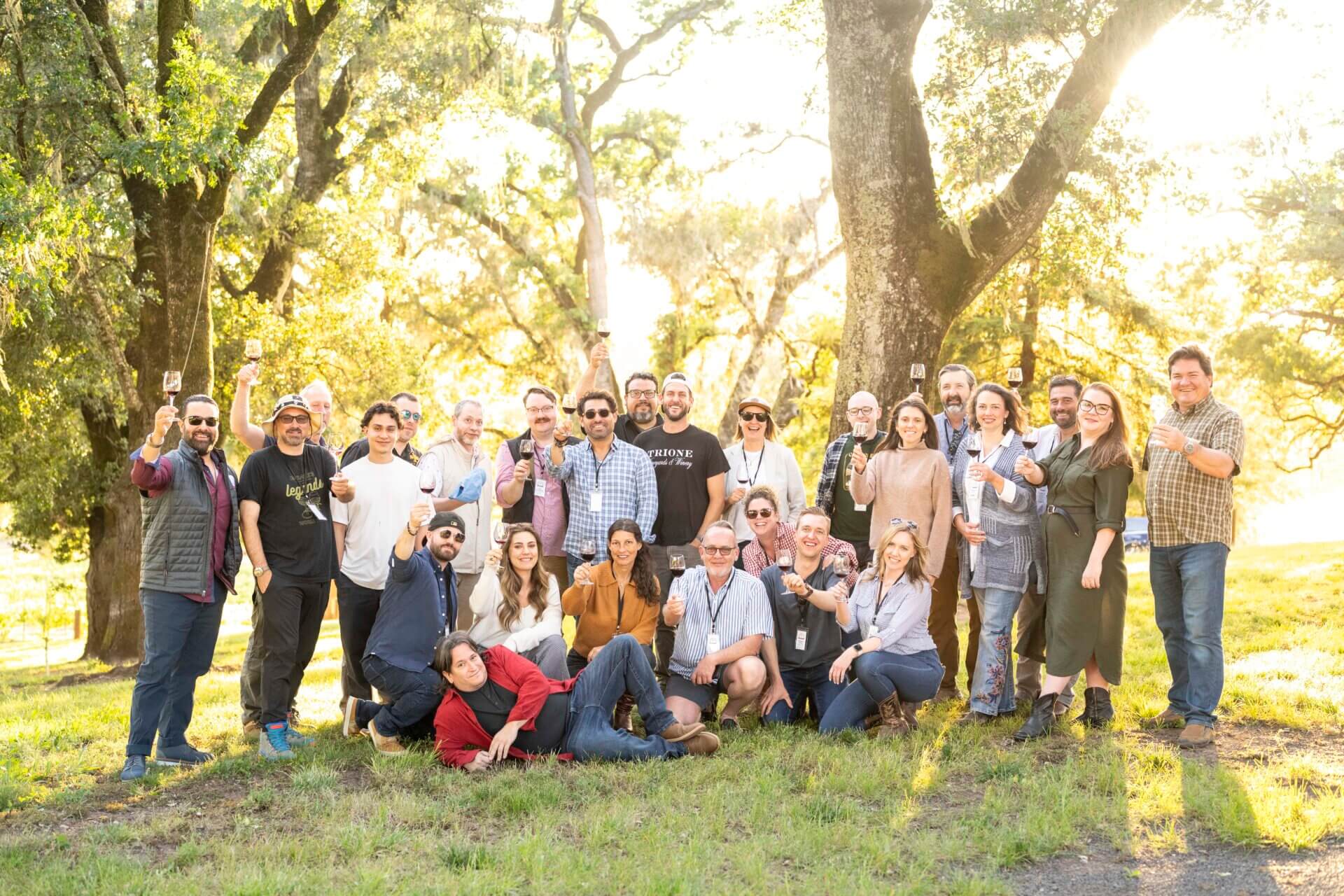
In my dreams, I dined at the Montage Healdsburg with the same convivial group of people I had actually broken bread with the night before. Denise Trione, committee chairwoman for the Alexander Valley Cabernet Academy and sales and marketing director at her family’s Trione Vineyards & Winery, welcomed a trio of sommeliers and me with the California French–inspired fare of resort restaurant Hazel Hill. I awoke still surprised at how well the delicate white fish in bright, creamy dill sauce swam with the notes of sage in the Trione 2019 Henry’s Blend Red. With a yawn, I pulled up the window blinds in my Geyserville Inn room. The dull gray light revealed a densely foggy morning: Neighboring vineyards could be seen, but the surrounding hills and mountains were faint suggestions at best.
A bit later in the lobby, a small group of renowned wine buyers from across the country gathered and introduced themselves between bites of pastries and sips of coffee. Most of us seemed tired from the previous day of travel followed by reception dinners such as the one I attended—and yet the next two days of the 2024 Alexander Valley Cabernet Academy would prove to be eye-opening. Since 2016, The SOMM Journal has been privileged to be a part of the Academy’s guest roster. We’ve witnessed the region’s Cabernets evolve to not merely shed the pyrazines they’d shown in the early 2000s but carve out their own niche in the form of a modern, savory, higher-acid style—one that contemporary wine drinkers, by the by, seem to prefer… But we’ve also seen the recurrence of issues from years past, such as the need to divide the 22-mile-long region—and its 77,000 acres of vineyards—into at least three climatically different subregions: north, central, and south. We’ll get to all that soon enough.
Day One: Showing a Little Ankle
Oak trees strung with oakmoss, fir forests, riparian foliage, an occasional cow or two, and vineyards—lots of vineyards—sped by as we headed to our first seminar. Earlier shrouded in fog, the hills coyly began to show a bit of foot. Alice Sutro, owner/founder of SUTRO Wine Company, leaned out of the front seat of the shuttle and gave what she jokingly described as a “fireside chat barreling at 80 miles an hour” about her family’s history in the Alexander Valley, from their purchase of Warnecke Ranch in 1911 to their management of the 80-acre vineyard, planted in 1973; she also discussed her own pursuit of winemaking—today she produces roughly 1,200 cases of SUTRO, using about 5% of her family’s fruit—as well as the moderating influence of the Russian River on the Warnecke estate and even a bit about early 19th-century Russian sculpture (she has degrees in both art history and fine arts). Of everything she had to say, one thing particularly stuck, as it seemed to foreshadow not only the next seminar but the entirety of the trip: “The Alexander Valley is further north than Napa and on the west side of the Mayacamas, so it’s Pacific facing—and those two major attributes make our terroir cooler than Napa. So the wine in general is less jammy, less extracted. Stylistically . . . I’ll brazenly lump the entire Valley into this: We use less oak, so the wine comes across as more elegant but still very powerful. Alexander Valley Cabernet is grace alongside power.”
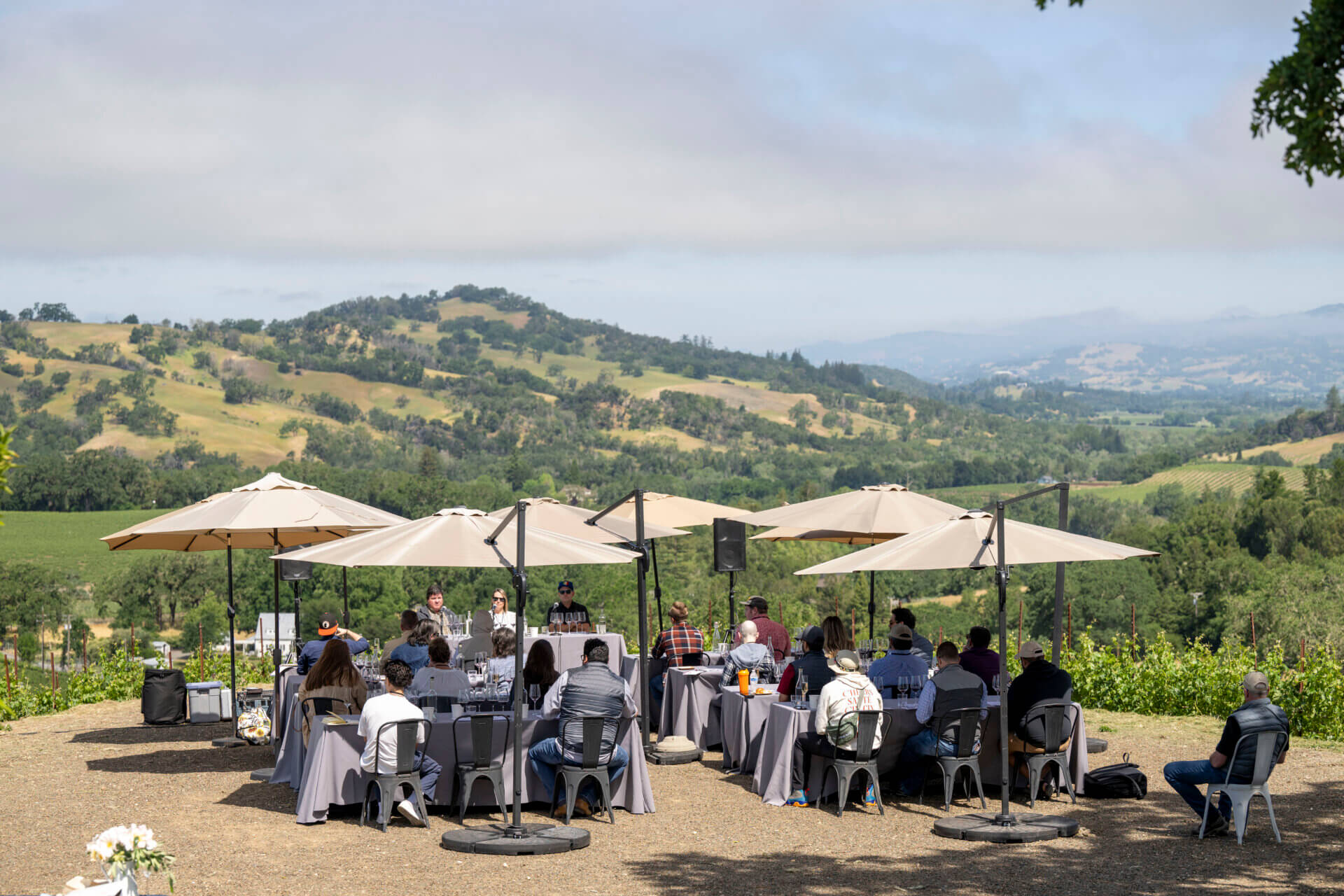
As fascinating and adorable as it was to hear the two very different personalities of Alexander Valley Vineyards (AVV) head of operations Harry Wetzel IV and Hawkes Wine winemaker Jake Hawkes talk about the climate of Alexander Valley, they could have very well sat in silence and made their point. By the end of our “Weather & Microclimates” seminar, the dense fog had withdrawn to reveal a sweeping view of the rocky, steep, and terraced Pyramid Vineyard and its surrounding green hills. Hawkes pointed to the house he grew up in below, nestled just under a small lot of fir trees. The winemaker, whose family has been growing grapes in the Valley for over 50 years, wrestled with attributing the character of his wines solely to climate. Regarding the Hawkes 2018 Pyramid Cabernet, for example, as nervy as it was extracted, he pointed out that “the vineyard is steep and rocky, and it has a propensity to want to produce really tannic, big, purple wines. And I think that the weather matches the extremity of the terrain too: We’ll have these cool, foggy mornings like we did today, but then, because this is a relatively exposed site, you get really hot afternoon sun and a lot of coastal wind. The climate is so completely integrated with the geography it’s hard to tease the two apart.”
Wetzel added that Pyramid is representative of the southern Alexander Valley. “It’s bright and sunny now, but this morning started out how most of the mornings start—fairly cool and foggy, which makes for a nice growing season. As you head farther north, it can be a totally different animal, and you can see a 10-degree temperature swing between northern Alexander Valley and southern Alexander Valley. Of course, this is a very broad picture, and it doesn’t get into the nuance of hillside versus valley floor or closer to the Russian River versus farther from the river.”
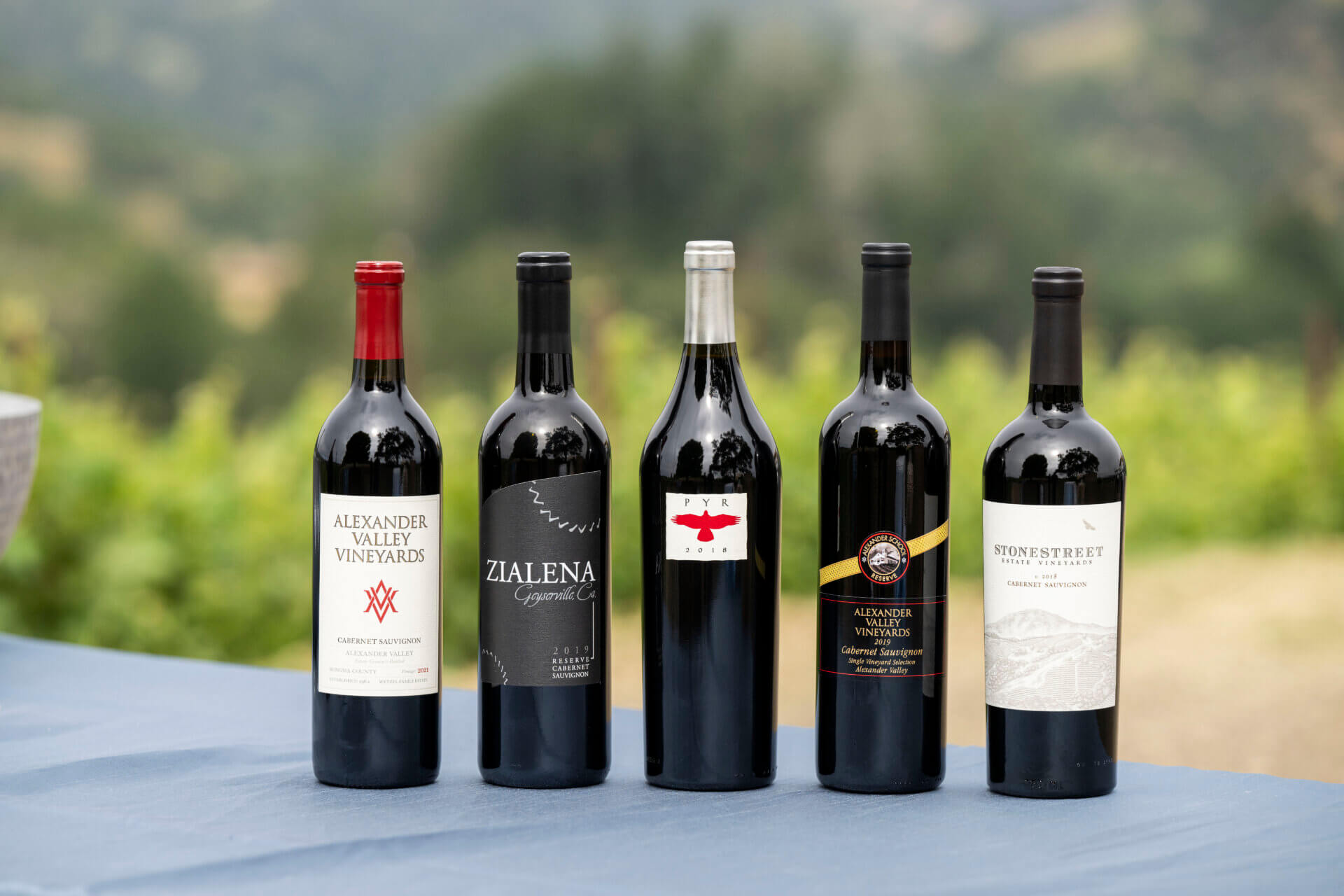
An egret circled the vineyard and landed in a rookery below as we tasted a number of wines, including the Zialena 2019 Mazzoni Vineyard Cabernet Sauvignon, the Stonestreet 2018 Cabernet Sauvignon, the AVV 2021 Cabernet Sauvignon, and the inky AVV 2019 School Reserve sourced from a single vineyard in Geyserville: All provided a graceful counterpoint to the dramatic shift of the morning weather before we headed to lunch at Rodney Strong Vineyards (see next section).
If Pyramid represents the south side of the Valley, AVV perhaps represents the region’s heart. That evening, we had dinner at the historic property, preceded by a tour. Wagging his tail, Wetzel’s dog, Drake, followed us around a shady oak tree under which one of the first settlers in Sonoma and the region’s namesake, Cyrus Alexander, is buried not far from Wetzel’s great-grandparents, Harry and Maggie Wetzel, who purchased the property from an Alexander heir in 1962 and would later lead the charge to make the Alexander Valley an official AVA in 1984. From there, we wandered through an extensive network of cool, musky caves used for barrel aging to a new crush pad; across a small bridge over a stream; past an old adobe building built in 1840 by Alexander; through a garden brimming with artichokes, lettuces, and more; past the original Alexander Valley schoolhouse built in 1868; and through a rolling vineyard to a sunset barbecue on picnic grounds overlooking a pond. But all that is just part of AVV’s estate: The Wetzel family now owns over 700 acres across the region.
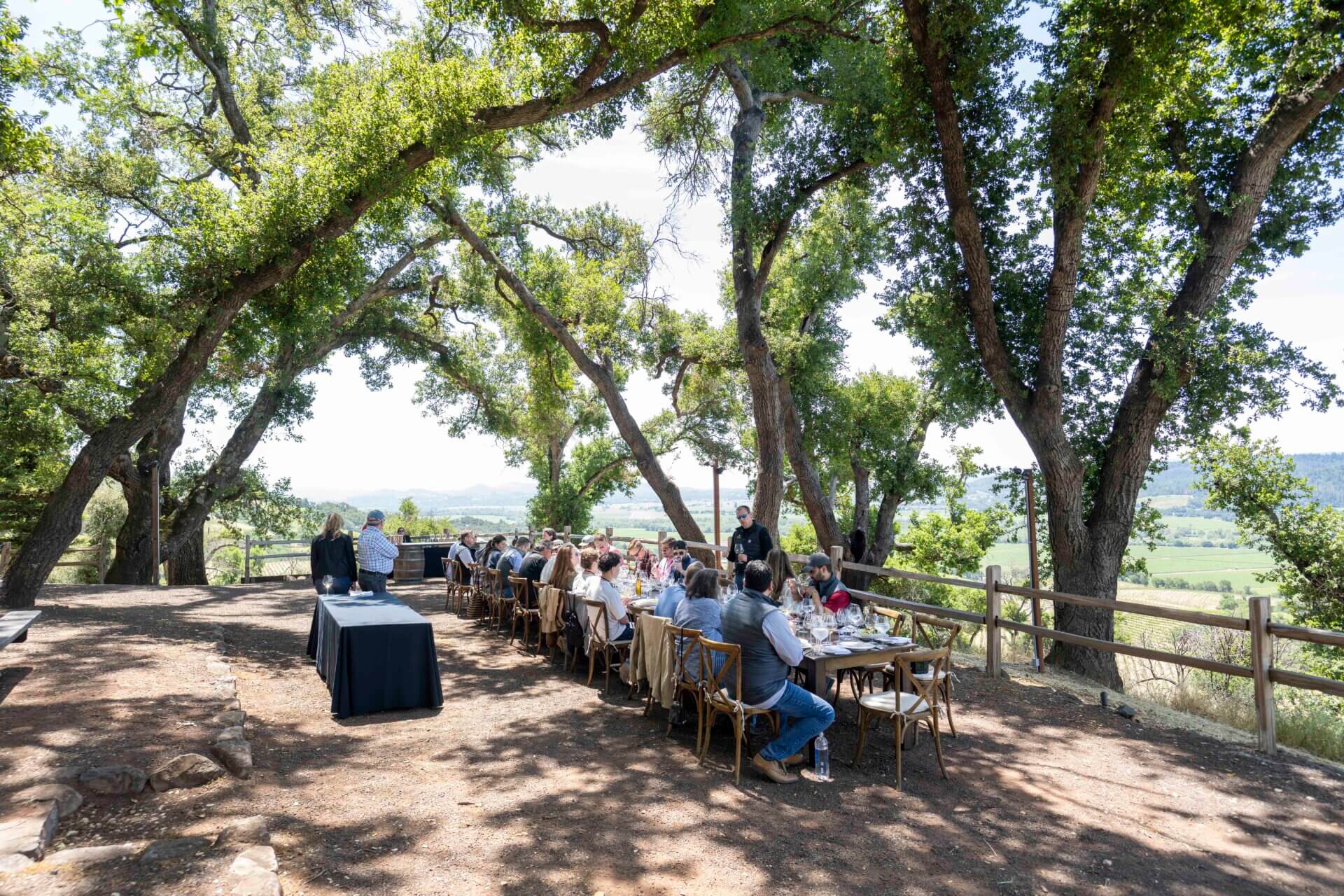
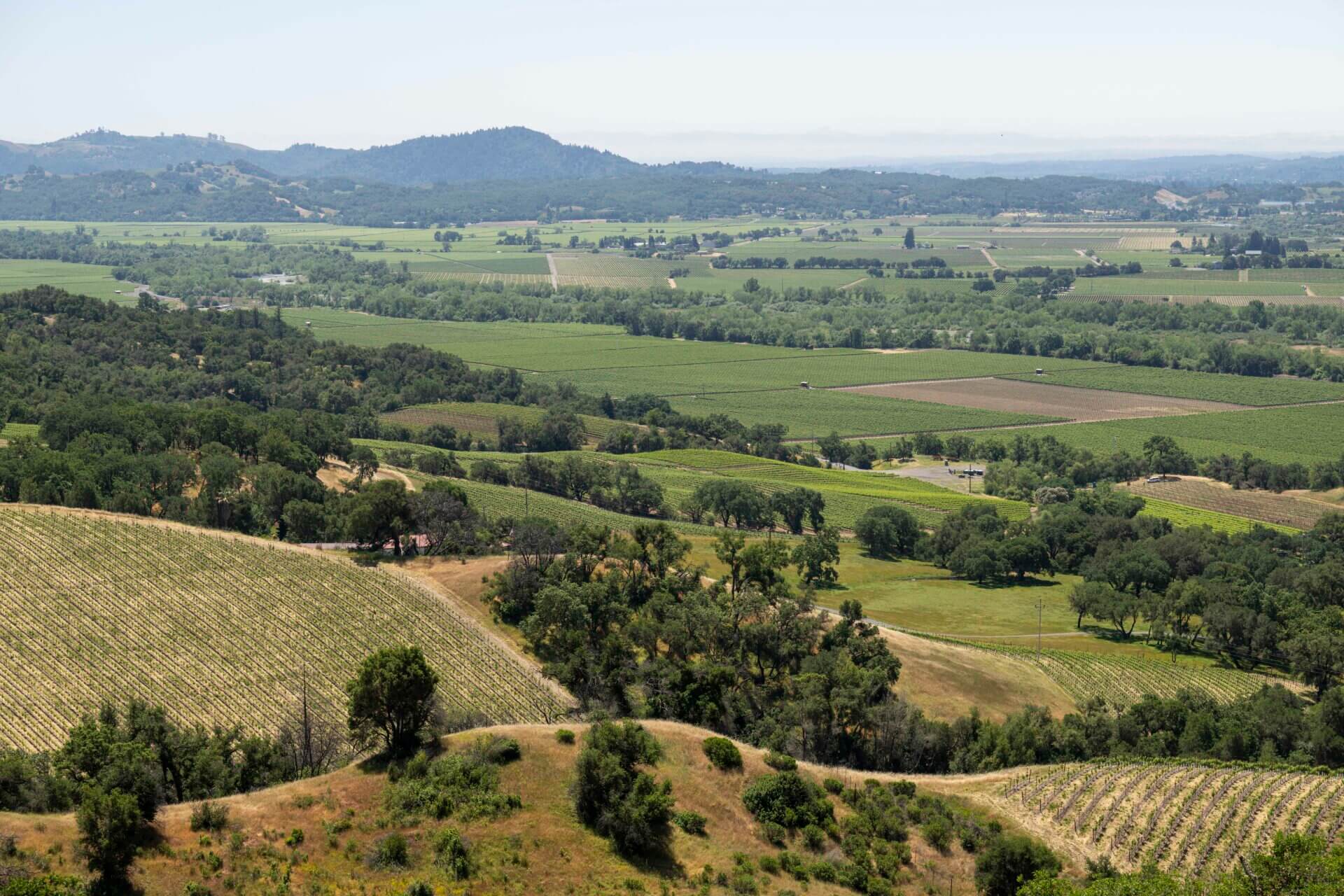
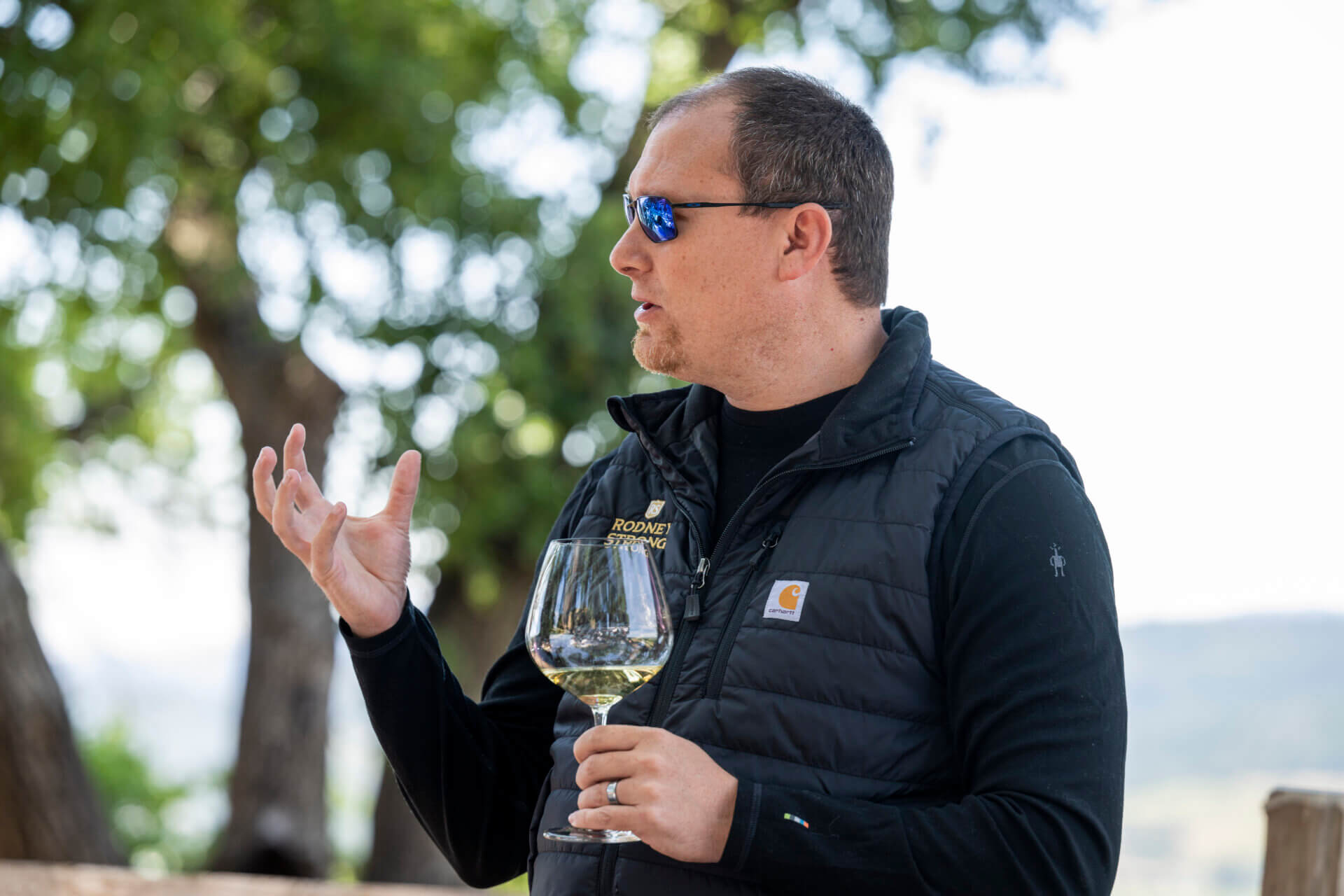
“You can’t tell the story of California wine without a big chapter on Rod Strong,” said Rodney Strong senior director of communications Christopher O’Gorman at lunch. Sitting under the shade of a stand of oak trees against the backdrop of the winery’s Rockaway Vineyard at 750 feet in elevation, the group found it hard to conceive that a wildfire had blazed through the area in 2019. In fact, it was the first time O’Gorman had visited since the fire, and his expression revealed just how happy he was to see the view of the valley below, not to mention the bocce ball court on the grounds back in operation once again.
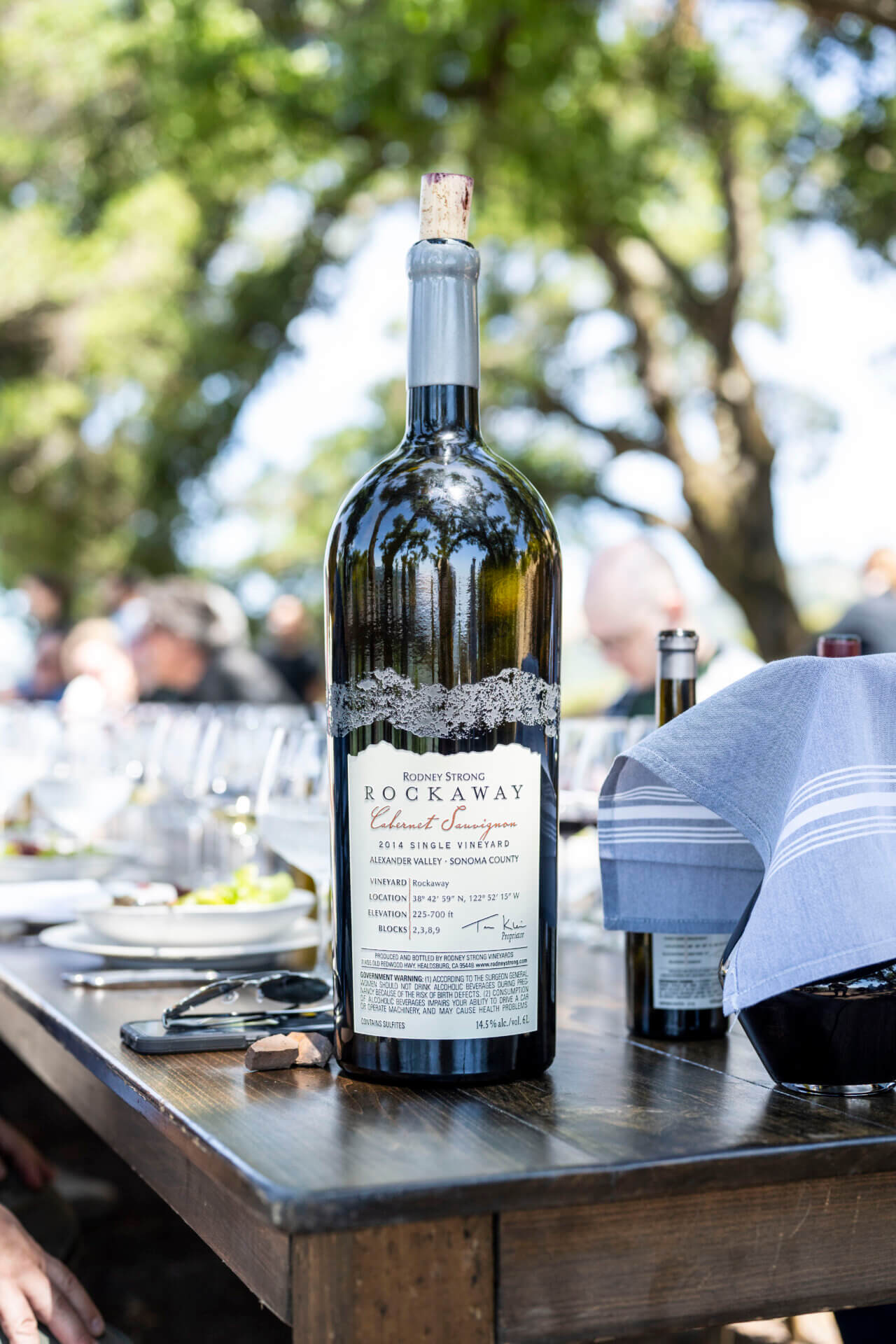
Seated at the center of our long table, O’Gorman was joined by Rodney Strong winemaker Justin Seidenfeld, who spoke extensively of the production process behind each of the bottlings paired with our meal, consisting of a strawberry salad; New York strip; asparagus; crushed Yukon gold potatoes; and gnocchetti sardi with pesto, mushrooms, and fava beans. All the wines were notable, but I’d venture to guess that, as the fragrance of the surrounding vineyard hung heavy in our nostrils, the majority of us were most struck by the Rockaway Vineyard Cabernet, of which we tasted the 2019 and the 2014 poured from a 6-liter bottle. The grapes for the former were picked from Block 2, situated just below our picnic grounds, roughly two weeks before the fire and were 100% optically sorted, “which means we’re throwing away about 60%,” noted Seidenfeld, hinting at the use of technology that represents just one aspect of the winery’s long history of innovation.
In 1959, its founder settled in Sonoma on the advice of an enologist from the University of California, Davis, who helped Strong to realize that it was the only area in California where he’d be able to grow the grapes used to produce the wines he’d come to love from his time in Europe—Bordeaux, Burgundy, and even German Riesling— thanks to not only its diverse topography but its varying meso- and microclimates. A few years later in 1962, Strong became one of the first to plant Chardonnay at a time when doing so was seen as a huge risk, as fruitier whites such as Chenin Blanc and Chasselas were more fashionable then. Strong was also the second producer to plant Pinot Noir in the Russian River, the second in Alexander Valley to plant Cabernet Sauvignon (just behind Robert Young), and the first to produce a single-vineyard wine in Sonoma County, namely Alexander’s Crown Cabernet. The professional dancer turned pioneering vintner also helped to establish a few different AVAs in the early 1980s, among them Chalk Hill, Russian River Valley, and, of course, the Alexander Valley.
Geology & Soils: Touch the Rock
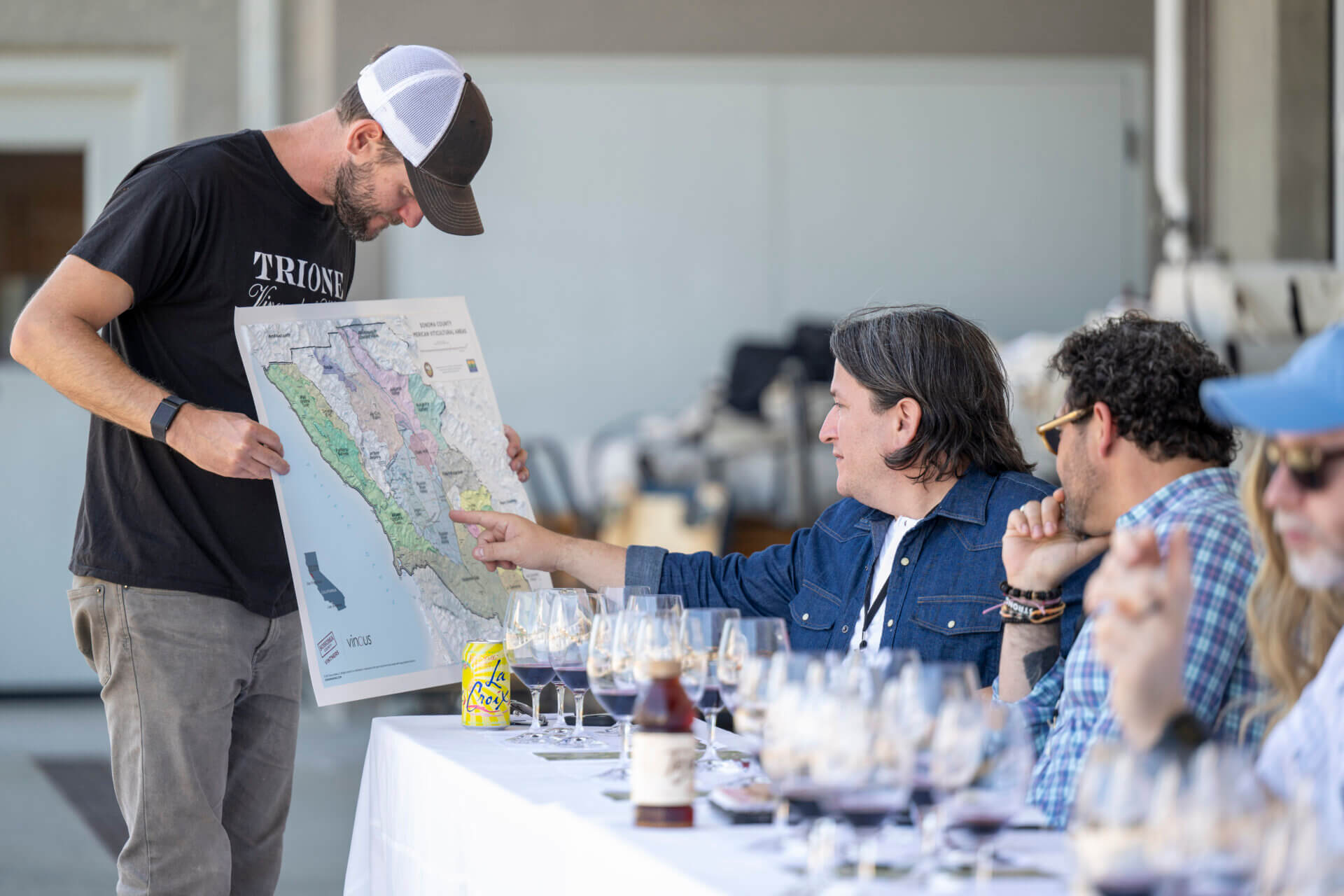
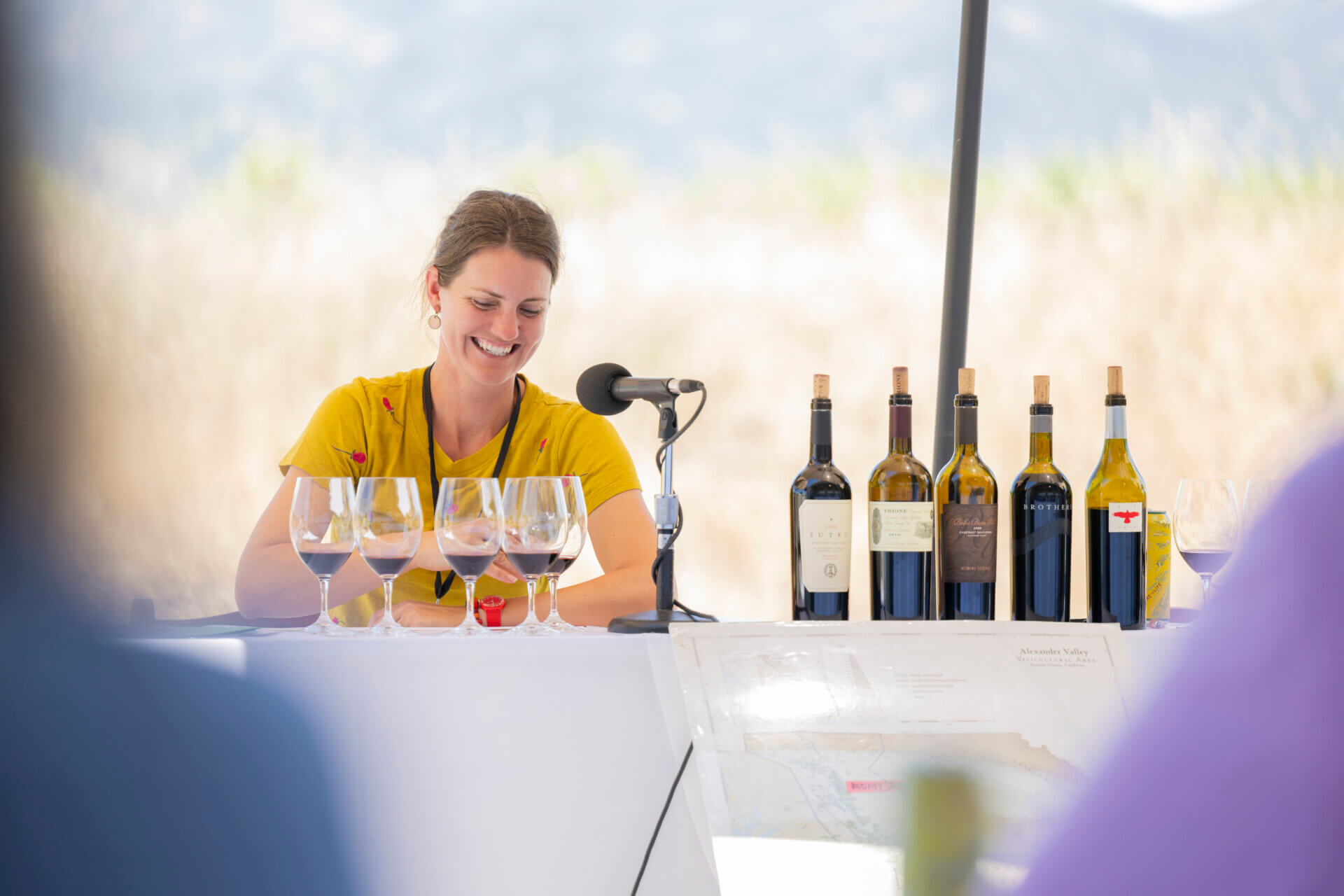
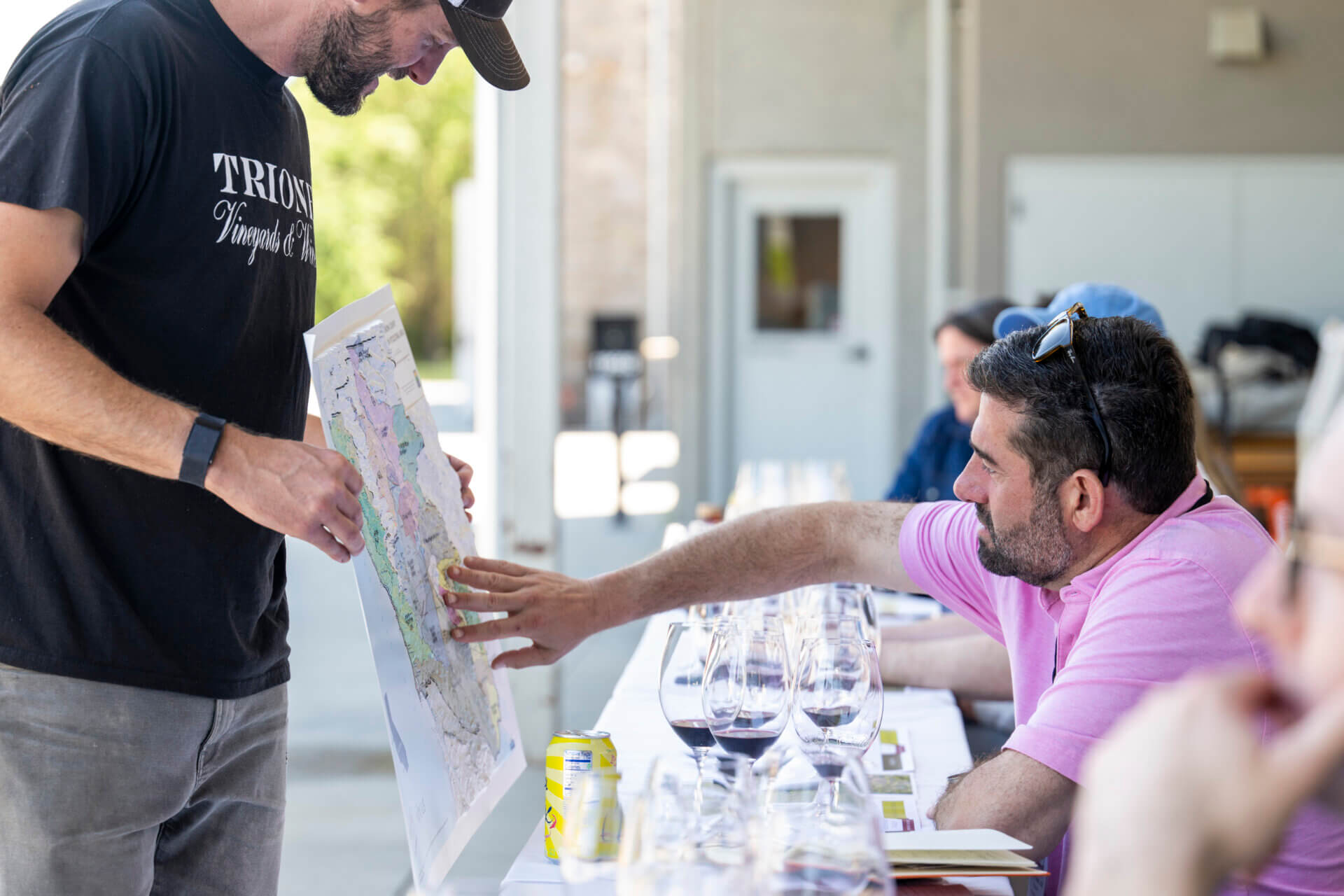
Mourning doves and other birds chattered in the block of vines behind Trione Vineyards & Winery’s production facility as Alice Sutro joined up with the group once again, this time for the “Geology & Soils” seminar with Trione winemaker John Duckett. While we settled into our seats in front of five Alexander Valley Cabs, Sutro began to pass around a topographical map and a large piece of compacted rhyolitic ash (aka tuff) about the size of a football. “Touch the rock or we won’t let you out of the pit later,” she joked, referring to a hole in the vineyard just behind us, freshly dug by Trione’s vineyard manager, Kris Hicks. The tuff, excavated from the soil at her family’s Warnecke Ranch property, served as evidence of the volcanic activity that occurred here 3–5 million years prior, which helped to form the Mayacamas Mountain range and today defines Alexander Valley’s eastern edge. Attendees rubbed the chalky white residue of the tuff left on their fingers as she spoke: “The effect here is really about water access to the vines. There’s some natural hydric stress that occurs with soil that’s high in calcium content and low in magnesium, resulting in very low cationic exchange, which means it doesn’t readily release water.” She noted that it’s soils like this, in addition to elevation and steep slopes, that cause the vine to suffer, producing lower yields and in turn higher-caliber Cabernet. We considered this as we sipped the peppery, bright 2020 SUTRO Warnecke Ranch Cabernet before moving onto the silky yet muscular Trione 2019 Block 21 Cabernet Sauvignon.
“I’m the only winemaker you’re going to meet whose wines you won’t be tasting,” acknowledged Duckett, flashing a smile. The former assistant winemaker at Jordan Vineyard & Winery , who joined Trione in 2022, explained that he’s hoping to make the 2023 vintage of Block 21 with 100% of the fruit from the site in northern Cloverdale. “It’s on the eastern side of Russian River and western side of Mayacamas, sitting on a Yolo soil series—a mix of volcanic and alluvial soil coming from years of erosion off the hills and from the Russian River,” reminiscent of that of Bordeaux.
Duckett added that the Alexander Valley is a hodgepodge of soil types thanks to volcanic activity, the uplift of ancient seabeds, and river deposits. The wines we tasted at the seminar reflected this complexity, be it Robert Young’s 2020 Bob’s Burn Pile Cabernet Sauvignon, sourced from the producer’s highest-elevation site set on volcanic rock and tufted silty loam (aka Spreckels series); Rodney Strong’s 2018 Brothers Cab grown on the alluvial Arbuckle series; or the Hawkes 2018 Stone Cabernet.
After the seminar we walked over to meet Hicks, standing in the middle of the pit between two rows of vines. He fiddled with a feeder root that continued to flop out of place as he spoke about Trione’s 570 acres of estate vineyards, noting that the team only ends up crushing about 15 acres’ worth of fruit to produce their annual 7,000 cases. Duckett, meanwhile, indicated his gratitude for the vineyard manager: “To have that communicative relationship with Kris and to see how we’re progressing forward with Trione is pretty unique and awesome, and I don’t take it for granted,” he said.
Day Two: The Best Days Are Yet to Come
En route to Stonestreet Wines on another foggy morning, Bret Munselle of Munselle Vineyards stood at the front of the shuttle, oscillating between being a tour guide and giving directions to the shuttle driver. The former president of the Alexander Valley Cabernet Academy might as well have had his eyes closed as he pointed out all the vineyards he and his family work or have worked, properties they’ve owned, buildings they’ve built, and streets named after them, as they’ve been farming in some form or another in the Valley since 1876. Today, they own 400 acres of vineyards while managing roughly the same amount of land for others. In short, Bret noted, there will be plenty to do if any of his four kids wants to continue the family legacy: “I hope my kids want to be involved. My wife and I talk about it all the time. She likes to think about tomorrow and next week. I just fixate on the next 20 years.”
Topography & Elevation: The Great Moderator
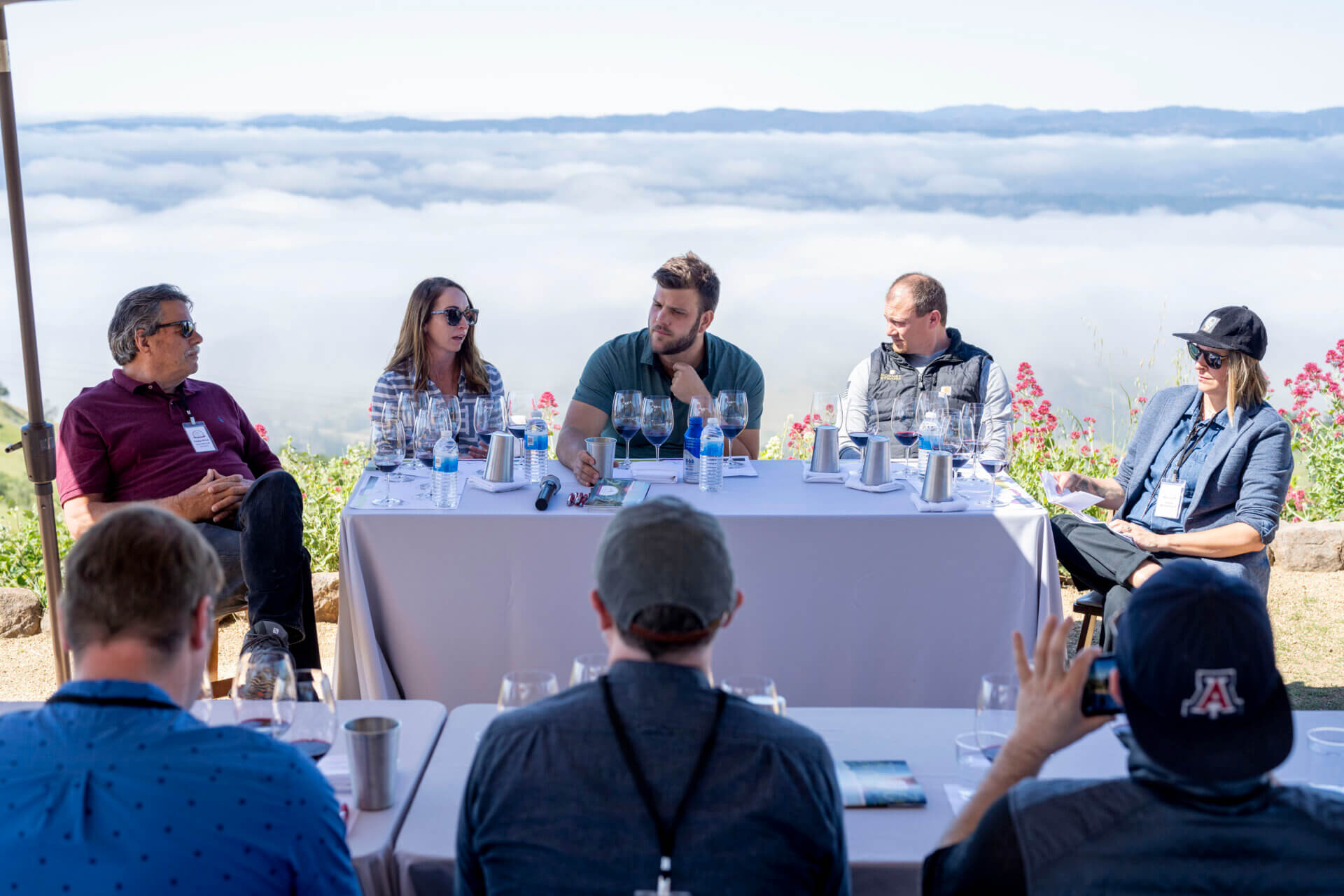
Sips of Stonestreet’s bright and creamy 2015 Blanc de Blancs cut effortlessly through the fat of the bacon quiche in the winery’s tasting room. Craig Ellick, ambassador and educator at parent company Jackson Family Wines, used the small-production, traditional-method stunner as an example of what Stonestreet’s mountain terroir is capable of as well as the lengths its winemaker, Kristin Shideler, will go to to achieve greatness, in this case conducting a scrupulous block selection of Chardonnay and leaving the final blend on the lees for seven years. Stonestreet’s Cabs receive the same patient care, of course. “You’ll never see a Stonestreet bottle of Cab less than five years old,” said Ellick, adding that there’s also a yearly library release.
After the reception, cows that were grazing on their share of Stonestreet’s 5,500 acres of land (800 of which are planted to vine) to help reduce fuel for wildfires watched the shuttle drive up the steep and winding road past a few rock formations and fallen trees before it suddenly disappeared above the fog line, bobbing to the top of sunny Christopher’s Vineyard at 2,400 feet in elevation. There, surprise guest Chris Jackson, proprietor of Jackson Family Wines, joined Shideler, Ellick, and Justin Seidenfeld, senior VP of winemaking and winegrowing for Rodney Strong Vineyards, for the “Topography & Elevation” seminar.
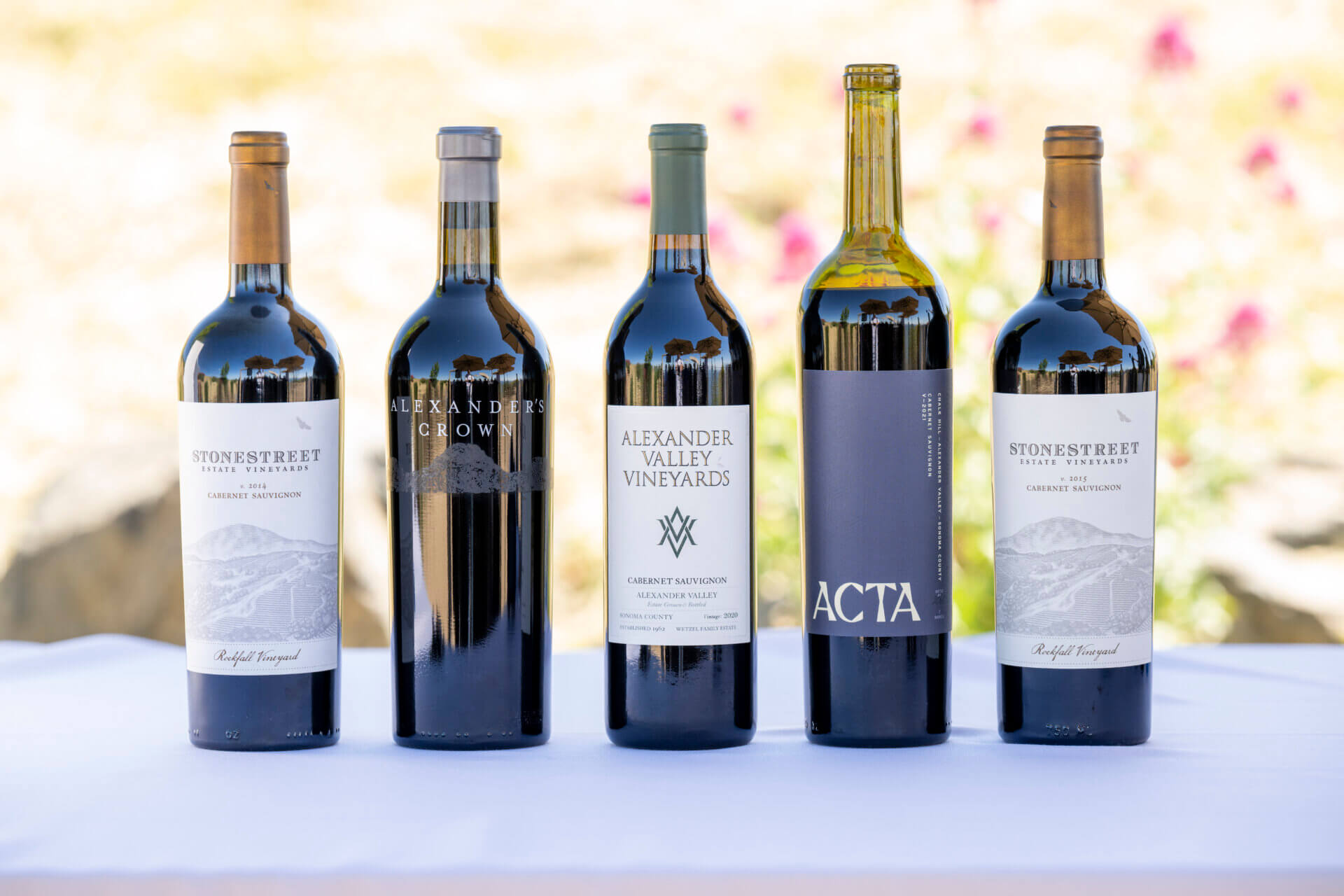
“I like to talk a lot about ‘Sonoma savory’ as a point of import for this terroir,” said Jackson. “For a long time critics didn’t understand it, because they went from old-school, rustic Bordeaux to the primary fruit of Napa. But the Alexander Valley is savory married with fruit, and I think we’ll see that herbaceous profile for all the wines on the table today.” Filled with Rodney Strong’s 2019 Alexander’s Crown Cabernet, AVV’s 2020 Organic Cab, ACTA Wine’s 2021 Battle Family–Chalk Hill Cab, and Stonestreet’s 2015 Rockfall Cab, the glasses in front of us were hard evidence.
Jackson, like most other Alexander Valley winemakers, believes that the AVA should be parceled up into subregions. In fact, his family has spearheaded the formation of the Pocket Peak AVA, the petition for which is still being processed by the TTB, to delineate between the terroir of the region’s valley floor versus that found at elevation. Between wet, cold weather and blazing hot temperatures, “I call the [Mayacamas] mountain range the great moderator,” he said. “From a climactic standpoint, the close proximity to the ocean is going to be a lifesaver and critically important, and I think the best days of Sonoma are ahead of it.”
Blending the Best: Barrel by Barrel
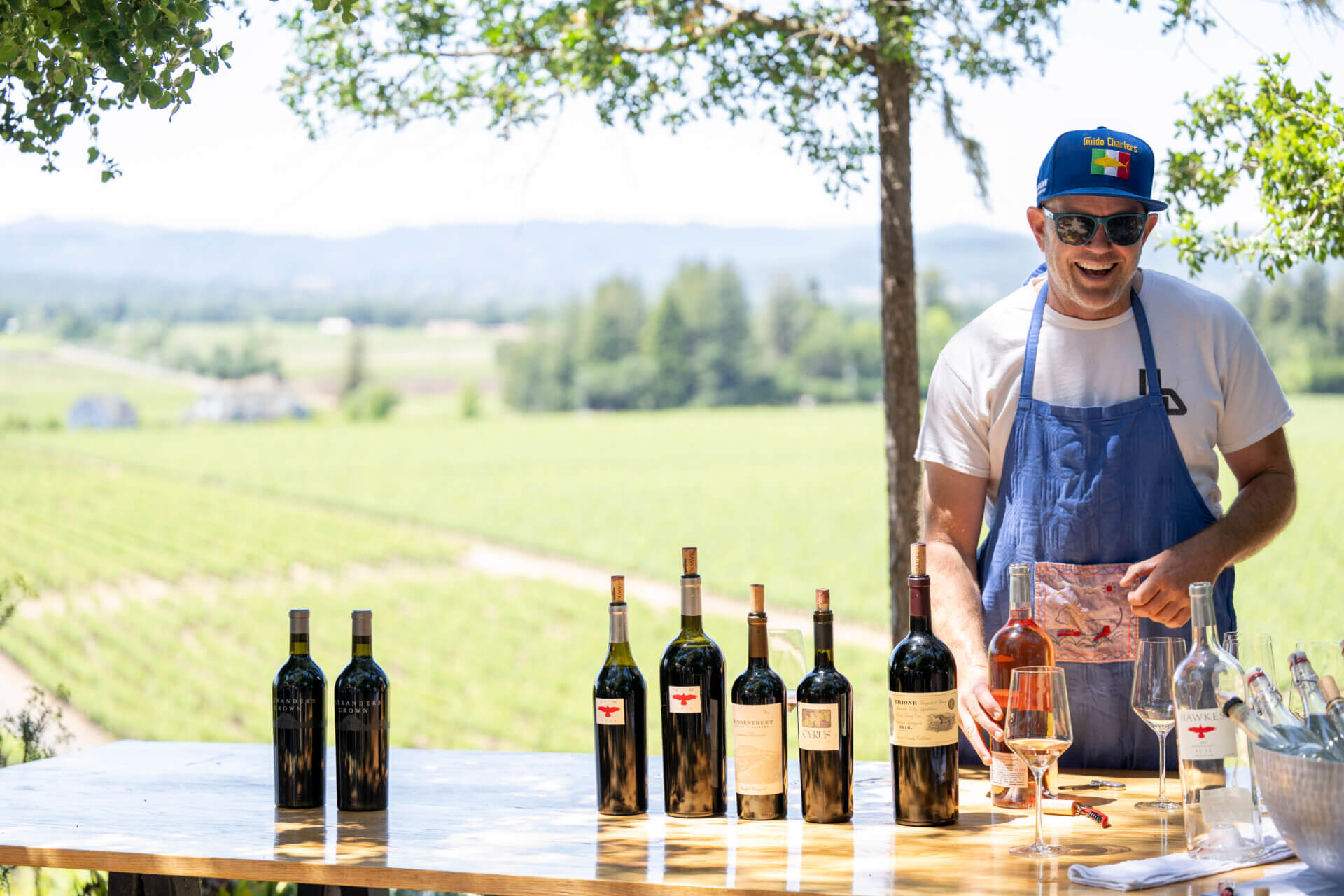
At Hawkes Red Winery Vineyard, brisket barbecued by Jake Hawkes himself was on the menu for lunch and served alongside a slew of back vintages like Hawkes 2013 Red Winery Cab, Stonestreet 2014 Rockfall Vineyard, AVV’s 2002 Cyrus, Trione 2016 Block 21, and Rodney Strong’s 2009 Alexander’s Crown. A spirited debate about how to get more library wines into the programs of wine buyers ensued, but all agreed that the high-toned fruit of the presented wines would enable them to age for decades.
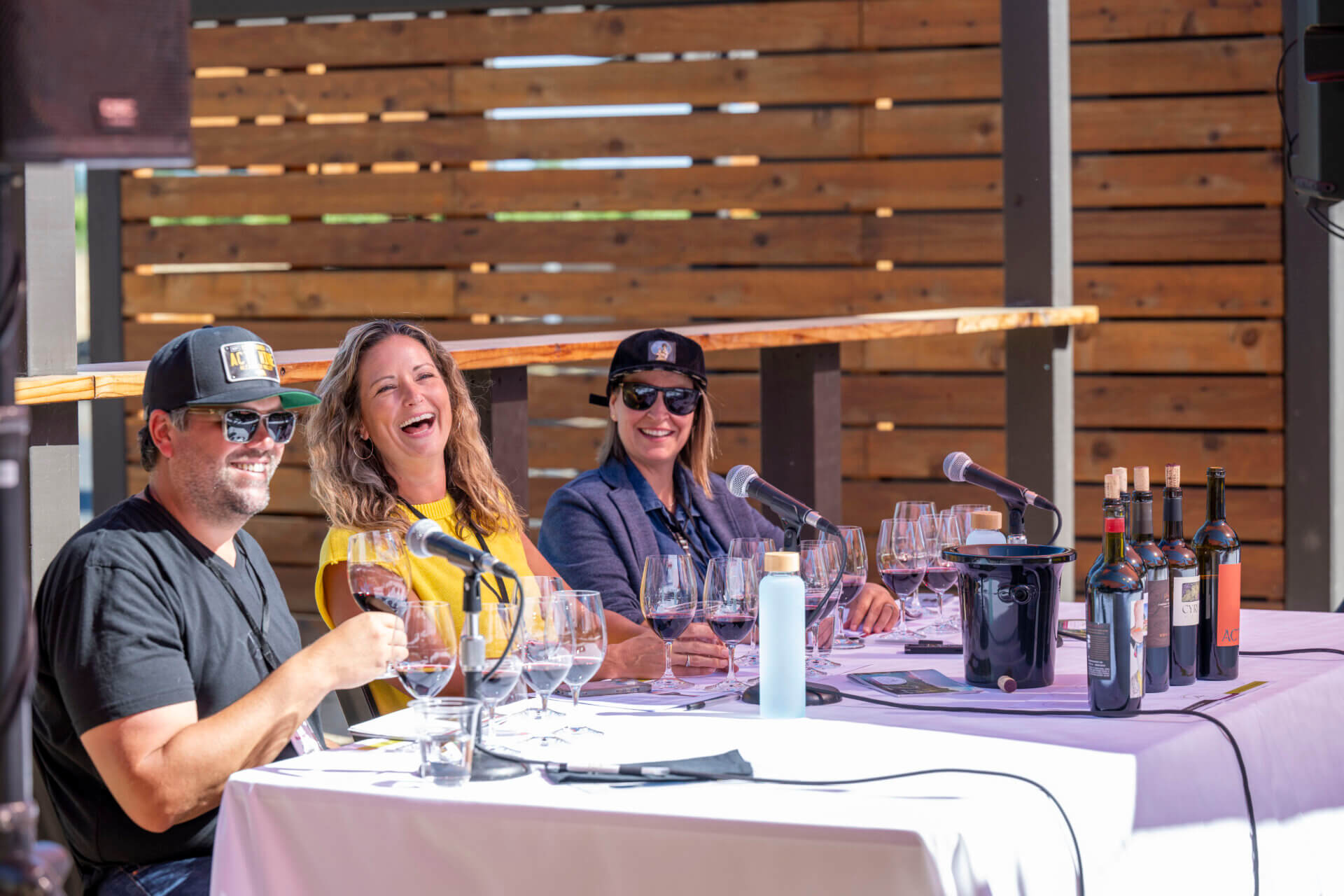
After lunch, ACTA Wine co-founder Dustin Moilanen received Academy attendees at the newly renovated 16-acre estate he and his family acquired in 2021. Moilanen hosted the “Blending the Best” seminar along with Francis Ford Coppola Winery senior winemaker Andrea Card; Card, a fourth-generation Sonoma County native, brought the Francis Ford Coppola 2020 Sei Querce Vineyard Cab, a direct-to-consumer reserve bottling sourced from a valley floor block and benchland block at about 1,000 feet in elevation. Maintaining the degree of freshness found in this Coppola’s reserve wines, she said, is a matter of deciding not only when to pick but which particular part of a block to pick, then micro-fermenting the lots separately and blind tasting them “barrel by barrel.” This is especially important in a record-setting wildfire season like 2020, she added; indeed, not one iota of smoke taint was detected.
Like the Sei Querce, ACTA’s plush and vibrant 2021 DEEDS is also sold direct to consumer, as are most of the wines in its small production of 2000 cases. But unlike most of the wines we tasted on the trip, which were predominantly or 100% Cabernet, the DEEDS is a blend of 66% Merlot with 23% Cab and other Bordeaux varieties. “I had always wanted to make a Right Bank–style Bordeaux blend, and that is essentially a nonstarter in Napa,” said Moilanen, who’s made and sold wine in Napa for two decades. “There’s hardly any Merlot left as it’s been planted over to Cab, and the good Merlot that’s left is so sought after it’s just not feasible. But here in the Alexander Valley, I’ve found old-vine Merlot that just tastes delicious and allowed to become what it should.”
Card concurred: “I love the diversity of varietals we have but also the diversity of agriculture in general; I love the integration of all that. . . . We’re not in a monoculture of just drinking wine. We have hard cider [producers], breweries, and distilleries, and I think that’s one of the things that makes Alexander Valley really appealing.”
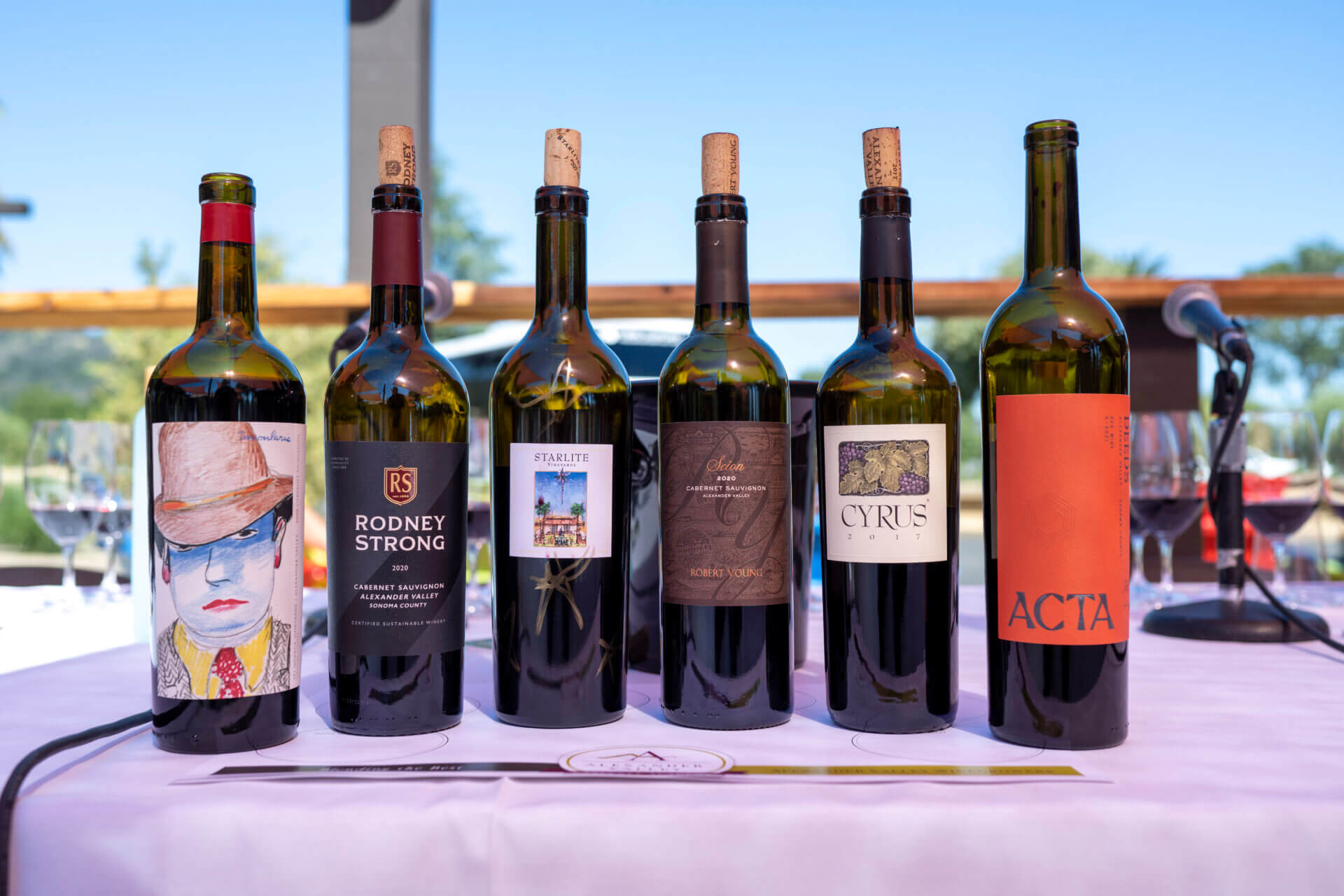
Also poured at the seminar were Rodney Strong’s 2020 Cabernet, Starlite Vineyards’ 2019 Cabernet, Robert Young’s 2020 Scion, and AVV’s 2017 CYRUS—all quite different yet all offering that familiar Alexander Valley herbaceousness. Following the tasting, Moilanen served wood-fired pizzas from his outdoor kitchen with bread and estate-made olive oil before taking me on a tour of the facilities; in his office, he proudly showed me old maps of his property and the Alexander Valley. It was a good place to end, staring at an old map of the region, realizing how far it has come—and yet, like Jackson and all the other producers we met with, Moilanen can also see where it’s headed, and his excitement was endearingly palpable. The next day, I and the other wine professional attendees of the Alexander Valley Cabernet Academy would reluctantly head home, feeling very much the same.
Meet the Guests of the Alexander Valley Cab Academy
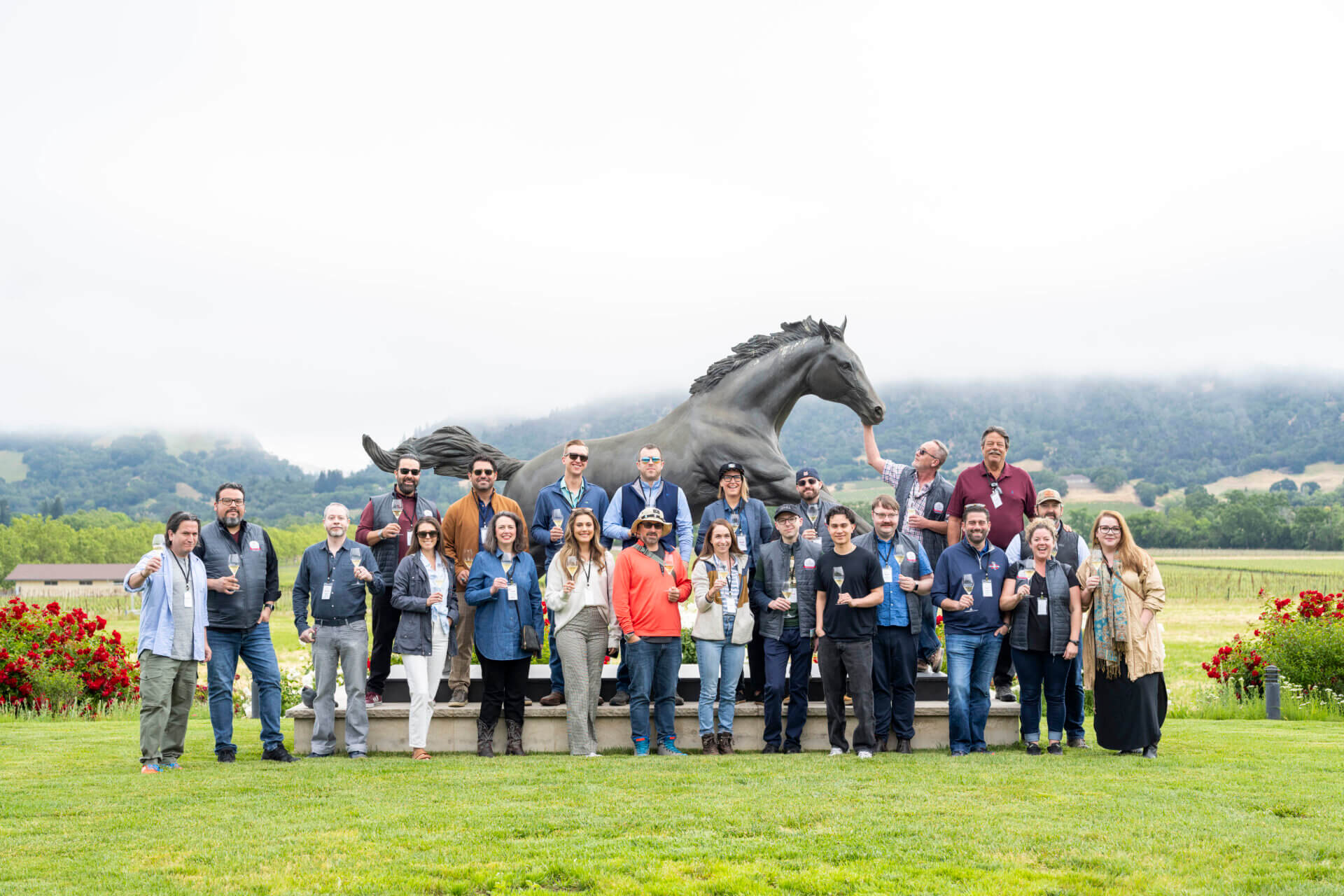
The 2024 Alexander Valley Cab Academy welcomed some of our country’s best and brightest sommeliers. Below is an alphabetical list of those in attendance followed by what a few of them had to say after camp!
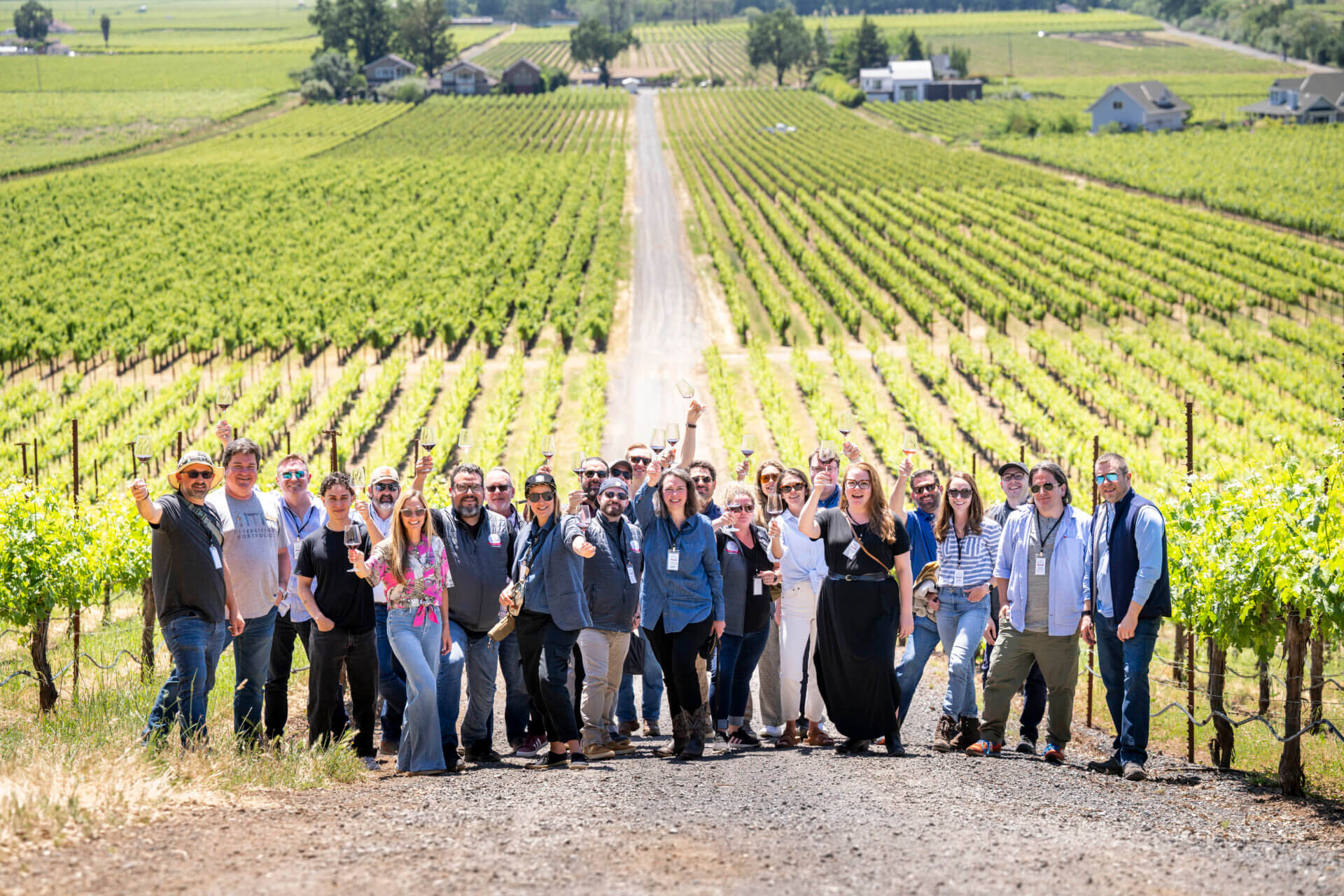
Nicholas Boudreau, Cloister Sommelier, Sea Island, GA; Brad Burton, owner/lead consultant. Bin 27, Las Vegas, NV; Alex Fisher, wine director, J Carver’s Oyster Bar and Chop House, Austin, TX; Samantha Danaher, assistant manager, Sodel Concepts, Bethany Beach, DE; Trey Dyer, CEO, Mesero Restaurant Group, Dallas, TX; Richard Greenleaf, manager, B&B Butchers Houston, Houston, TX; Chris Hutchison, director of operations, Coles 735/Main Epping’s on Eastside, Lexington, KY; Brandon Kirklin, sommelier, Castle Pines Gold Club, Castle Rock, CO; Mindi Lamar Miller, store manager, Riverside Wine & Spirits, Nashville, TN; Susie Long, wine director, JTJ Restaurants/Petit & Keet/Cyprus Social Group, Little Rock, AR; Alejando (Ale) Melendez, wine director, Ember Kitchen, Austin, TX; Jon Wine, owner/sommelier, The Tasting Room, West Palm Beach, FL; Juan Navarro, owner, The Wine Attic, Clifton, VA; Corey Nyman, VP operations, The Nyman Group, Las Vegas, NV; Scott O’Brien, sommelier, Oakville Grill and Cellar, Chicago, IL; John Schlichting, sommelier, Blackberry Farm/Blackberry Mountain, Walland, TN; Brandon Smoot, wine director, Dakota’s Steakhouse, Dallas, TX; Matt Snyder, owner, Winestore, Charlotte, NC; Kelly Sexton, sommelier, The Heritage Table, Frisco, TX; and Adria Woodson, state manager, Cork Capital, Orlando, FL.
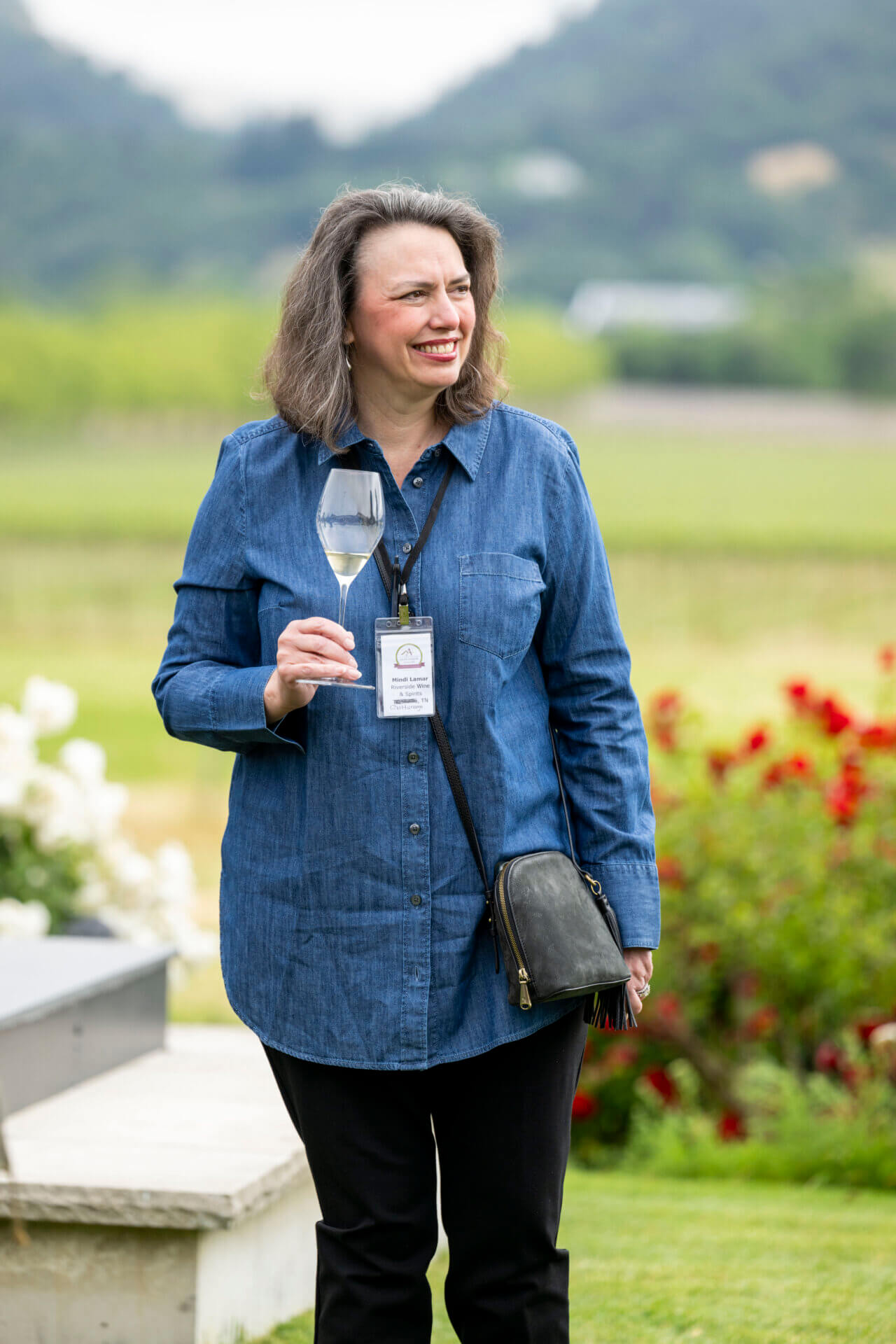
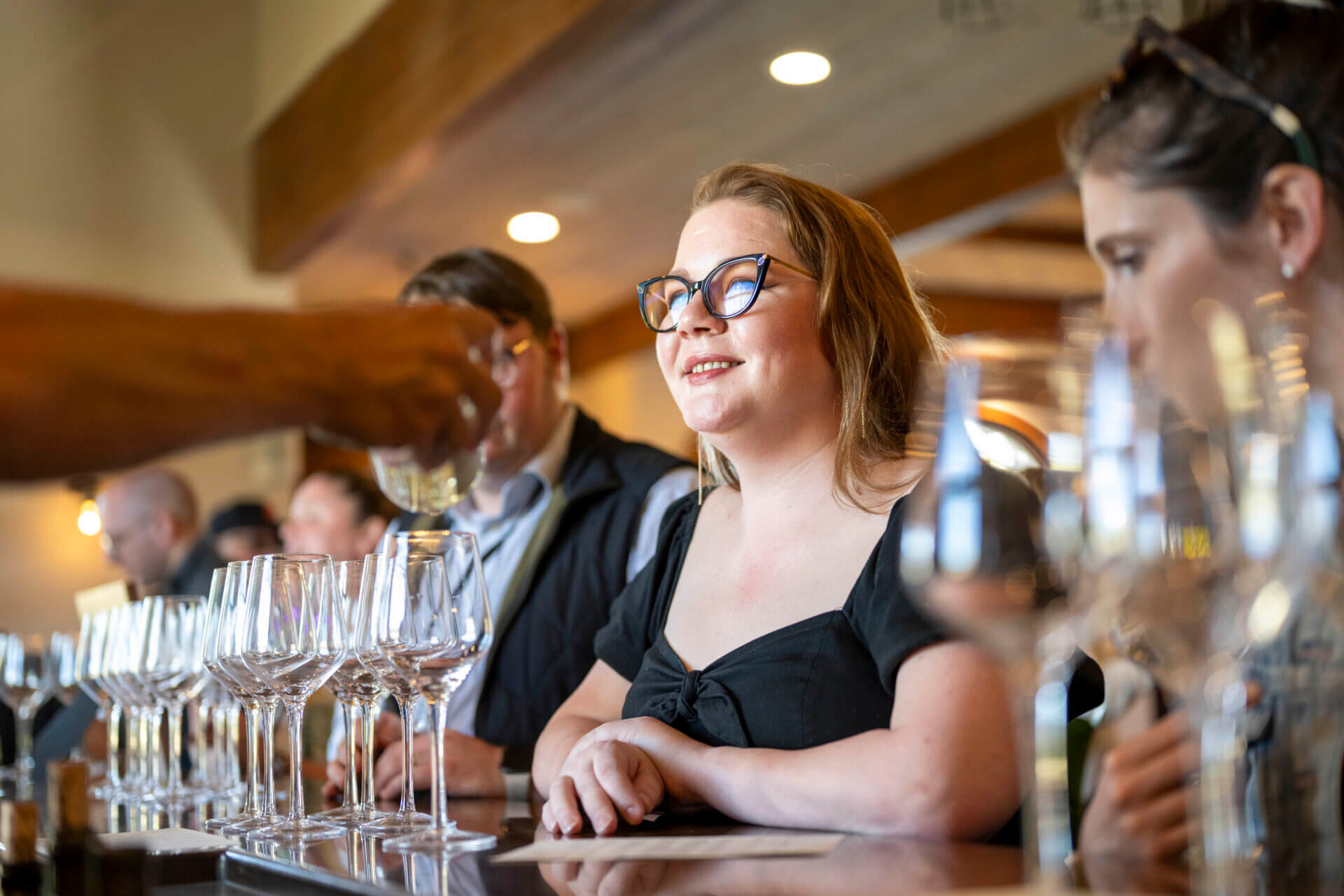
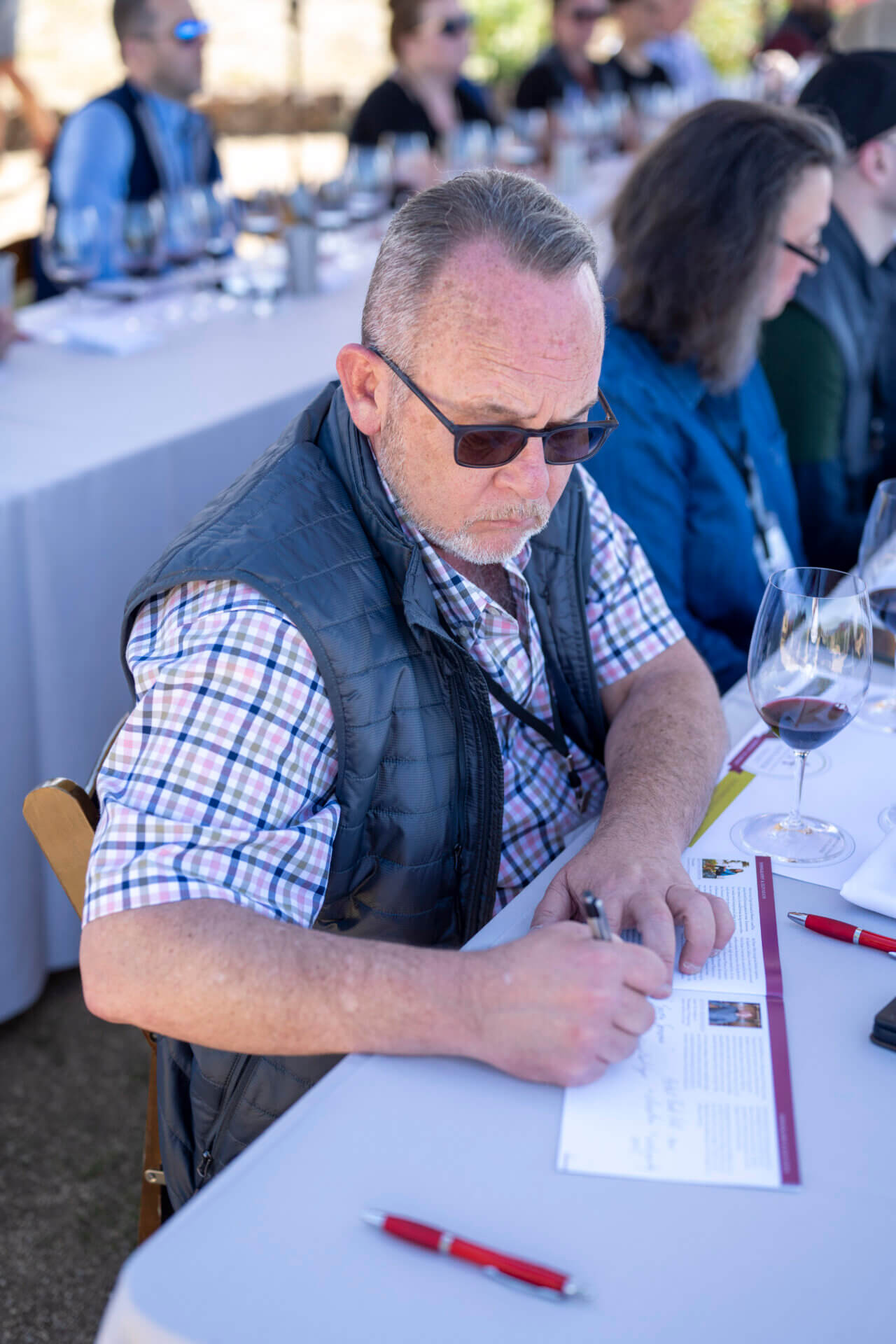
“I think it’s really important to fully understand the agricultural process, make meaningful connections with people in the industry, and to always keep in mind the real heart of this field. Learning from both small- and large-scale growers and business owners via the Cabernet Academy has been so rewarding for me and has reignited my passion for Alexander Valley wine. . . . Denise Trione and our group spent our free time discussing youth baseball, sports psychology, and balancing family commitments, which is at the heart of how they operate. I get it, we’re all businesspeople, but to connect with those who aren’t ‘on’ all the time is refreshing. And then when it turns out they have a true passion for what they do, we can really feel that. It tells me they ‘get it,’ and when I can share that with potential guests and customers, everybody wins.” —Juan Navarro, owner, The Wine Attic, Clifton, VA
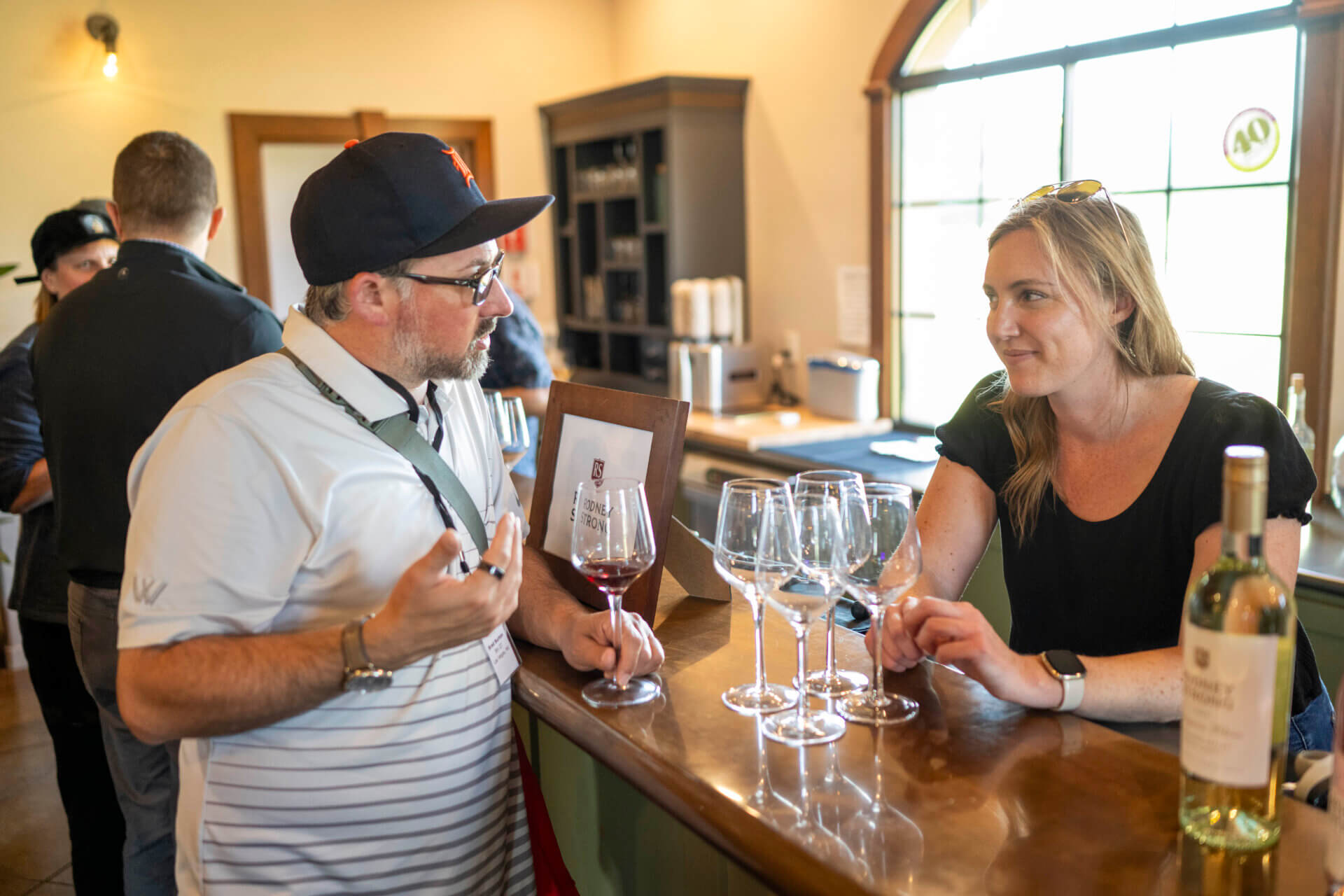
Outtakes from the Academy
It’s impossible to thoroughly recap the breadth of topics covered during our two days in the Alexander Valley, but we can at least provide a few compelling quotes from our hosts.
Hawkes
“I try to have our wines about four years old at time of release. I think our ’18s are drinking better than our ’19s right now. It’s a balance for me of making Cabernet the way I want it and completely alienating people because it’s too acidic and tannic for people to comprehend at the time its released. [Pyramid] Vineyard is all Cabernet Sauvignon. With our other two single-vineyard wines, we don’t blend any other varieties either. It’s all 100% Cab. To me, that’s why I drink wine—to taste something different, not just the same wine in a different bottle, and it’s why my Cabs are 100% varietal and specific to site. Even if they suck, at least they’re different than everything else.” —Jake Hawkes
“We bought the [Red Winery Vineyard] property for $50,000 in 1972. It was prunes when my dad bought it, and now it’s an acre of woods and about 20 acres of vines. You’ll taste a couple of older vintages of wine from this property, and I hope you find our Red Winery Vineyard wines to be more floral and aromatic and red fruit[ed], as opposed to the darker Pyramid and Stone wines. 2015 is an underrated vintage: they are brighter and more high-toned. The ’13 is just …you couldn’t miss.” —Jake Hawkes
Alexander Valley Vineyards
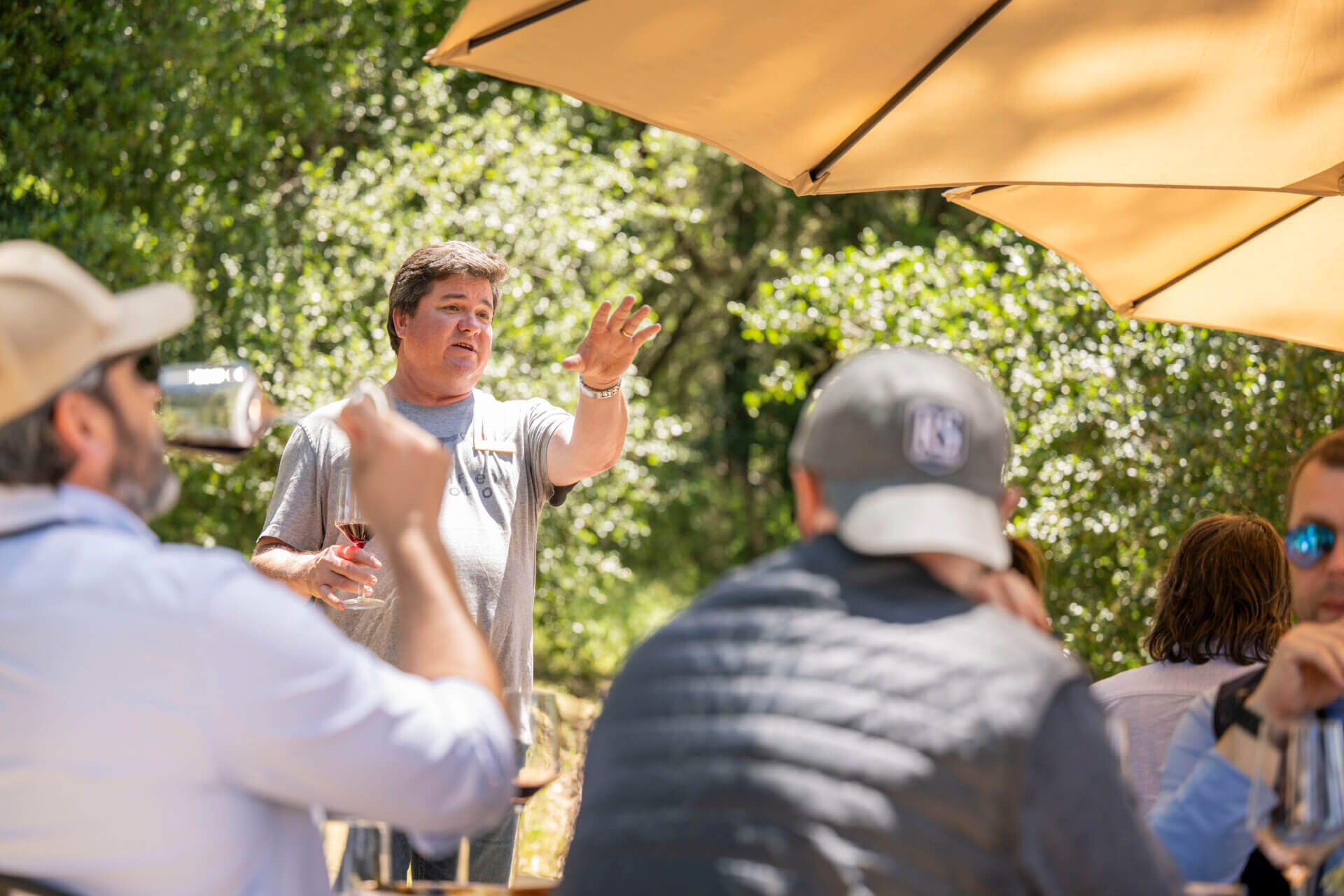
“[We] just finished our fourth addition to our caves. [We’re standing in] the oldest, built in 1997. The nice thing about the caves is it’s always this temperature, whether it’s 20 degrees outside or 115. Caves might be more expensive to build than a warehouse, but they pay for themselves in energy.” —Harry Wetzel
“Don’t ask me what the blend is in the CYRUS is. It’s our Bordeaux-based blend named after Cyrus Alexander. It’s the best stuff from that particular year, which is why I couldn’t tell you the blend, because it changes each year. But it always has all five Bordeaux varieties.” —Harry Wetzel
Rodney Strong Vineyards
“Queen Elizabeth said ‘It’s not the large changes that make the most impact but many small changes.’ So we look at things like oxygen exposure, oak choices, genetics, really hundreds of facts, and try to improve on every one.” —Justin Seidenfeld
“This is our 2019 Alexander’s Crown Cab, which comes from this little mountain behind Stonestreet, about 250 feet in elevation. This vineyard is the crown of that hill—14 acres on the very top, and in the middle of that vineyard is [owner] Tom Klein’s house; [he] lives there part of the year. We have four distinct blocks surrounding that. The soil is unique, beautiful red soil, metamorphic soil; just outside of the vineyard is more clay focused. This is 100% clone 4 Cab, from one section of that small block, a 5-acre section [of] all-west facing slopes. It’s optically sorted, fermented out naturally, [and aged in] 100% new French [oak]. This is the first vintage that went through a lot of new technology we implemented at the winery, including automation, so we can really control that time and temperature. At the end of the day, what makes a great wine is three things: One, great raw ingredients, which we have thanks to our vineyard sites. And two and three, having the ability to control how you make that wine via time and temperature. This is the first single-vineyard [wine] to be produced in Alexander Valley; [it] goes back to 1974, when Rod decided to break the mold of the Alexander Valley at the time. When he released the wine, it got a lot of notoriety because Robert Parker reviewed it and put it on the cover of the first issue [of Wine Advocate], he liked it so much. It was the only wine that year that he gave a 90-point score [to]. The 50th anniversary of it being made is coming up, so we’re putting together verticals and showing people on the road. Right now, the 1977 is showing the best to me. Forty to fify years is not a problem for these wines.” —Justin Seidenfeld
SUTRO Wine Co.
“Our volcanic soil is gray, not black or red, and the effect here is really about water access to the vines, so there’s some natural hydric stress that occurs with this type of soil, because this soil is high-calcium, low-magnesium, and with that ratio you have a very low cationic exchange capacity, so the soil is actually not going to even release water to the vine roots very readily. I call it a stingy mo’ fo’. It is a Haire clay loam soil. The topsoil is 30% clay, so it holds a lot of water, it just doesn’t release readily because of that chemical composition. So that’s how we get stress at our site, and, as you hopefully know, you need the vines to be stressed some way to produce premium Cab.” —Alice Sutro
“It’s good to dispel any myths that dry farming is better farming. It’s just not true. It is always site specific. The Russian River is the reason why we’re able to farm the Alexander Valley at all. A lot of our sites require some amount of irrigation, and it all comes from the river and some rainwater or if you have a nice reservoir.” —Alice Sutro
Trione Vineyards & Winery
Kris [Hicks’] standards are so much higher than a lot of other growers. I’m used to working with 30 to 40 growers at [a time]; here it’s just one, so I’m a kid in a candy store right now.” —John Duckett
“I [might] deliver 120 tons to one producer [that Trione sells fruit to] in one night, where Trione is 120 tons a year. They have 80-ton fermenters, where we have 7-ton fermenters.” —Kris Hicks
“This is our 2016 Block Cab, and for all intents and purposes, I would say it’s our flagship wine: 80% Cab, 80% of [which] comes from our northernmost Oak Ranch Vineyard in Cloverdale. [It’s aged in] 45% French oak. The idea was to hand-select the best grapes from our properties, and to have John [Duckett,] our new winemaker, taste the fruit and go, ‘Oh yeah, that’s good fruit’ felt like an affirmation.” —Denise Trione
Munselle Vineyards
“My family has been farming here since 1876, so we’re one of the oldest farming families in the Valley. So our business is really growing and selling winegrapes, mostly in northern Sonoma County. We have a tiny wine brand and make about 750 to 1,000 cases a year of usually five varieties. Our Merlot-based blend will be our 150th anniversary wine. We do one to two private tastings a week on the tailgate of my pickup [in] whatever field I happen to be at.” —Bret Munselle
“My great-great grandfather opened up Lone Pine Cellars in 1876, which is where Fieldstone is now, which is owned by Kendall-Jackson. The new Silver Oak property was our first family property. Our family sold it in the ’50s. My second great-great grandfather was a winemaker for Stags’ Leap [Winery], and when Stags’ Leap got phylloxera in the late 1800s, they bought a property in Alexander Valley and sent their cellarmaster, my great-great grandpa and [he] built the Red Winery, which this road was named after. So both my great-great grandfathers were vintners; both died relatively young, and the[ir] families started farming hops. So our family story is wine and winegrapes to start; hops [were the] next major commodity, prunes following that but by 1972 all of our family properties were winegrapes. So for my whole life I only remember winegrapes.” —Bret Munselle
Stonestreet Wines
“We are a mountain vineyard. In 1995, Chevron put 5,500 acres up for sale. They had planned on building McMansions [but] realized that with all the seismic activity, they would only last three years. So their nightmare became our dream come true. Because of all the seismic activity, we have 31 soil types on this mountain: 800 [acres] planted, 287 blocks. This is the most terroir-driven vineyard, in my opinion, in California. . . . I’ll put my Sonoma Stonestreet Cab against any $300 Napa Cab any day of the week. Production levels are low. We pick at a much lower sugar level. We want to be more of an Old World–style wine. There are enough Napa Cabs out there with 15% alcohol and big fruit.” —Craig Ellick
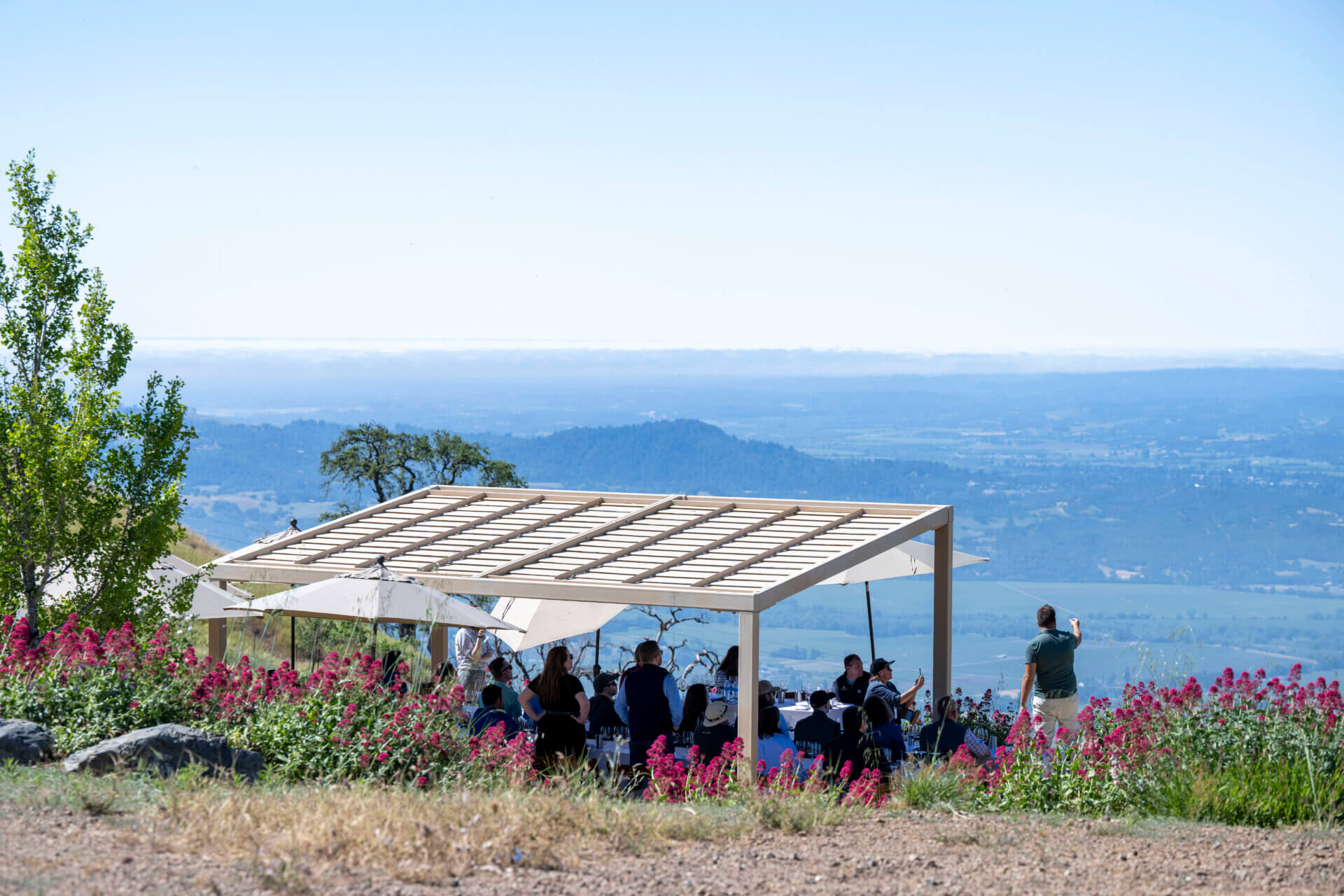
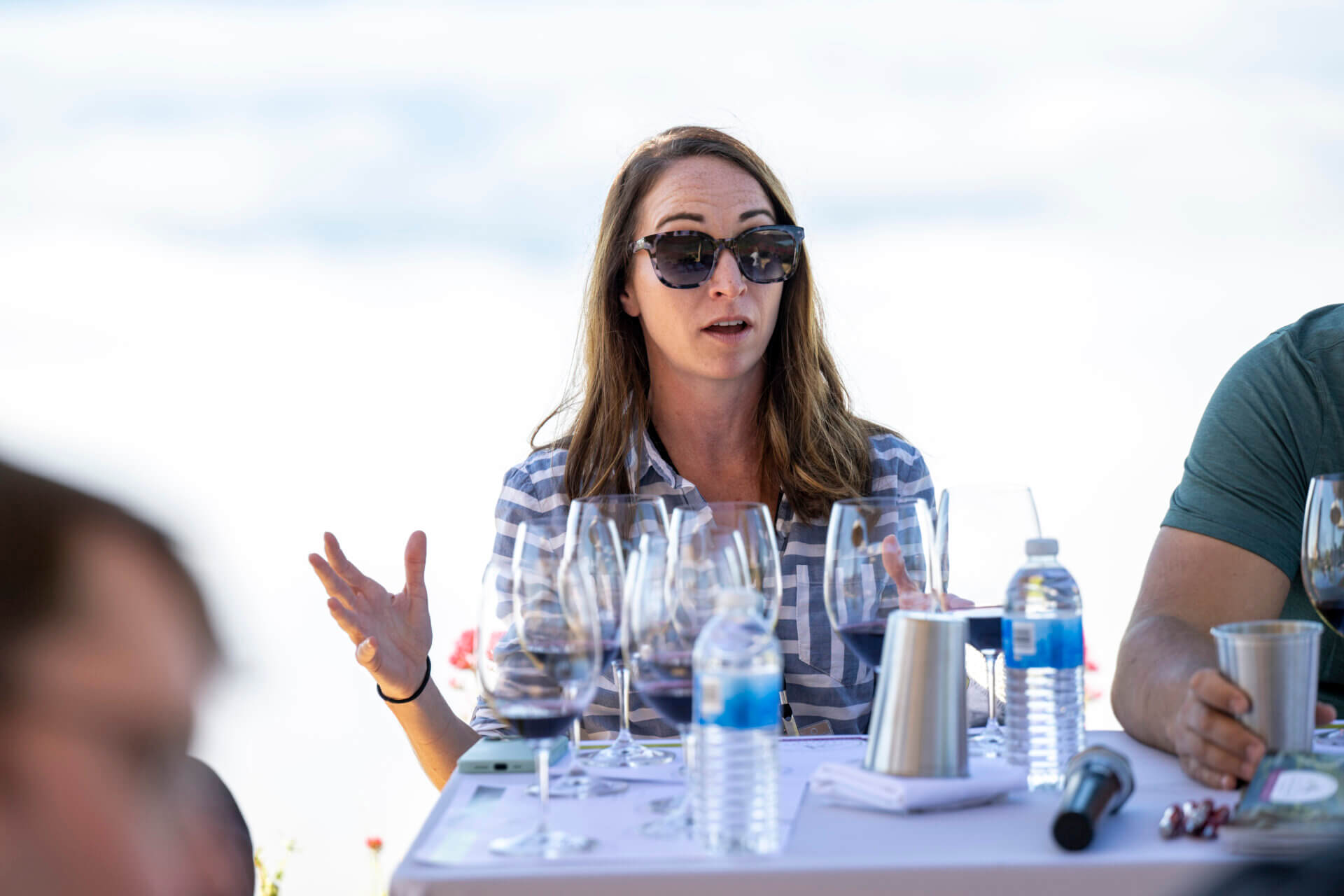
“Sonoma has more soil diversity than the entirety of France, and that’s part of why there are so many iconic expressions of different varieties from this county. We can grow Riesling, Assyrtiko, Chardonnay, Cab, Pinot, you name it, and that’s [thanks to] soil diversity [along with] diversity of exposition, diversity of elevation, and diversity of coastal influence. I’m a firm believer that the Alexander Valley should probably be a series of nested AVAs, kind of like Napa County. . . . North to south, there’s so much variability in profile.” —Chris Jackson
“I pointed it out on the way up on the bus: Rockfall Vineyard falls straight down the mountain at about a 30% grade. It’s [got a] southeast exposure, which is important. We call it ‘the solar panel block.’ We talked about ripeness levels earlier, how some producers pick at 26 to 28 Brix; that’s not the style we’re going for at all. Even if we did try to do that, it would be negligent to the vines. It’s not what these sites give. It’s one of the earliest-ripening sites, and it is in a VSP trellising system but gets really nice exposure [thanks to] the timing of [the] sunlight. . . . The soils are a combo of volcanic and quartz soils, really pretty pink and purplish rocks—very rocky. It’s a really distinguished site compared to what we’re sitting on here which is Christopher’s [Vineyard]. It’s a very different expression and yet it’s only a stone’s throw away, and that speaks to the soil diversity, the exposure, and the elevation at the very top of the mountain. You can taste the concertation and structure of wine. In the winery, we use different vessels to help express that.” —Kristina Shideler
ACTA Wine
“As a general rule, I will not blend Cab lots for at least a year, because I really want to understand what each is offering. So if you have even a very small vineyard but you can split it up into a couple of different picks, it’s worth doing, because you’ll have more of a spice rack—more to work with to make better wines.” —Dustin Moilanen
“The last real piece for us is [replanting] these vineyards, and I’m terrified, to be honest, because we’re experiencing so much change in our climate. This is really a decision for my children, not so much for myself. The last thing I want to do is make the wrong choice . . . and leave them with a bigger hole to pay off. So I’ve been spending a lot of time looking into varietals that . . . thrive in these warmer temperatures. Many of those are Spanish grapes.” —Dustin Moilanen
“My background is in Rutherford ,and if it’s 95 in Rutherford, there’s a good chance it’s triple digits here. But if it cools down to 60 in Rutherford, it’s gonna be 52 here. So the shift is really incredible. It really builds intensity in your fruit, and it’s pretty special.” —Dustin Moilanen
“We are just a 2,000-case brand, mostly direct-to-consumer, but I set out to make this a style-based house. I think we have to establish a core group of supporters as a DTC brand. They become your members, your advocates, and when they open your wine, they’re going to be sharing, so it has to show great and show the same—so I’m a big advocate of blending. I use blending primarily as a tool to make sure we keep our quality and consistency [and] above all else our style, because those are our people.” —Dustin Moilanen
Francis Ford Coppola Winery
“With our wine, it really is about the vineyard and being able to blend in different styles of oak and evaluate all the small little pieces and nuances, as opposed to just appellation or whatever variety. This is our 2020 Francis Ford Coppola Reserve, the only DTC [wine] in our tasting room and online.The 2020 vintage was rough for us so we all had to go to really great lengths to be able to find the wines that we wanted to put in the bottle. Every day we would micro-ferment; we were picking and tasting all of those micro-ferments [and] working extra hard to make sure that the wine in the bottle was clean and sound.” —Andrea Card
“You learn a lot more if you pick small bits and keep them apart. We don’t blend for 16 months sometimes. We like to wait and check it out. To me it’s about keeping everything separate as long as you can because the evolution of each wine is so different.” —Andrea Card