

by Lars Leicht
Like most hospitality industry professionals, sommeliers work hard eight days a week. When they’re not serving, they’re taking inventory or prepping, and when they’re not doing that, they’re studying. On those rare days that they have a chance to socialize, they’re talking about either work or studies or both. Even a seemingly straightforward order of a round of drinks will prompt a discussion on proper technique.
Such was the case in late August in the Montserrat neighborhood of Fort Worth, Texas, on the eve of beverage conference TEXSOM. Importer HERITA USA invited a small group of trade professionals to dinner at outstanding New American restaurant The Mont. HERITA USA’s Jacob Gragg, Ca’ del Bosco and portfolio wine senior manager, and Martha Bednarek, estate brands and events manager, had known from a previous visit that, with its midcentury decor and menu, it was the right place to not only present their wines but host this trade dinner. “From the first time we were introduced to the team here opening The Mont, there was this immediate embrace of the Ca’ del Bosco mentality and style,” declared Gragg. “When they were telling us about how they wanted to do service and how they wanted to build this restaurant, [we saw that] there’s an alignment . . . in the context of how Ca’ del Bosco has always tried to do business, which is just presenting our wines thoroughly and well to people who are interested in [what] makes [them] special.”
The Mont’s general manager, Doug Farner, and sommelier Joel Teddlie were on hand to cordially greet us as well as take part in the tasting and conversation. Meanwhile, their team’s attention to detail was obvious all around us, especially as we noticed other diners being served Ca’ del Bosco’s Franciacorta in the proper glasses.
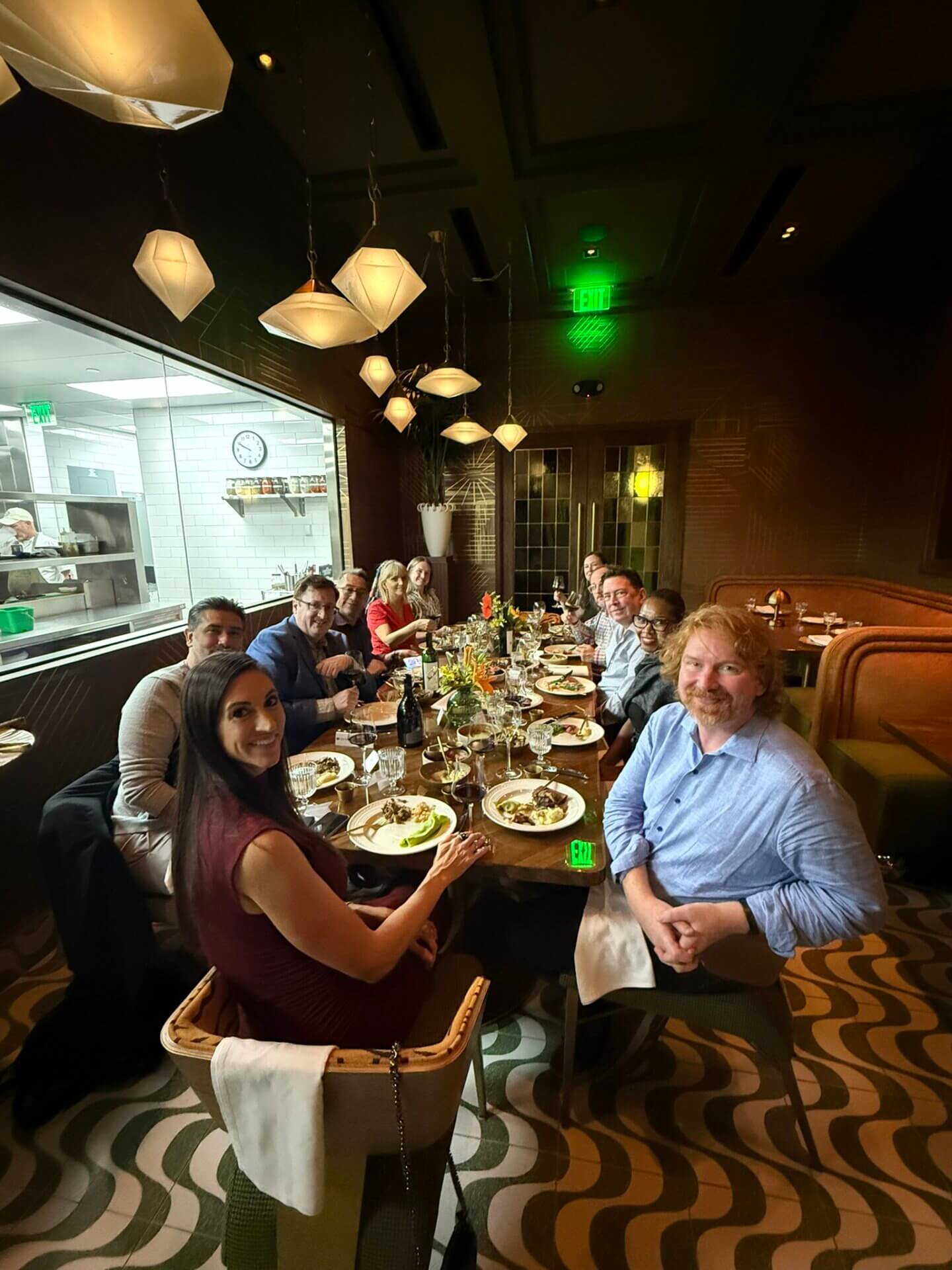
Our own table was adorned with those same glasses—and plenty of them. We started with Ca’ del Bosco Cuvée Prestige Edizione 47, a multivintage blend “that’s all about Franciacorta,” according to Gragg, being sourced from vineyards around the territory. “This is a classic,” said guest Chris Keel, owner of local wine shop Put a Cork In It. “I’ve been to that region, so I always recommend the wine as a reflection of it.” Charisse Henry, general manager and wine director of Teddy Wongs Dumplings & Wine, claimed that the expression “far surpasses [my] expectations for sparkling wine.”
The Cuvée Prestige was paired with an opening salvo of deviled eggs topped with shallots, breadcrumbs, chives, and two different caviars and lobster hush puppies served in a mustard-and-truffle aioli. As we complimented the pairing, Gragg pointed out that because the wine was aged for a relatively short 25–27 months, the yeasty components remain in the background, “kind of lifting up the fruit. That’s what makes Franciacorta special, especially in the very dry and very clean Ca’ del Bosco style. It’s a wine that’s all about fruit, so from a pairing standpoint it is tremendously versatile.”
Aga Hilferty, wine educator for HERITA USA, next introduced Ca’ del Bosco Satén, named for a category of Franciacorta wines with lower pressure—5 atmospheres as opposed to the usual 6; it is also made only from white varieties and is vintage-dated. “This wine is gentle,” Hilferty said. “It’s like satin fabric.”
The Satén was paired with The Mont’s fruits de mer, a composed selection of oysters, crab claws, lobster, and shrimp served with smoked fish dip and aioli, as well as a red snapper ceviche with pickled red onion and jalapeño.
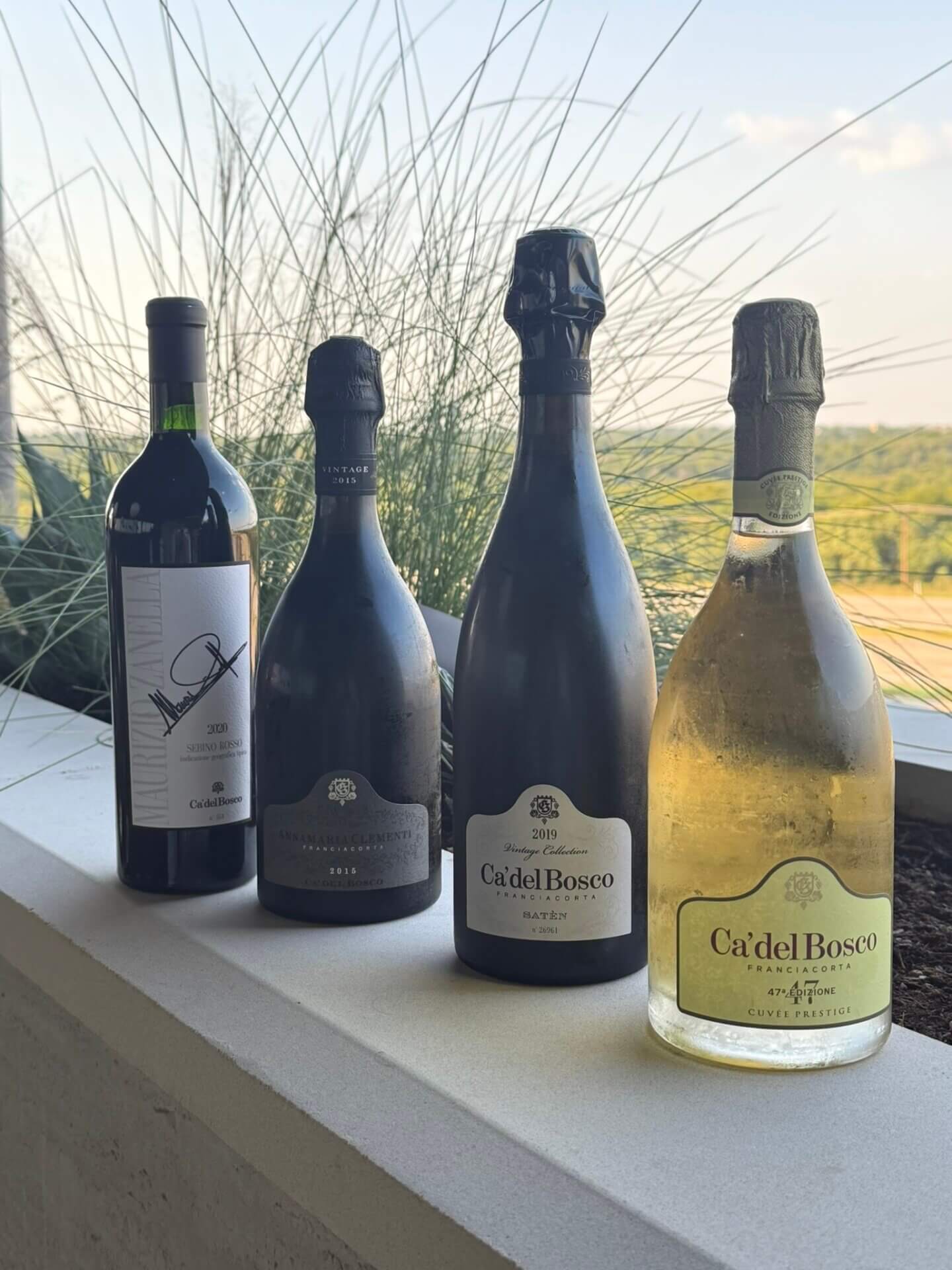
The next wine poured was Ca’ del Bosco Annamaria Clemente, which, Hilferty explained, was created by winery founder Maurizio Zanella in homage to his mother. The vintage-dated sparkling reserve is made only in superior years and is aged eight years on the lees. “This, I believe, is the only tête du cuvée from any producer in the world that is always zero dosage,” said Gragg, pointing out that Ca’ del Bosco’s entire range of Franciacorta legally qualifies as zero dosage, being under 3 grams per liter of sugar, but the producer reserves that classification only for this wine, which contains just half a gram per liter.
For the main course, we enjoyed Irodori wagyu tomahawk steak and slow-roasted duck leg with Maurizio Zanella Rosso del Sebino. Gragg explained that the wine was inspired by Zanella’s admiration for Château-Figeac’s proprietary Bordeaux blend of Merlot, Cabernet Sauvignon, and Cabernet Franc. The Rosso has been made since 1979, and according to Gragg its label partly inspired in turn the original label design for Opus One. He added that only 10,000 bottles of this signature red are produced, and roughly 600 come to the U.S. “It’s not something you would find in too many restaurants and shops,” he said.
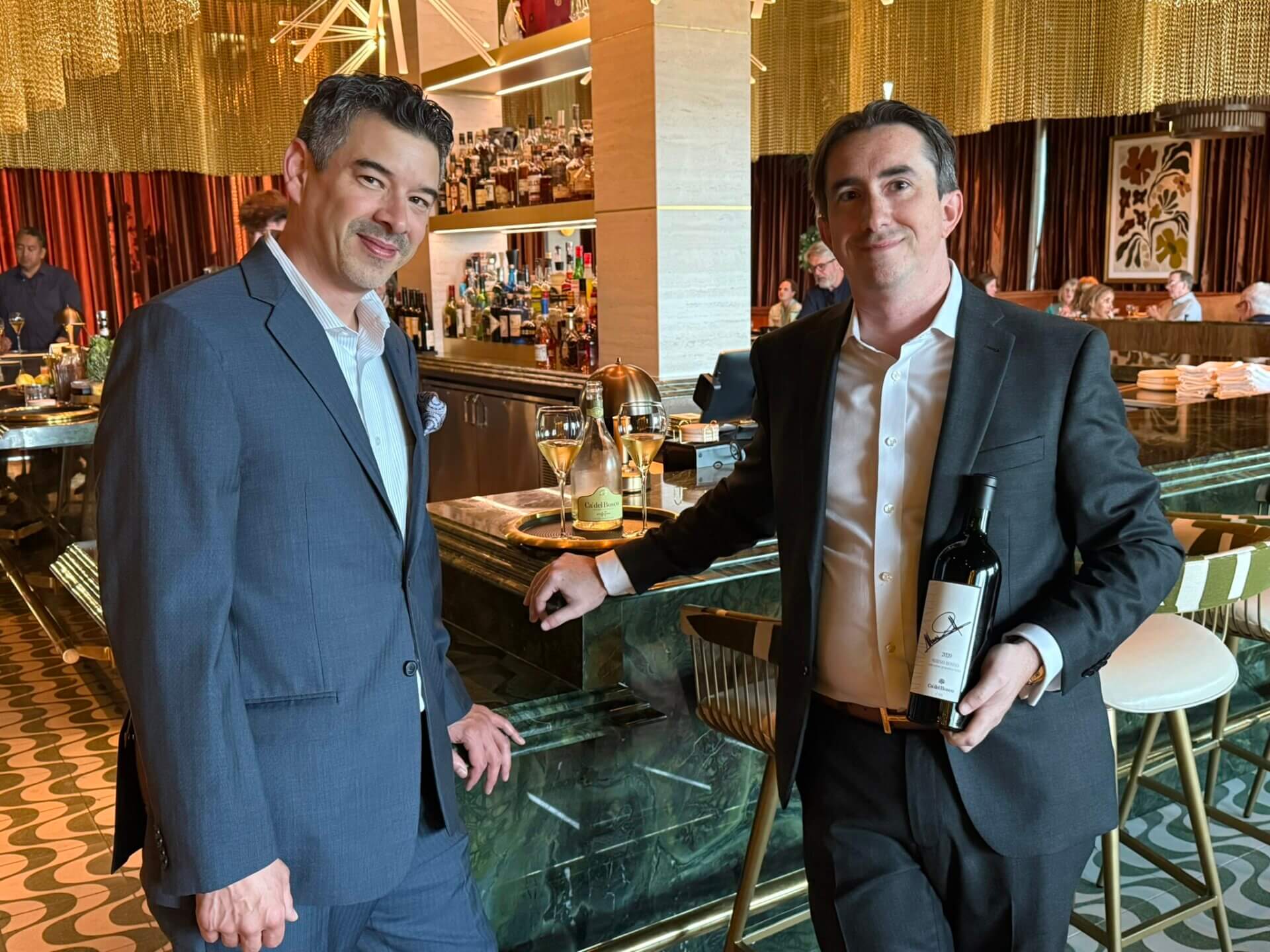
That was in fact the case for most of the wines served that night; production of the Cuvée Prestige and Satén is about 1,200 bottles each, while 30,000–35,000 bottles of the Annamaria Clemente are made. Most of those, as with 90% of all Franciacorta wines, sell in Italy, and the U.S. is not the leading export market for the balance. But just the same, Gragg was determined to present them here, a fact not taken lightly by the handful of somms invited. While our table talk ranged from the proper size and role of barriques to yeast autolysis, the importance of latitude in wine country, good versus bad vintages, and customer impressions, the nature of the wines we were sharing was very much appreciated and expressed by the guests.
Aptly summing them up as “people who want something a little bit different and who care about what we care about from a quality standpoint,” Gragg continued, “We are not trying to move boxes per se, we’re trying to put the wines in the hands of people who are going to expose them to their guests in the right way, and that is why we’re sharing this experience with you. . . . We don’t have that much to share, so we like doing it in a very qualitative way. At the end of the day, what is important to us is putting it in the right hands and communicating it the right way.” And that, to attendees, made for time off well spent.
