As the group of polyphenols most abundant in red wine (found in concentrations of up to 3.3 grams/liter), tannins play a starring role in dictating a given wine’s ability to not only stand the test of time but improve with age. They are the most significant member of a family of phenolic compounds that contribute both bitterness and astringency to red wine, standing out as a defining component of quality.
Tannins are perceived in two ways: Smaller tannins activate our bitter taste receptors, while larger tannins register as astringency, which is a tactile sensation felt through the specialized sensory receptors in our skin—known as mechanoreceptors—that respond to touch, pressure, vibration, sound waves, and motion.
As bitterness and astringency are typically perceived together, they’re often confused or combined into a single perception described as “unripe,” “hard,” “coarse,” “drying,” and “bitter” regardless of which sensation is dominant. Wines with softer, less astringent tannins are often described as “ripe,” “supple,” “lush,” “velvety,” or “round.”
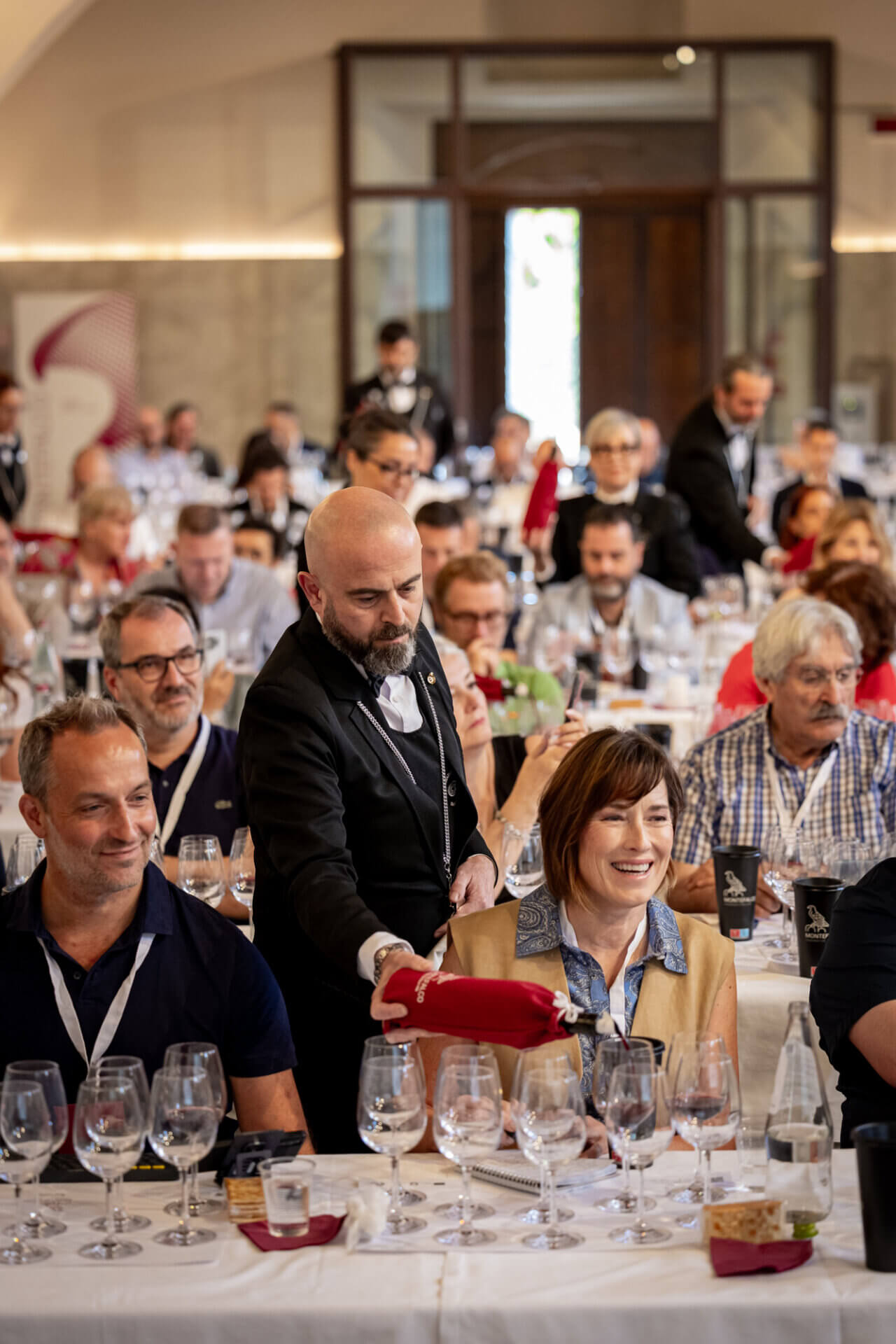
But this commingled perception can be limiting when it comes to understanding how tannins are perceived in a particular grape variety. A case in point was demonstrated at “Beyond Flavors: Understanding Wine Quality by Tannins,” a tasting conducted by Cristina Mercuri, DipWSET and founder of the platform Wine-Club.it, during the premiere of the 2020 vintage of Sagrantino DOCG at the Chiostro Sant’ Agostino in Montefalco, Italy.
Kicking off the blind tasting of ten expressions, Mercuri asked participants to determine where the tannin structure of the wines was being perceived in the mouth as a means of identifying whether or not the variety being tasted was Sagrantino. Given that the grape can have 33% more tannin than other Italian varieties and twice as much tannin as Cabernet Sauvignon, which contains concentrations of 0.6–1.5 grams/liter, it could easily stand out. But tasters were being asked to prioritize their sense of touch, which requires a deliberate effort when one’s olfactory and taste receptors are being flooded with aroma and taste compounds.
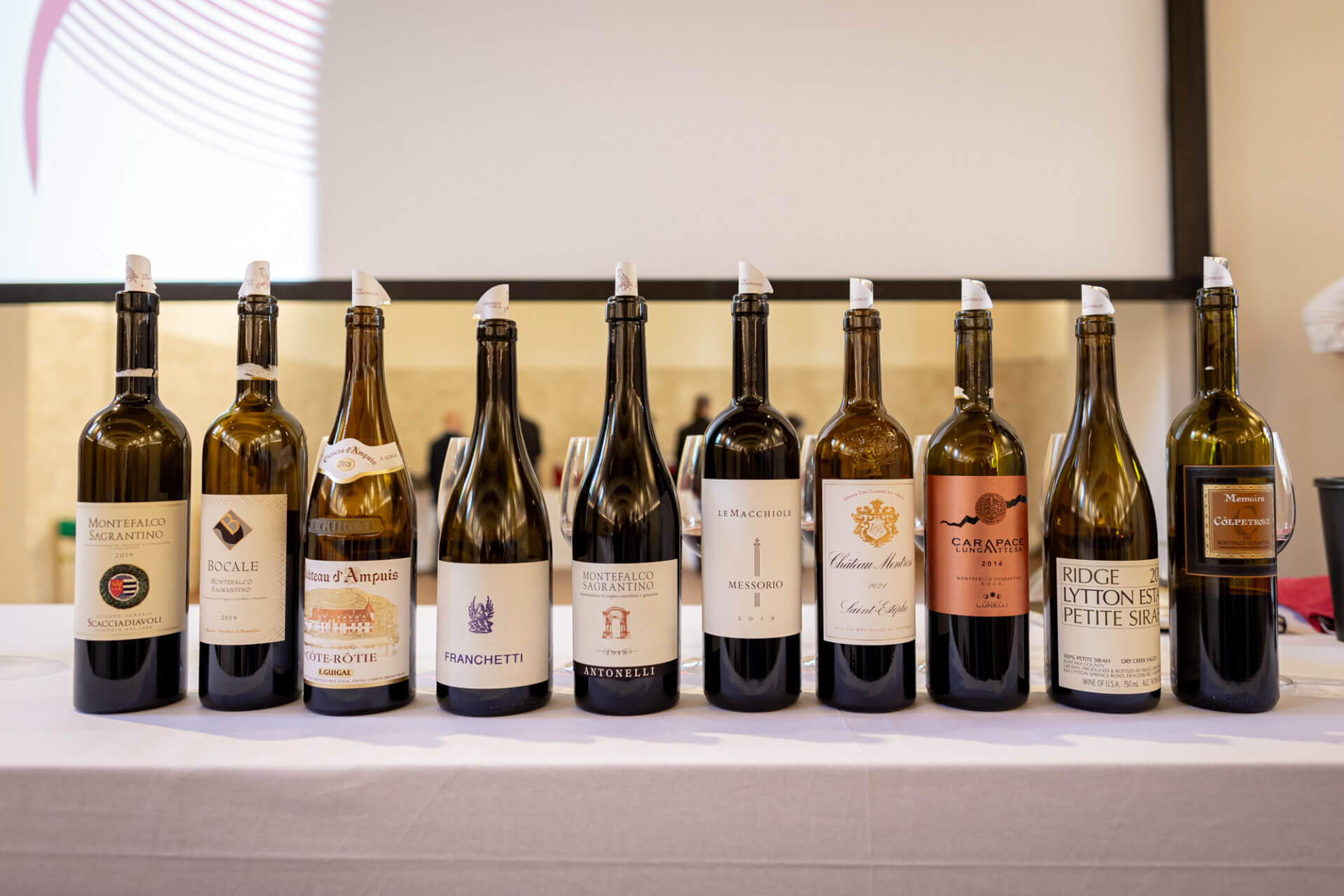
The wines Mercuri selected demonstrated a wide range of tannin structures that, according to a show of hands by the tasters, were felt in different areas of the mouth: center of the tongue, roof of the palate, front of the mouth, and sides of the tongue. That this wasn’t surprising was not because we have mechanoreceptors in our gums, cheeks, tongue, and soft and hard palates but because the sensations were often localized to one area. Based on a show of hands, performance was about 50% correct for identifying the Sagrantino wines.
Tasters are off the hook in this exercise, as researchers agree the variability of tannin concentration among wines from the same grape makes it challenging to determine a variety based on the location in the mouth where tannins are perceived; with repeated tasting, however, we could learn to recognize a particular wine by where the tannins register. Regardless, Mercuri’s overarching point was well made: She demonstrated that Sagrantino, which has earned a reputation for “monster tannins,” is being elegantly vinified to the point that it can be mistaken for wines from the Northern Rhône, Brunello di Montalcino, Bolgheri, and Bordeaux.