

MASI HOSTED A SEMINAR AND DINNER AT SOMMCON 2025 TO SHOWCASE ITS ROLE IN THE EVOLUTION OF ITALY’S VENETO REGION
story by Bob Paulinski, MW / photos by Rafael Peterson
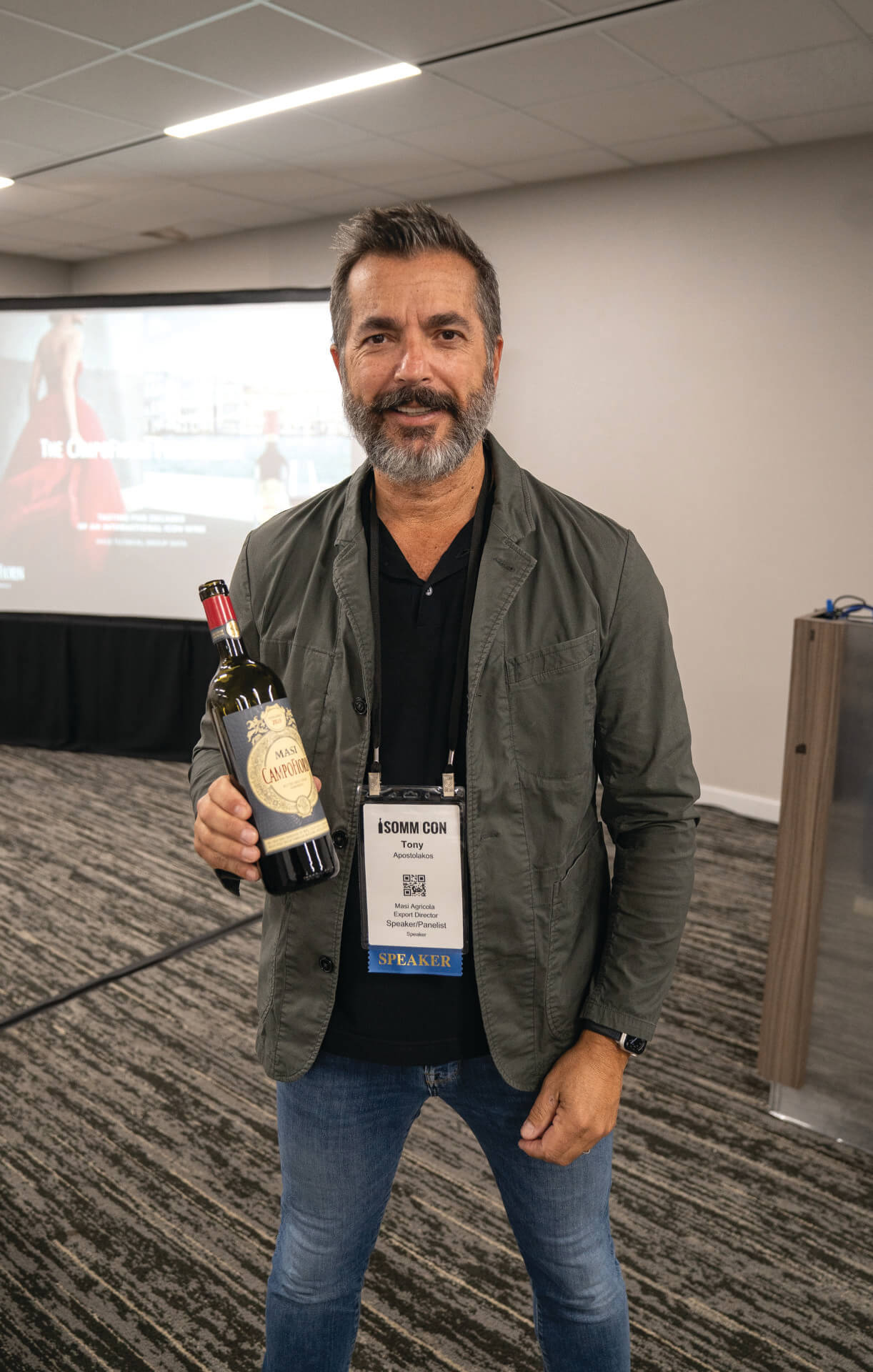
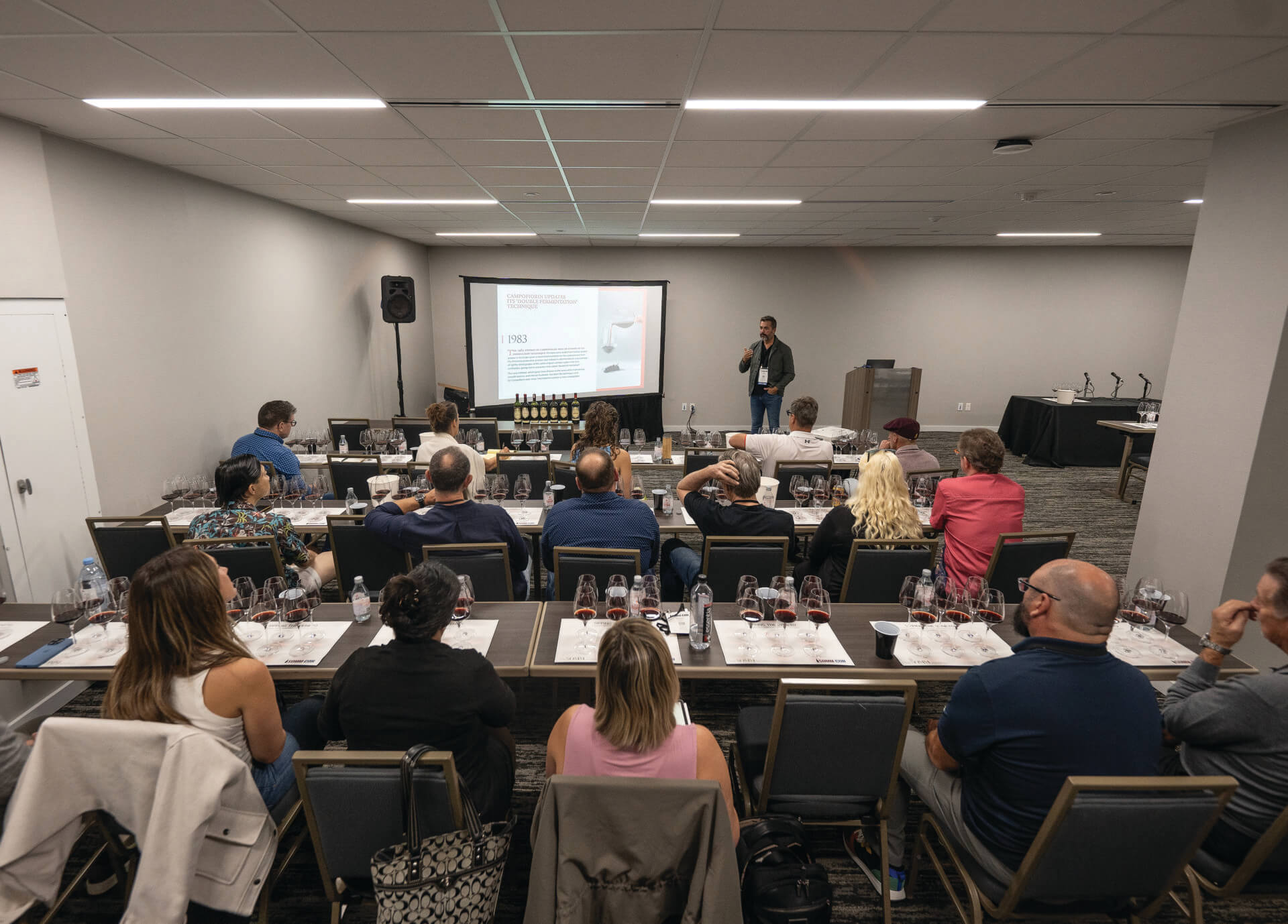
With over 250 years as a leader, innovator, and standard-bearer in the Veneto region of Italy, Masi remains the benchmark for outstanding, distinctive wines that display a keen sense of place. As its U.S. director, Tony Apostolakos led the seminar “Sipping the Veneto: The Flow of Crimson Nectar” at SommCon 2025 in San Diego to introduce attendees to the producer and explain how it has “taken many steps over the last 40 years to evolve [our] wine but to keep it intact in terms of varietals and tradition.”
An Overview of the Veneto
The Veneto is an ancient wine region, with Valpolicella forming its historical reference point. The name Valpolicella is derived from Greek and Latin, meaning “the land of many valleys and cellars” (poli is Greek for many, cella is Latin for “cellars”). All of Masi’s vineyards are located in Valpolicella’s zona classica, so demarcated for its long-recognized history of producing the best wines in the region in a range of intriguing styles.
Serving as a counterpoint to Valpolicella, Valpolicella Classico, and Valpolicella Superiore, wines made by the appassimento and ripasso methods encapsulate the true magic of the region. These require a deeper look at the terroir, grape varieties, and techniques involved in their production.
The Veneto’s soils represent an incredibly diverse mosaic of volcanic deposits, limestone, and underlying clay, offering both good drainage and adequate moisture retention. In these soils are grown both mandatory and optional grape varieties. Corvina and Rondinella are mandatory, forming the core of Valpolicella’s blends; Molinara traditionally plays a minor role. At Masi, the preferred ratio is typically 70% Corvina, 25% Rondinella, and 5% Molinara.
Today, the iconic wine of the Veneto is Amarone della Valpolicella DOCG. It’s on the short list of Italy’s most noteworthy wines along with the likes of Brunello di Montalcino and Barolo. That said, Amarone didn’t come into prominence until the 1950s, when it was championed by producers like Masi. Prior to that, Recioto—a sweet style—was the dominant wine of the region.
The Art of Appassimento
The unique character of both Recioto and Amarone is linked to the aforementioned appassimento method. Translating as “withering” or “wilting,” the word refers to the process of partially drying grapes prior to fermentation to concentrate their color, aroma, sugars, acidity, and flavors. This is an ancient technique that’s well suited to the Veneto, which is surrounded by an amphitheater of mountains on three sides in close proximity to Lake Garda and the Adriatic Sea. These environmental conditions result in the ideal humidity level for a properly controlled appassimento.
Appassimento starts with newly harvested grapes that must be in pristine condition. Per Masi’s traditional approach, a single layer of bunches is set on bamboo racks and stored in special drying rooms (fruttai) for more than 100 days, during which the grapes lose up to 40% of their weight.
Corvina provides structure; increased body; and ripe, tart cherry notes. During appassimento, the variety is particularly susceptible to the formation of Botrytis cinerea (noble rot), which enriches glycerin content and enhances the cherry aromas while adding roasted hazelnut notes. In short, small, controlled amounts of botrytis add layers of depth, but too much “can result in gray rot, which is a detriment,” as Apostolakos noted. Stipulations allow Corvinone to replace some of the Corvina in the blend, but it’s not a mainstay for Masi, as the berries tend to be large and less concentrated, which makes them less than ideal for appassimento.
Rondinella is a reliable, generous, and generally easy-to-grow variety. It provides tannic structure, color, and a nuanced floral aroma. Appassimento deepens its color and softens its tannins.
Molinara is a wild card. It has fallen out of favor in the Veneto due to its lack of color along with its proneness to rot, so it’s no longer a mandatory part of Valpolicella blends. At Masi, however, it’s a small but critical component, giving the wine a lift of bright acidity along with a note of cracked black pepper.
The Rise of Ripasso
Amarone and Ripasso (whose name means “repassed”) are deeply intertwined. While Amarone and Recioto are made through the use of semi-dried grapes, Ripasso involves the reuse of the pomace from their production. The nutrient-rich pomace is added to freshly fermented Valpolicella wine, imparting heightened aromatics, color, weight, structure, and flavor.
Produced in 1964 to enter the market in 1967, Masi Campofiorin Rosso del Veronese IGT was a pioneering venture as the first commercially available Ripasso wine, today commonly called a Super Venetian. Masi refined its technique in the 1980s: Instead of using pomace, it began adding semi-dried grapes (25%) directly to freshly fermented Valpolicella, a process it calls double fermentation, which results in the richer color; heightened aromatic profile; increased alcohol; and softer, more elegant tannins that define modern-day Campofiorin.
In 2020, production underwent another evolution: Harvest is now delayed by a week or two for the sake of further ripening, and the percentage of dried grapes used in the blend was increased from 25% to 30% to make the wine, which is aged in partially new Slavonian and French oak, even more harmonious, well rounded, and full-bodied, with more integral fruit intensity.
Tasting Notes
Masi is deeply rooted in the traditions of the Veneto, yet it continues to evolve, experimenting with new methods to raise the profile of its wines. The end result is a portfolio of expressive and compelling wines that are unlike any others in the world. Over just a few short decades, Masi Campofiorin has become a prime example as it has established itself as a Veneto classic.
Tasting through six vintages of Masi Campofiorin was a history lesson on the amazing progression of its style over the decades as well as a demonstration of its longevity.
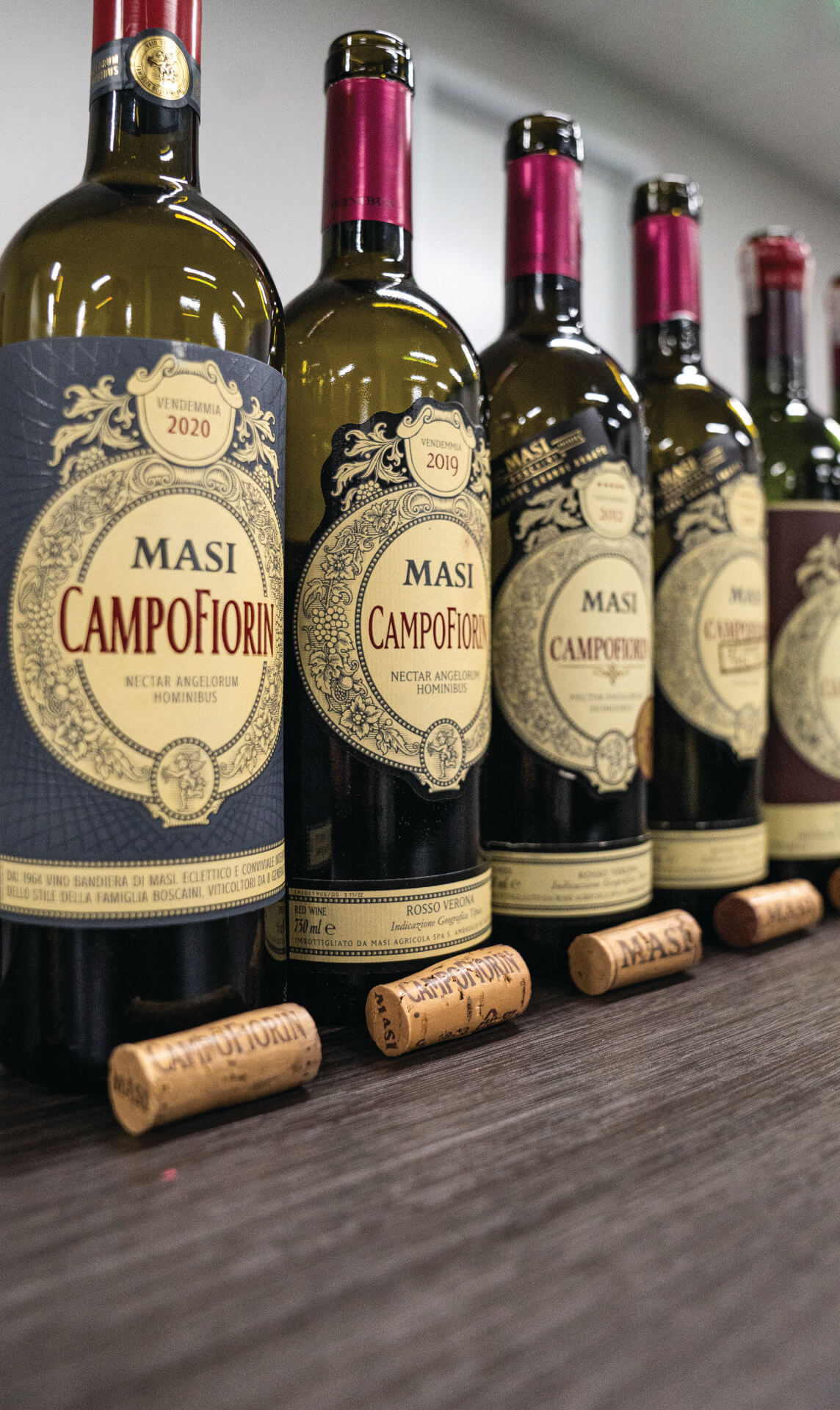
1985: Moderately deep core with fade and some browning at the edge of the glass. Wonderfully developed tertiary notes of coffee and caramel. Of moderate length, the wine is soft yet balanced and elegant, with a bone-dry finish.
1999: Deep core with fade and a slight browning at the edge of the glass. Lovely tertiary notes of forest floor, coffee, fig, prune, and mocha. Good density on the well-structured palate, which shows moderate length.
2007: Surprisingly vibrant, dense red core, with some fade at the edge of the glass (but no browning). Showing some bottle-aged notes—licorice, fig, prune—along with wonderful intensity, balance, and length, this is a fine wine that is just hitting its prime.
2012: From an exceptional vintage, this wine possesses superb depth of color; expressive, lifted aromatics; notes of dense red fruit, roasted coffee, subtle forest floor, and roasted hazelnut; and grip on the palate. Its potential for aging over the next ten years is excellent.
2019: Deep, dense core with a slight fade at the edge of the glass. Excellent aromatics are bright, lifted, nuanced, and pronounced. Medium- to full-bodied, with notes of ripe cherry, this wine displays exceptional balance, wonderful precision on the palate, and the structure to keep well for many years.
2020: Deep red core with a slight fade at the edge. Offering bright red fruit notes, this is weighty, round, full, and well structured and balanced, with good length. Another fine example of Campofiorin with excellent aging potential that’s also ready to drink now.
Valpolicella Past and Present
story by Jessie Birschbach / photos by Rafael Peterson
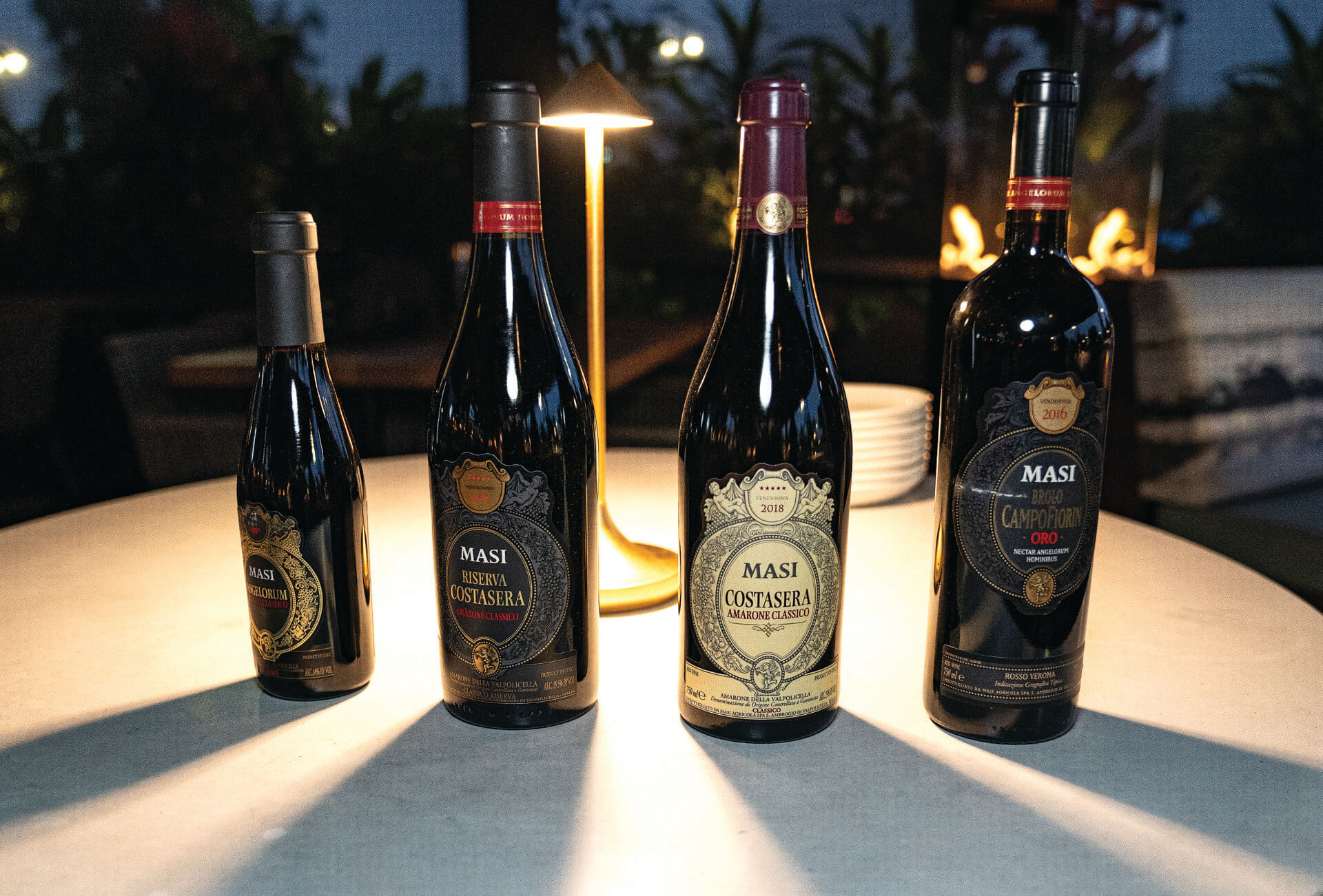
Although the seminar earlier in the day at SommCon San Diego offered an incredible, decades-spanning library tasting of Masi’s Campofiorin, I’d argue those of us in attendance at the dinner hosted by the winery were luckier still: Like the seminar attendees, our group of sommeliers from all over the country enjoyed Masi’s famously double-fermented wine, but we were also treated to a duo of organically grown Verona IGT dry white and red wines; two Amarones; and the rare Recioto dessert wine. These expressions, paired with a five-course meal at La Jolla restaurant The Amalfi Llama, not only revealed the full potential of Masi’s winemaking capabilities but painted an expansive picture of the specialized traditional production techniques of Valpolicella.
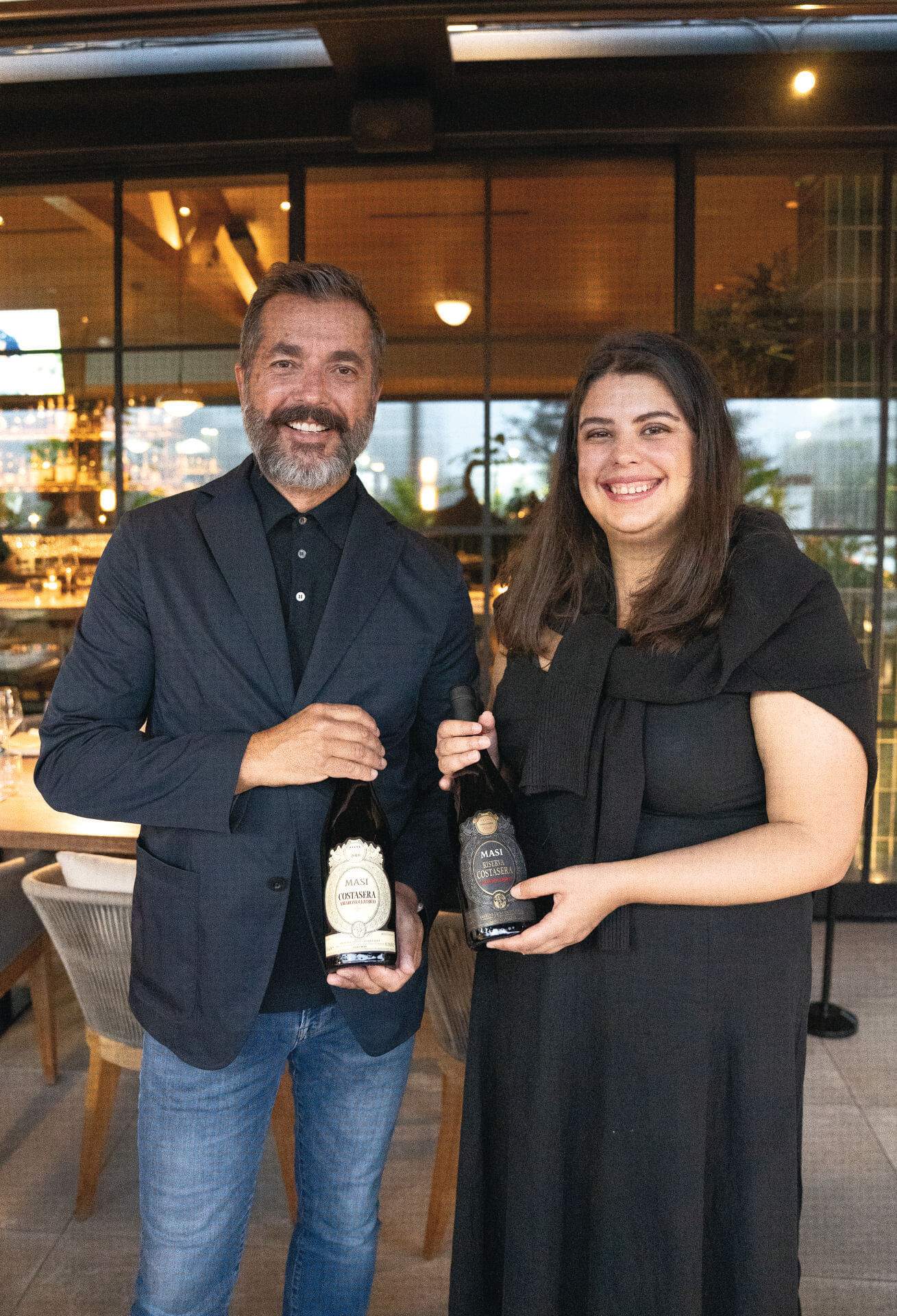
Starting the night alongside fine cheeses, cured meats, and crab cakes were the Fresco di Masi White Wine Verona IGT and the Fresco di Masi Red Wine Verona IGT made with grapes organically grown near Lake Garda; both were unfiltered, spontaneously fermented, and aged in stainless steel for a few months. With ABVs of 11% and 11.5%, respectively, the bright, dry wines lived up to their name (which of course means “fresh” in Italian). Served with short rib empanadas, meanwhile, was the Masi 2016 Brolo Campofiorin Oro Rosso Verona IGT.
Overall, the meal’s uncommon marriage of flavors highlighted the complexity of Masi’s wines. As Luciana Rankins, beverage director at The Amalfi Llama, explained, “We draw from two inspirations: flavors from the Amalfi Coast and the cooking techniques [of] Patagonia. I’m very proud of the unique way in which we prepare our menu, using white oak to fuel our coal and a wood-fire grill and oven: Whether [we’re making] a pizza or grilling protein or vegetables, you’re going to get those flavors from the fire.”
Tony Apostolakos, Masi Agricola’s U.S. director, was as humorous as he was knowledgeable, comparing the time-consuming practice behind the restaurant’s dry-aged steaks to the appassimento process with one major caveat: “After around 90 days, maybe 10%–15% of grapes develop botrytis. As a result, gluconic acids start to develop, as well as some glycerin during fermentation. This contributes greatly to the velvety, textural component in Amarone. Also, there is genetic activity happening [during appassimento] in which genes are switched on and off. . . . So it’s a transformation of these grapes, not just dehydration. By law we’re only allowed 40% weight loss. They’re not raisins[, though] the grapes look like they’ve been living on the beach: They’re wrinkled, but they’re still alive.”
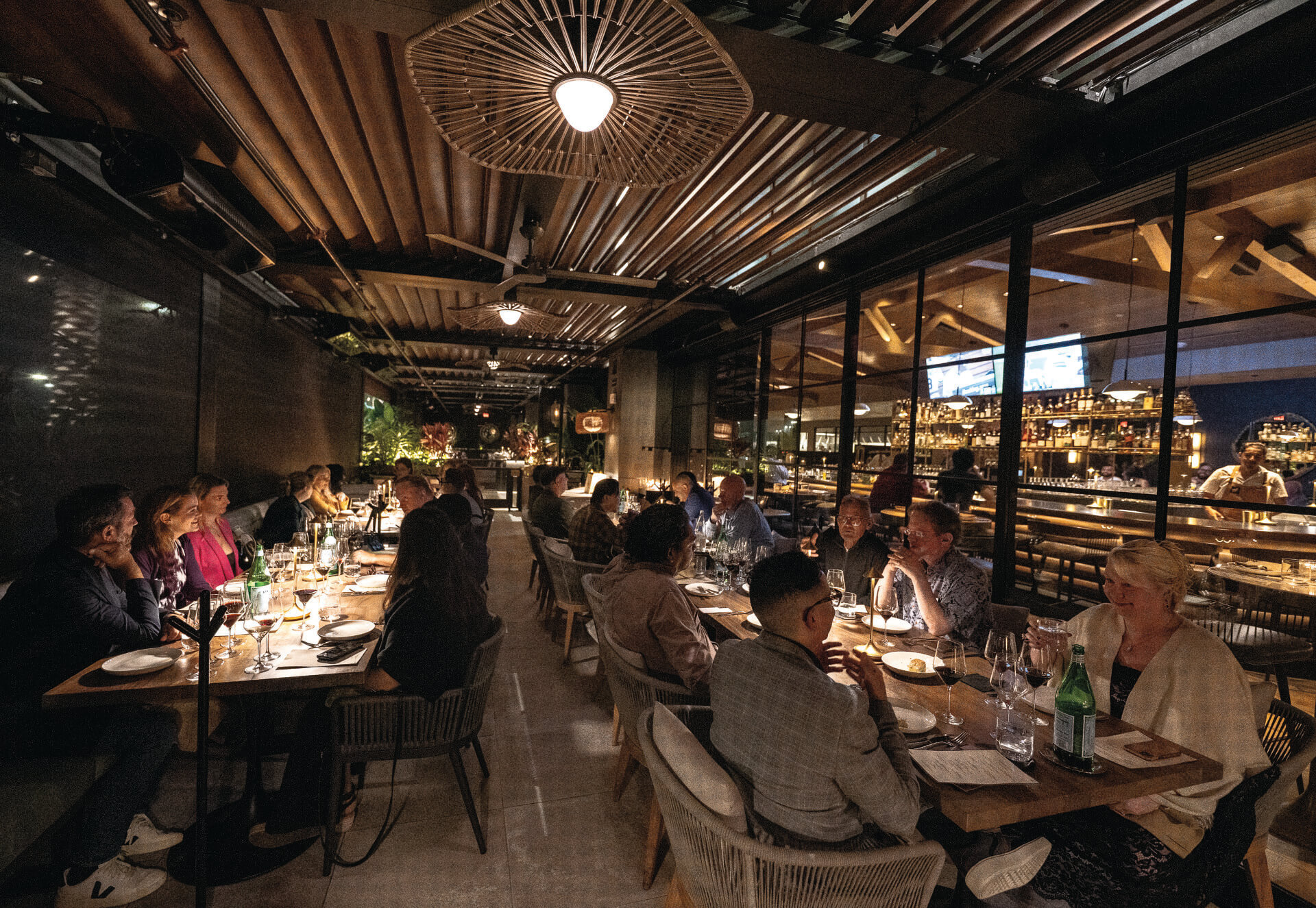
Apostolakos’ lighthearted joke proved apt: Masi’s Amarones were as vivacious as they were rich and chewy. Both from the 2018 vintage, the Masi Costasera Amarone Classico was served with a creamy, peppery cacio e pepe, while the Masi Riserva Costasera Amarone Classico accompanied a prime New York strip. Apostolakos noted the differences between their aging regimens; while the Costasera goes through 100 days of appassimento, the Riserva sees 110, with those extra ten days providing an additional 3% weight loss while increasing the alcohol content of the resulting wine by half a percent, not to mention determining the “new aromatics and flavor profiles that emerge,” he added. These elements, compounded by more time in Slovenian oak and the addition of the indigenous Oseleta grape (a rare variety resurrected by Masi in the ’80s), “weave in a layer of fine tannin not typical of Amarone,” in Apostolakos’ words, making the Riserva shine bright in the Amarone universe.
As privileged as we felt to enjoy Masi’s Amarones, it was the last wine of the night that made the evening feel extraordinary. The Masi 2019 Angelorum Recioto della Valpolicella Classico served with a carajillo cream tiramisu simultaneously represented the origins of winemaking for Valpolicella and the end of our night. “You can’t understand Valpolicella without understanding Recioto. Amarone is the offspring of Recioto, the dry version,” said Apostolakos, noting that Recioto dates back to 450 A.D. in the form of a wine called Retico, made by the ancient Rhaetian people who lived around the hills of Verona. Today, Recioto della Valpolicella must achieve at least 14% alcohol through the appassimento process and contain roughly 50 grams of residual sugar. “In Italy this isn’t a dessert wine—it’s a wine for the winters in Verona. The acid is there. The balance is there. But how many people here have had a Recioto in the last year? If I could take one wine to represent our area it would not be Amarone—it would be Recioto,” he concluded.
For more information, please visit www.masi.it
