

by Wanda Mann
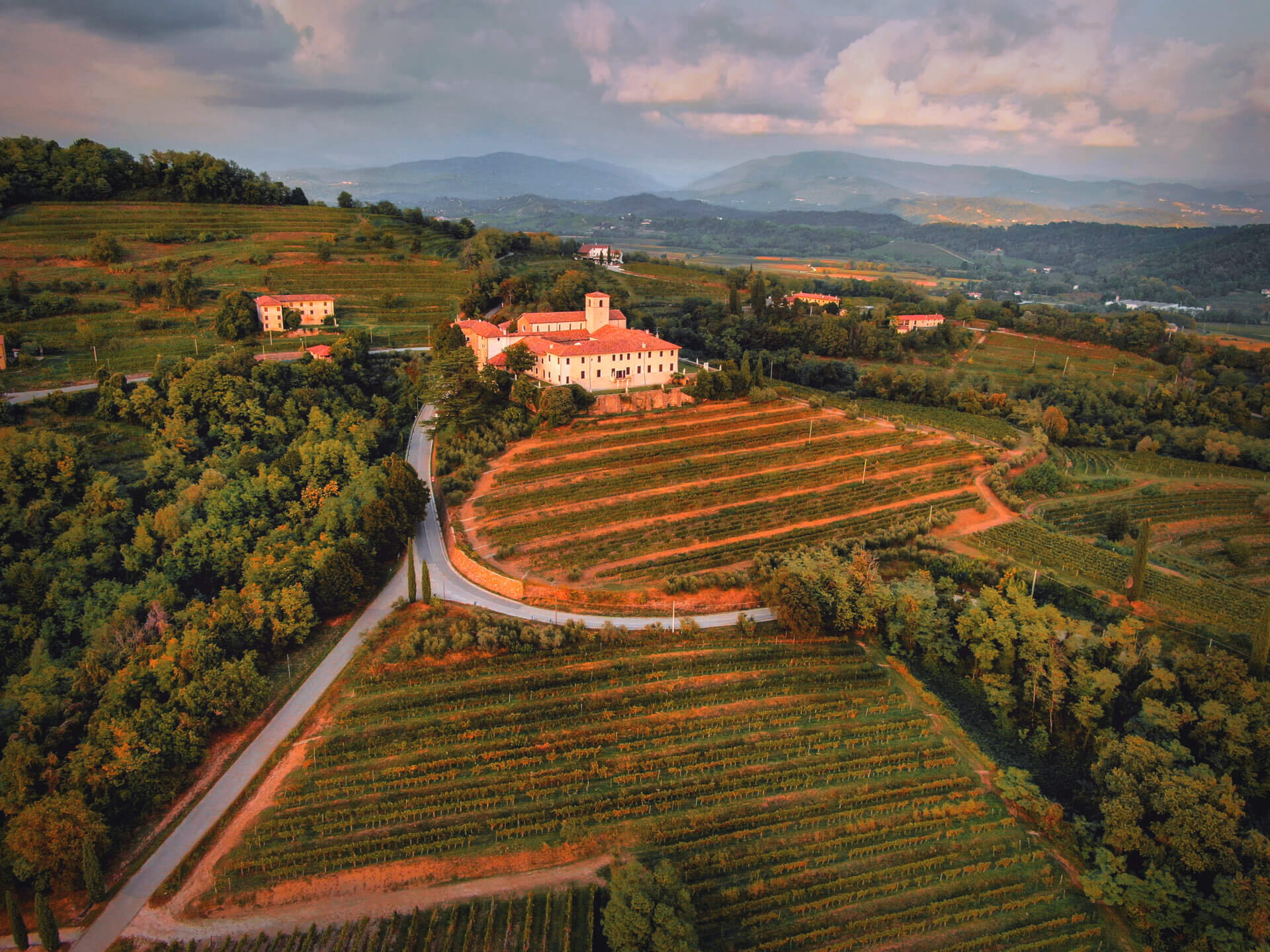
What elevates a wine from good to great? Andrea Felluga, who co-owns Friulian winery Livio Felluga with his siblings, doesn’t falter in his response: “It’s a wine of utmost complexity that gets better and better through aging, that has a heritage, and that has a legacy with the territory that pleases both your senses and your mind.”
Over the course of the three hours that I recently spent tasting with Andrea in New York City, it became clear that achieving greatness as a producer is his mission—one he inherited from his late father, Livio Felluga. Often acknowledged as the patriarch of the wines of Friuli, Livio moved to this region in northeastern Italy in the 1930s and after World War II soon gained respect for reviving the old hillside vineyards of Rosazzo while introducing modern winemaking techniques. The torch passed to Andrea in 1994, and he is fully aware of the magnitude of his role: “The chain of quality doesn’t allow for a weak link,” he told me.
While attention to quality has long earned Livio Felluga’s wines global acclaim, Andrea began to feel a piece of the puzzle was missing. Most of the wines in the portfolio emphasized the art of blending; take the iconic Terre Alte, for example, whose current vintage contains Friulano, Sauvignon Blanc, and Pinot Bianco. “Blending is fun, but a few years ago, we realized that there was a spot in our portfolio to bring the single-varietal wine to the next level—to great,” said Andrea, noting that making a single-varietal wine poses a unique set of challenges: “If you make a blend wine, you want to show in the best way the character of the terroir, period. When you make a single-varietal great wine, you have to show both the character of the terroir and the character of the variety.”
But where to start? “We realized that we have some vineyards that, year after year, always give a particular character and that we used to blend with the other vineyards. When we decided to implement this project, we immediately thought of those vineyards,” explained Andrea.
Livio Felluga introduced three single-varietal, single-vineyard expressions with the 2018 vintage, featuring what Andrea considers the flagship grapes of Friuli: Pinot Grigio, Friulano, and Sauvignon. In the case of the former, Livio Felluga 2020 Pinot Grigio Curubella is a stellar example of how magic happens when a ubiquitous variety is made with greatness in mind. To craft it, handpicked Pinot Grigio grapes were destemmed and macerated on the skins for two days to yield a subtly coppery, rose-gold hue. (Traditionally, Pinot Grigio from Friuli made in this fashion is called ramato—rame means “copper” in Italian—but Andrea said he finds the term a bit “old-fashioned.”) Toward the end of fermentation, the wine was racked into containers made of cocciopesto, an ancient Roman style of concrete, and underwent malolactic fermentation for two weeks. Andrea described the result as a more “opulent” style of Pinot Grigio with a creamy texture and aromas and flavors of pears, peaches, and citrus, including lime blossom and lemon zest.
To Andrea’s surprise and delight, the Friulano grapes in the Sigar vineyard experienced a bit of botrytis in 2020, and he praised the aromas and flavors of “alpine resin, pine needles, and balsamic notes” this unexpected touch of noble rot imparted to the Livio Felluga 2020 Sigar, which also offers notes of citrus, green herbs, flowers, and candied lemon peel. Toward the end of fermentation, Sigar was racked into terracotta jars to allow micro-oxygenation and enhance its mineral character.
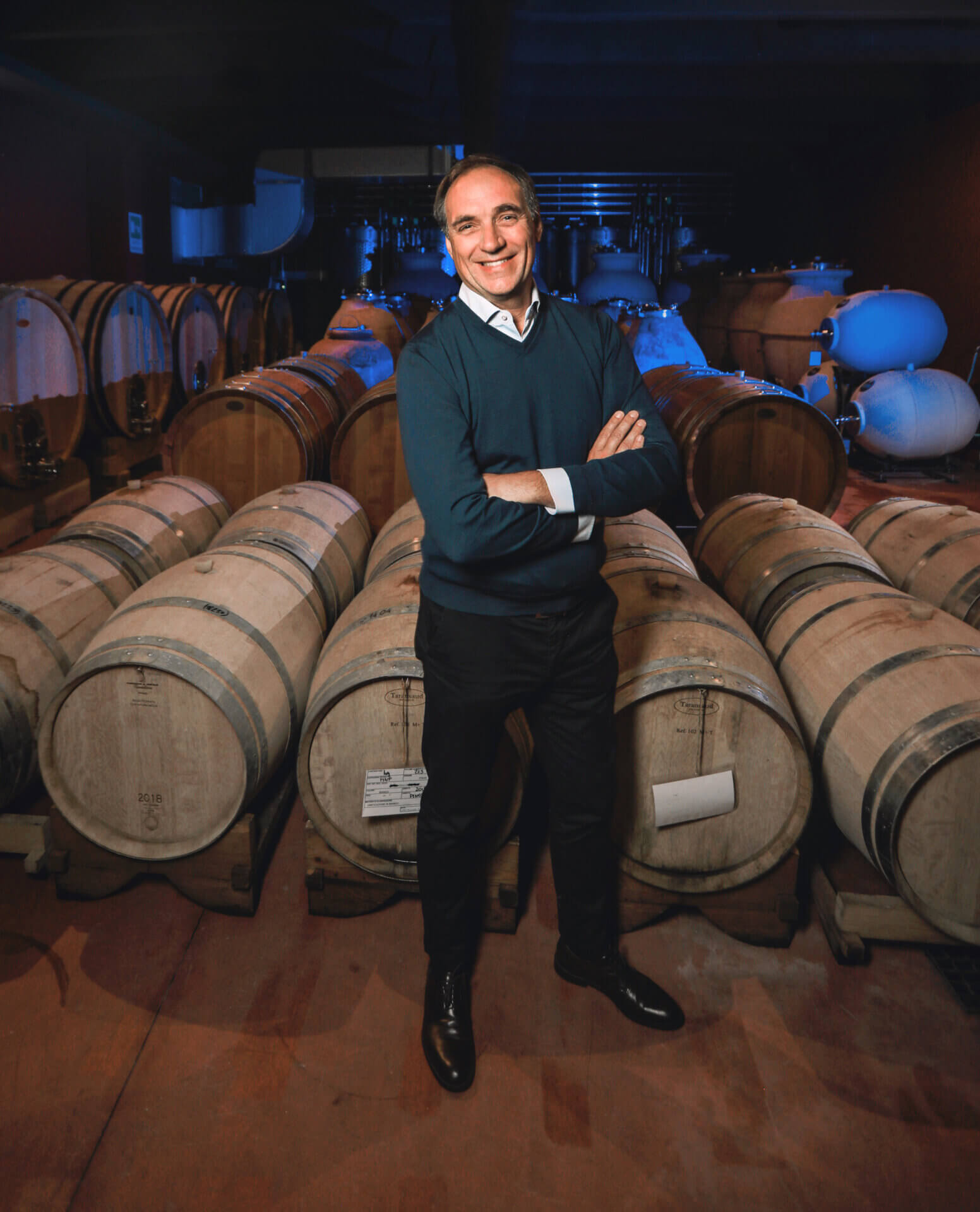
Livio Felluga Sauvignon Potentilla is named after a flower that grows on the hillsides of the Felluga estate whose name translates as “small flower with great power.” To make the 2020 vintage, handpicked Sauvignon grapes were macerated on the skins for a few hours and underwent one month of malolactic fermentation in large oak casks. “It’s not common to have Sauvignon go through malolactic fermentation, but I like the style of it,” said Andrea. The wine is creamy yet zesty and crisp (or “crunchy,” per Andrea), and the oak influence is quite subtle, allowing notes of elderflower, jasmine, citrus, and sage to shine through.
Although each of the three wines aged in a different vessel, Andrea was adamant in asserting that “the character of the wine is led by the vineyard. . . . The style of the wine is not made by the vessel,” whose role is to enhance, not obscure, whether it’s made of terracotta, cocciopesto, or oak.
By identifying vineyards with exceptional fruit and implementing precise vinification techniques, Andrea has achieved his goal of creating monovarietal, single-vineyard wines that showcase both the terroir of Friuli’s rolling hills and the region’s key grape varieties. After leisurely savoring them, I agree they certainly meet Andrea’s additional criteria for great wine: “I would add, it is a wine that also improves not just in bottling and cellaring but also when you open the bottle and you spend half an hour, one hour, two hours in front of the wine and you establish a relationship with [it].”