

by Christina Barrueta / photos by Mona Shield Payne

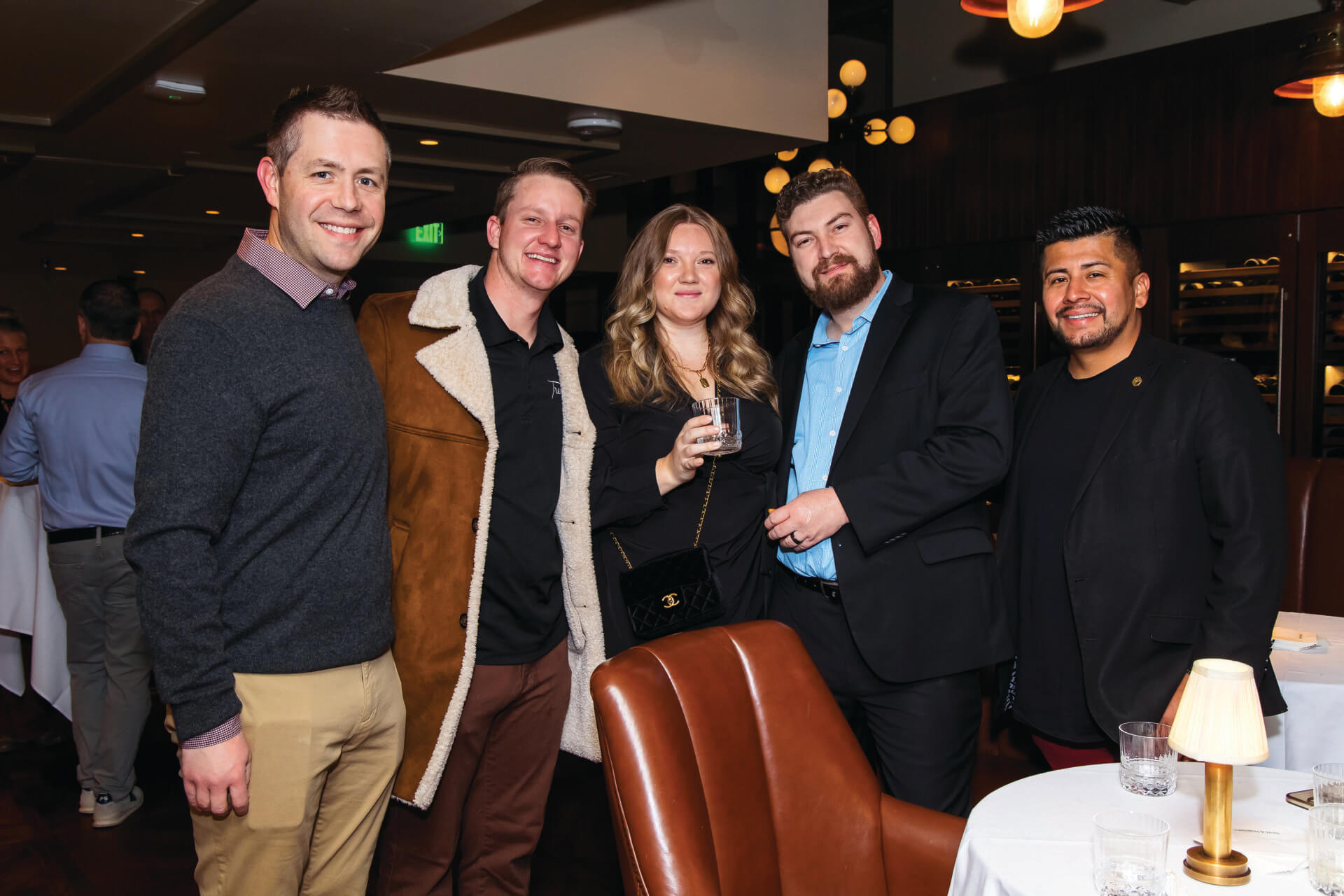
At Smith & Wollensky in Las Vegas, the sounds of lively conversation and clinking glasses filled the air at a welcome reception hosted by Foley Family Wines (FFW) in January. The weekend prior, the invitees had served as judges for the Wine & Spirits Wholesalers of America’s Wine & Spirits Tasting Competition, sponsored by The SOMM Journal; now they nibbled on cheeseburger sliders, stuffed mushrooms, and tomato-and-mozzarella skewers as Alan Crawford, vice president of luxury brands at FFW, introduced them to two of the company’s newest craft spirits. Produced by New Zealand’s first female head distiller, Rachel Hall, Lighthouse Gin showcased aromatic botanicals and bright citrus notes from hand-zested Yen Ben lemons and navel oranges, while Charles Goodnight Texas Straight Bourbon Whiskey, aged for six years in charred American white-oak barrels and clocking in at a robust 115 proof, made a bold statement with a mash bill of Texas-grown high rye.
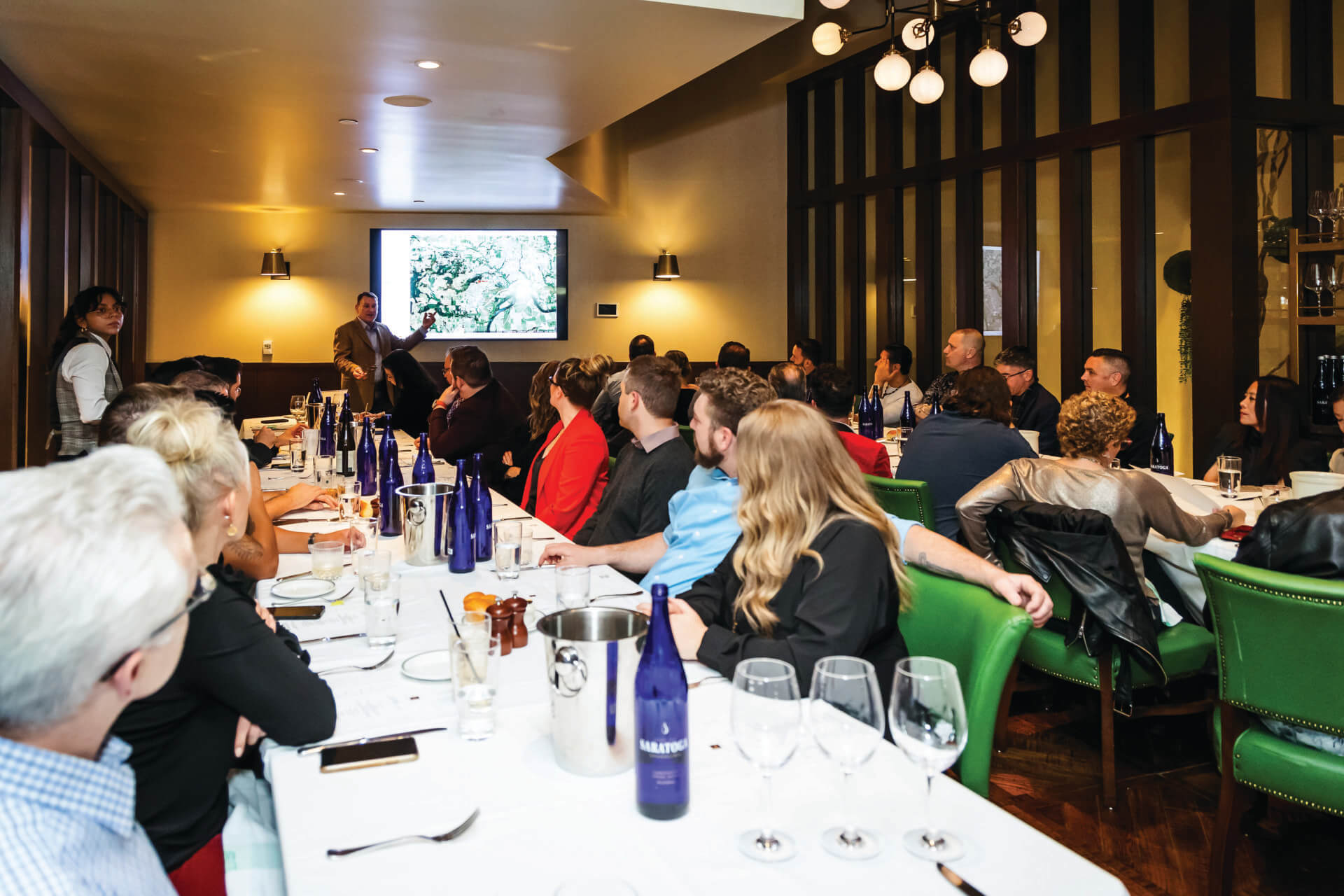
It was a festive start to the three-course dinner that followed, paired with 18 wines across six flights from FFW’s impressive global portfolio. Founded by entrepreneur Bill Foley on a property in Santa Barbara County, California, the company has now grown to encompass many of the New World’s premier vineyards. “It started in 1996 with J. Carey Cellars, a small winery Bill bought from the Firestone family,” recounted Crawford. “Now we own roughly 17 wineries up and down the U.S. West Coast and five wineries in New Zealand, along with maintaining partnerships with other wineries outside of the United States. Tonight’s wines will show our diversity, with almost every one tied to a single estate for a true sense of place.” With that, his presentation took a perspective-shifting turn as he used Google Earth to offer bird’s-eye views of specific vineyards and their unique topographical and geologic features. Here’s a flight-by-flight recap.

Miscellaneous Whites
“Let’s take a little journey, shall we?” Crawford proposed as we navigated to New Zealand’s Awatere Valley. Located in the heart of Marlborough, it’s one of the famed region’s windiest and driest areas, yielding herbaceous white wines with oyster-shell minerality—including the first of six wines paired with the salad course, the Vavasour 2022 Sauvignon Blanc. “This is fruit from a single estate with some of the oldest vines in the valley,” Crawford said. “When local farmer Peter Vavasour started the winery back in 1986, the locals thought he was crazy. . . . They said it’s too dry and windy in the Awatere, the soils are too poor, even the sheep struggle out here. How are grapes going to grow? But as we now know, when vines are made to work a bit harder, the wines are always more distinctive.”
Another spin of the globe and we found ourselves in Napa Valley’s Yountville AVA with the Silverado Vineyards 2022 Miller Ranch Sauvignon Blanc. Crawford pointed to specific plots on the screen, noting that “Miller Ranch, this Stags Leap vineyard right across the river, and this vineyard in Coombsville were all planted in the late 1800s, so we have three of the oldest vineyards in Napa, which is pretty special.” Our final destination in the flight was Alexander Valley in Sonoma County courtesy of an aromatic and refreshing Ferrari-Carano 2022 Dry Sangiovese Rosé, which incorporated “a little smorgasbord of grapes like Grenache and Carignan,” according to Crawford.
Chardonnay
Remaining in California, we next focused on distinct terroirs in Monterey, Santa Barbara, and Sonoma counties. Our travels kicked off with the Chalone Vineyards 2021 Estate Chardonnay, sourced from Monterey’s Chalone AVA, as Crawford pointed out. “This line right here is the San Andreas Fault,” he said. “The winery is at the foothills of the Pinnacles range where, millennia ago, the shifting of the Pacific plates unearthed the volcanic soil you see littered with limestone.”
Moving to the RLH 2021 Sta. Rita Hills Chardonnay, Crawford drew attention to the Santa Barbara region’s oceanic influences. “At about 1 o’clock, God kicks on the air conditioner, and boom, you have these incredible breezes that come in off the Pacific,” he said, adding that “it’s also unique because it used to be underwater, so the soil is diatomaceous with fossilized seashells and sand.”
Next we turned to the volcanic origins of Sonoma’s Chalk Hill AVA, home to Chalk Hill Estate Vineyards & Winery’s 2021 Estate Chardonnay. “The founder, lawyer Fred Furth, was flying his plane looking for Chardonnay vineyard sites when he spotted these chalky areas,” Crawford explained. “Its decomposed white-volcanic soils were deposited by Mount St. Helena long ago.”
Pinot Noir
Our first red wine flight was poured alongside steak tartare and shrimp cocktail as we returned to the dramatic landscape of New Zealand. The Mt. Difficulty 2018 Bannockburn Pinot Noir was produced by a winery located at the base of the mountain for which it’s named with grapes sourced exclusively from vineyards on the south side of the Kawarau River. “We’re one of the oldest vineyards in Central Otago and arguably at the pinnacle of Pinot Noir in New Zealand,” Crawford asserted.
In the blink of an eye, we were next transported to California’s Russian River Valley with the El Pino Club 2021 The Cusp. Crawford pointed out well-known landmarks as he delineated the neighborhood of this Forestville vineyard, such as its proximity to Joseph Swan Vineyards (“the godfather of California Pinot Noir”) and the acclaimed Farmhouse Inn boutique hotel, a new property for the Foley group. “That place rocks!” interjected Jared Hooper, the Inn’s wine director, to laughter.
“Lastly, we’re flying up to Oregon, so don’t get vertigo,” Crawford joked as we enjoyed The Four Graces 2021 Dundee Hills Reserve Pinot Noir. Nestled at the top of the Willamette Valley in Yamhill County, the Dundee Hills AVA is marked by Jory soil that is rich in iron and clay. “You can immediately see where Dundee Hills is because of that decomposed red volcanic soil,” said Crawford as the group nodded in agreement.
Red Blends
For this flight, Crawford wanted to take us on a journey that not only traversed the Americas but also provided “different takes on a Bordeaux blend, whether it’s 100% Malbec with your first wine, Syrah and Cabernet with the PreVail, or all five grape varieties in the Lancaster.” We first landed in Mendoza, Argentina, with the Nieto Senetiner 2019 Don Nicanor Barrel Select Malbec from Uco Valley, where semi-arid conditions at high altitudes lent rich nuance to the 100% Malbec sourced from three different vineyards.
Rounding out our flight were two wines spotlighting the aforementioned Alexander Valley, the first being the Ferrari-Carano 2019 PreVail West Face, a blend of 61% Cabernet and 39% Syrah sourced from the steep slopes of LookOut Mountain situated at the junction of the Alexander Valley, Knights Valley, and Chalk Hill appellations. Swooping into Lancaster Estate—“a little winery that’s special to us,” in Crawford’s words—we finished with its 2019 Alexander Valley Winemaker’s Cuvée, a lush Bordeaux blend of 80% Cabernet Sauvignon, 14% Merlot, 5% Malbec, and 1% Cabernet Franc.
Sonoma Cabernet Sauvignon
As the courses grew heartier, so did the wines, with rich Sonoma County Cabernets gracing the table alongside dishes like filet mignon and chicken roulade. We began at the easternmost edge of the county in Knights Valley with the Chateau St. Jean 2021 Knights Valley Cabernet Sauvignon. “I think you can tell that Bill looks for storied properties, and Chateau St. Jean is an important chapter in California wine history,” said Crawford. “As part of that, we’ve endeavored to bring St. Jean back to what it was” as a pioneer in the region for 50-plus years.
Introducing the Ferrari-Carano 2021 Reserve Cabernet Sauvignon, he next transported us to the mountain vineyards of LookOut and RockRise in Alexander Valley, the latter so named “because they hauled away tons of rocks when they built this vineyard and the cellars, with the caves stretching roughly a mile into the mountain.”
The final glass of the flight was the Sebastiani Vineyards 2018 Cherryblock Cabernet Sauvignon, hailing from a site originally planted by August Sebastiani as a cherry orchard. “It’s a special vineyard,” said Crawford. “In the original blocks, we’re not sure what the DNA is, so to preserve it we don’t introduce any new clones. Sebastiani was one of the first wineries to bottle and label Cabernet in Sonoma County.”
Napa Cabernet Sauvignon
The final leg of our odyssey led us back to Napa Valley. From the heart of Rutherford came the Foley Johnson 2021 Rutherford Cabernet Sauvignon: Via the aerial map, Crawford guided us through a neighborhood that has birthed some of Napa’s most iconic Cabs, noting that “our estate vineyards in Rutherford outline a rough rectangle with Napa River to the east, Sequoia Grove next door, and Opus One five doors down in Oakville.”
We next ventured to the Stags Leap District as the source of the Silverado Vineyards 2018 SOLO Cabernet Sauvignon. “This 100% Cab comes from our estate vineyard,” Crawford explained. “It’s planted with a heritage clone, the See clone identified by UC Davis. Like our Cherryblock clone, we don’t know its true origins, but this wine captures how special our site is.”
A fitting grand finale was the coveted Merus 2019 Estate Bottled Cabernet Sauvignon, “our top wine from Coombsville made in small quantities,” he continued. “Merus was started by Mark Herold, the research enologist at Joseph Phelps, and was arguably the first garagiste of California. Today, it’s made at the historic Rossini winery built in 1890. We have just six small stainless-steel fermenters, three cement fermenters, and a hillside cave for our French oak barrels. It’s a little postage stamp of a winery, and we make no more than 50 tons.”
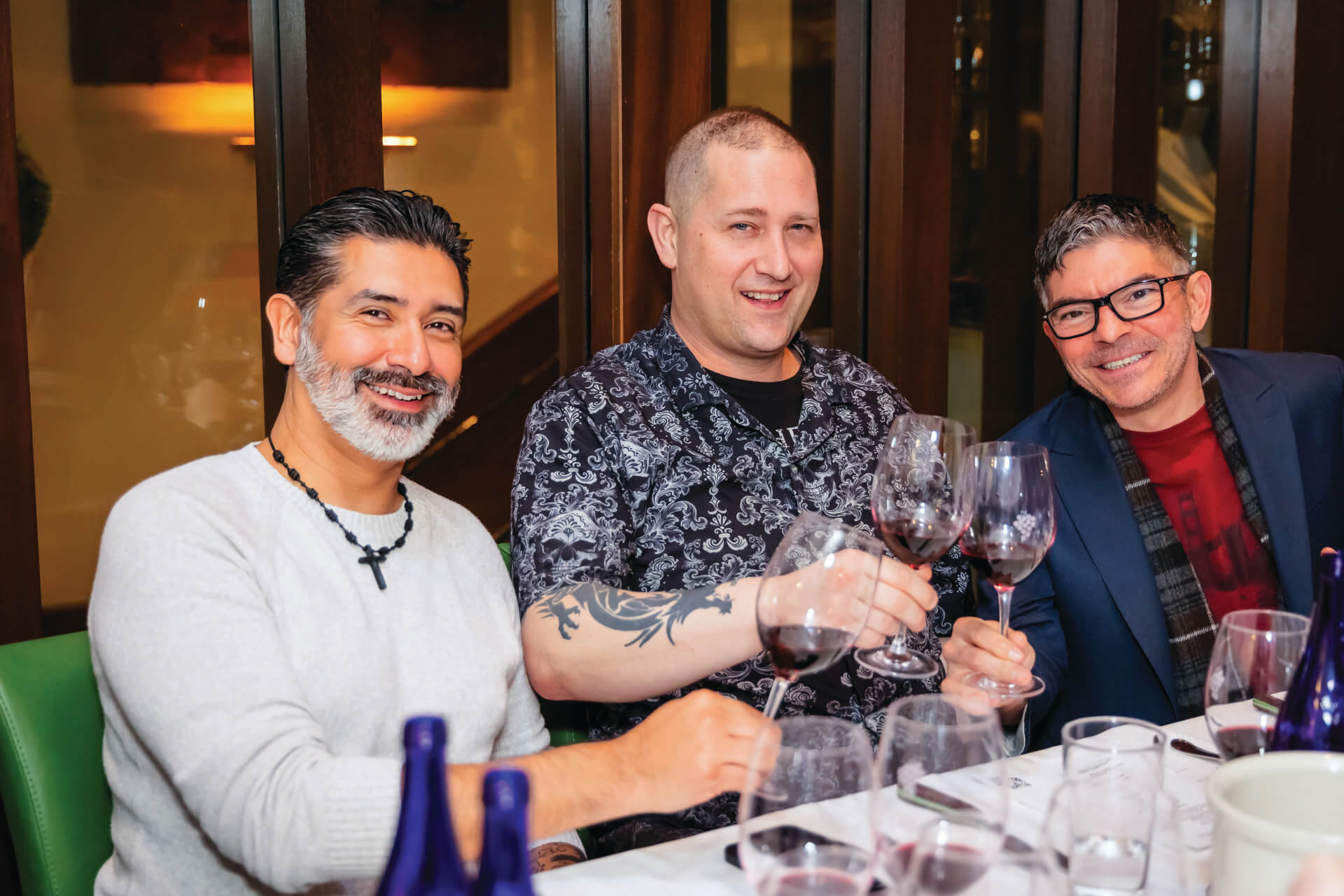
For the sommeliers in attendance, it was a night to remember. Jared Sowinski, beverage director at Uptown Projects in Phoenix, Arizona, relished pairings such as The Four Graces Pinot Noir and steak tartare as well as the chance to discover “lesser-known bottlings from familiar labels, like PreVail West Face from Ferrari-Carano.” PJ Alexander, sommelier at Somerset Club in Boston, Massachusetts, remarked that “a highlight was being able to contrast and compare a big chunk of the Foley portfolio in a dining environment”; he singled out the “superb” Mt. Difficulty and the Chateau St. Jean, “which has been making a comeback since Foley purchased it in 2021 with a plan to restore its reputation to its former glory. It’s well on its way.” Bretton Lammi, director of beverage at Prime Hospitality Group in Indianapolis, Indiana, appreciated “the opportunity to experience side-by-side differences in terroir in one portfolio—for example, the well-roundedness of the El Pino Club Russian River Valley Pinot Noir, Mt. Difficulty’s really bright fruit, and The Four Graces’ earthiness.”
But the most popular aspect of the tasting was the virtual vineyard tour. As Alexander put it, “Being able to skydive into the different regions was awesome!” Lammi agreed: “It was key to seeing how nearby sites can produce such distinctly different wines, like the Foley Johnson from Rutherford and the Silverado from Stags Leap. Being virtually transported from place to place was really unique and eye-opening.”