

by Kate Newton
Anyone who’s set foot in Paso Robles in recent years with the intent of exploring its ever-expanding wine scene has likely heard the phrase “Cab is king” bandied about; they’ve also likely paid a visit to at least one of the major producers that have distinguished themselves as the heavy hitters helping to elevate Paso’s profile on an international scale. But if they’ve delved beneath the surface of what this pillar of Central Coast winemaking has to offer, as I did on a recent visit, they’ve found there’s much more than meets the eye—and plenty to pique the palate of every type of wine drinker. Read on for a roundup of some boutique producers carving their own niche in the region.
Calcareous
Vineyard
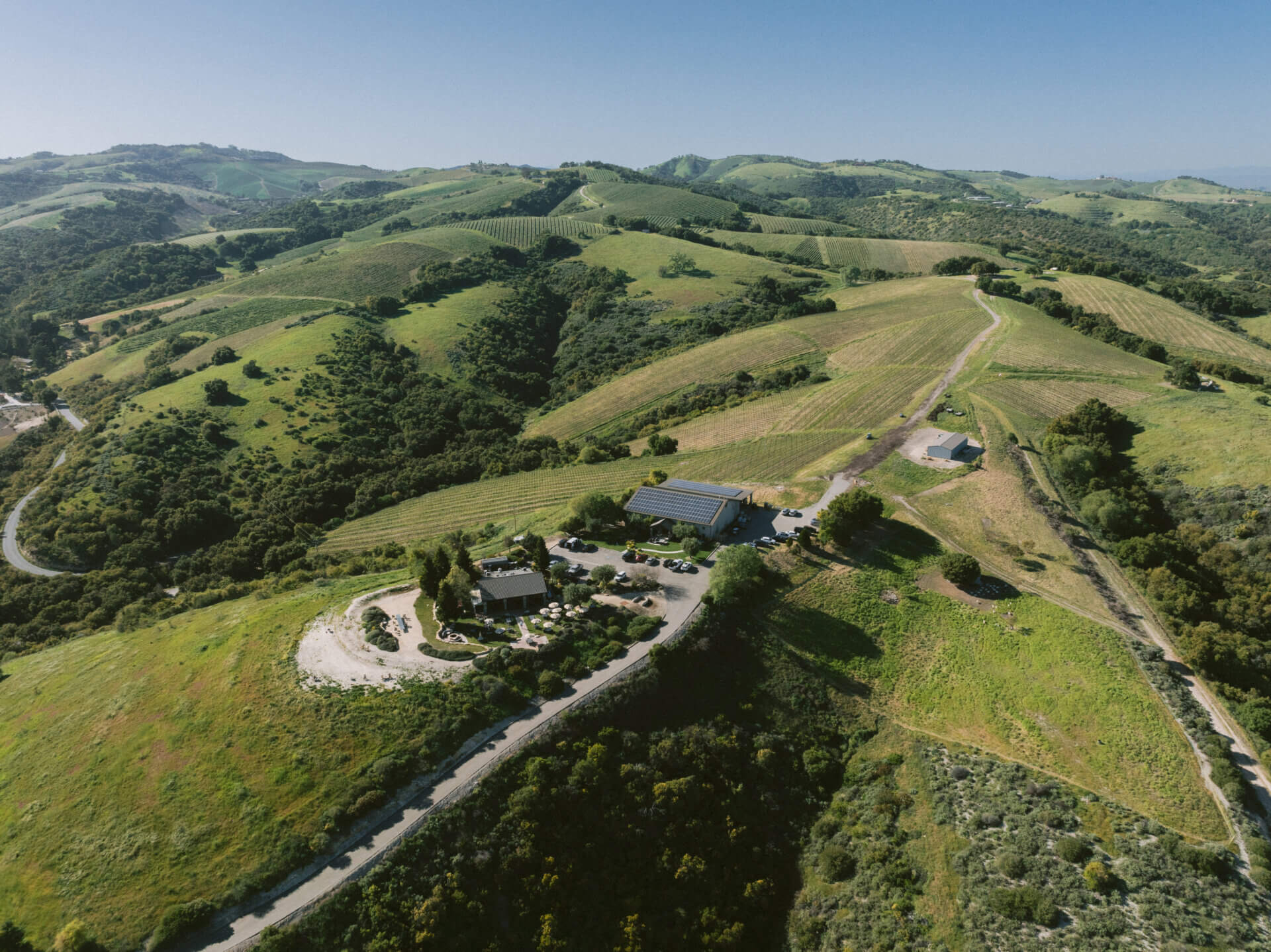
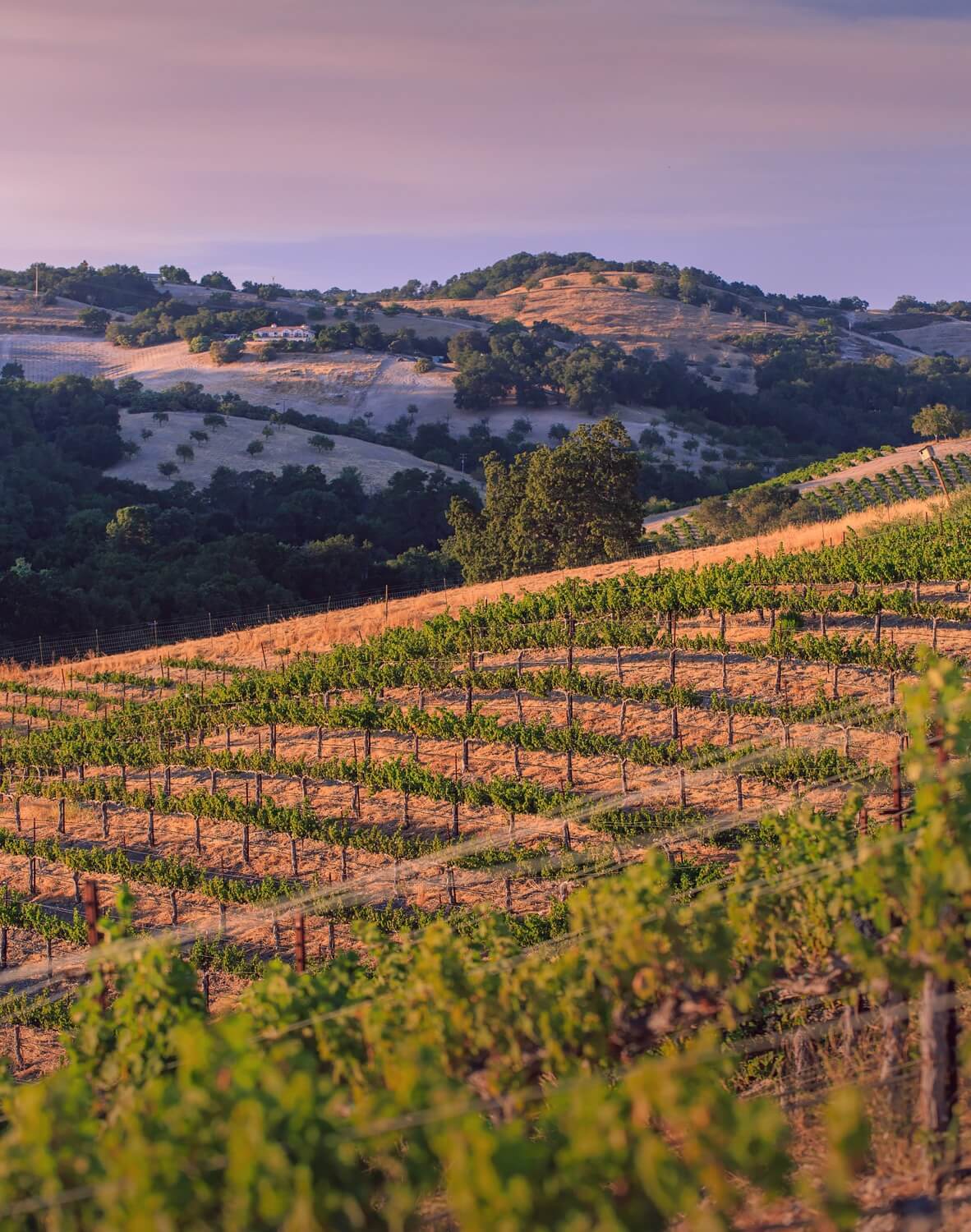
Set atop a hill at 1,800 feet above sea level on Paso Robles’ west side, Calcareous Vineyard is a destination for the wines it crafts with fruit primarily grown in its two estate vineyards and pairs with its seasonally driven culinary program. It claimed the name Calcareous for its brand to reflect the region’s famed limestone-derived soils long before most were aware of the role this distinctive geology plays in the character of the wines—but that has certainly changed as Paso’s popularity has soared. “If you look at our pre-2015 wines, there was a phonetic spelling on the back,” says Jason Joyce, who’s marking his 15th year as Calcareous’ winemaker. “Now, I say half the people that come up here know exactly what that word means.” It’s a reflection of how consumer tastes and education levels have evolved as they embrace drier, more nuanced expressions abundant in acid and tannin that are built for enjoying with food: “It’s a good feeling right now [that] the people who are coming here want much more complex wines, [and] we can produce those,” he adds.
While Calcareous produces a range of reds with Bordeaux and Rhône varieties—among them its well-balanced and velvety York Mountain Cabernet Sauvignon and its rich yet refined Moose, a Syrah-dominant blend that’s an homage to late founder Lloyd “Moose” Messer—Joyce has established himself as a white wine specialist, incorporating the use of concrete eggs for fermentation and aging to impart a fresh character and soft mouthfeel in wines like the stone fruit–driven Lily Blanc, a blend of Grenache Blanc, Roussanne, and Picpoul Blanc. With an annual production of 9,000–12,000 cases a year depending on vintage conditions, Calcareous embodies “the beauty of a boutique winery [in] that we’re allowed to be vintage-driven,” Joyce says, adding, “The season dictates what my job is. . . . It’s a deeply human experience, and I hope people get that from our wine.”
Dilécta Wines
Dilécta Wines has a decidedly family-owned feel: Situated on 11 acres off a quiet segment of Vineyard Drive in the Adelaida District sub-AVA, it’s run by mother-and-son team Paloma Bilson and Andre Minassian, the latter of whom oversees the annual production of roughly 3,000 cases that are largely sold direct to consumer, through their wine club, and at their tasting room. The hearts that ubiquitously appear on their striking labels featuring both Bilson’s and local illustrator Betty Wick’s artwork are a nod to the inspiration behind the winery’s name—a play on the Latin word for “beloved”—and a charming reflection of the labor of love that is the Dilécta portfolio.
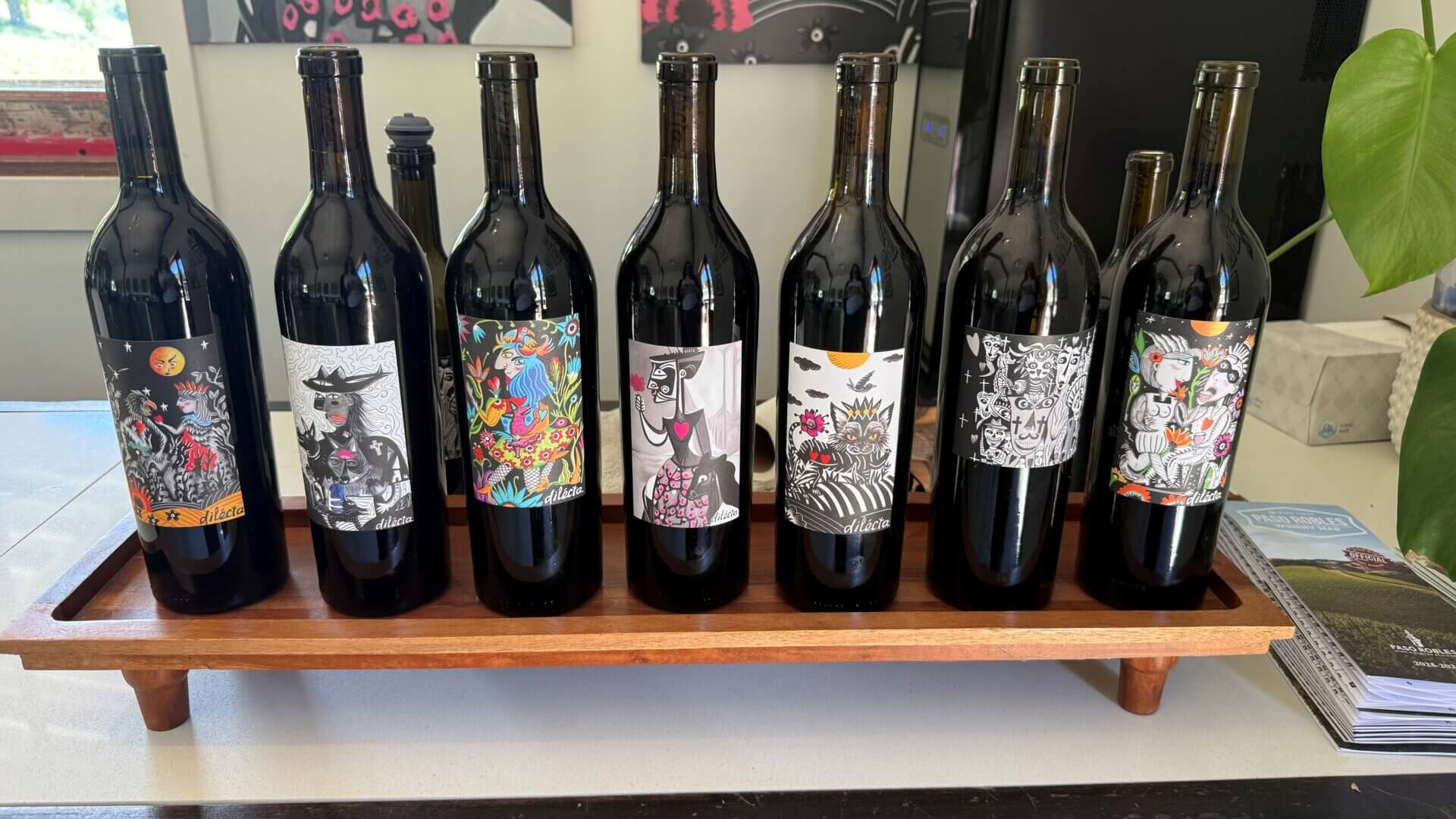
“The first Paso wine I tasted, it was like [something] out of a movie. This is what real wines taste like?” recalls Minassian, who over the past several years has developed a house style that often favors the spice character and “green essence” that whole-cluster fermentation yields in wines like the Tiller, a 100% Grenache with notes of strawberry, dried fruit, and leather. “[With] the tannins, you can feel it almost hugging your tongue,” he says. “It doesn’t speak to everyone, but the ones that it does speak to, people love.” Other standouts include the “off-the-wall” and incredibly aromatic 2020 Unorthodox, a blend of Syrah, Grenache, Carignan, and Graciano that “hits every part of the palate while still staying nice, light, and acid-driven,” and the 2019 Zurita, a 100% Zinfandel that’s approachable and surprisingly light on its feet for being over 16% ABV. The winery also produces several expressions featuring Paso Robles’ signature Bordeaux varieties, including the Devotion, whose 2021 vintage is a blend of 50% Cabernet Sauvignon, 25% Malbec, and 25% Petit Verdot, and the Infatuation, a 100% Cabernet Sauvignon.
Later this year Dilécta will open a new social club and event center equipped with a commercial kitchen that will enable it to turn its already warm sense of hospitality up another notch. It all amounts to the start of “a family legacy. And, you know, hopefully I can have enough kids to work the vineyard one day,” Minassian says with a laugh.
Rava Wines
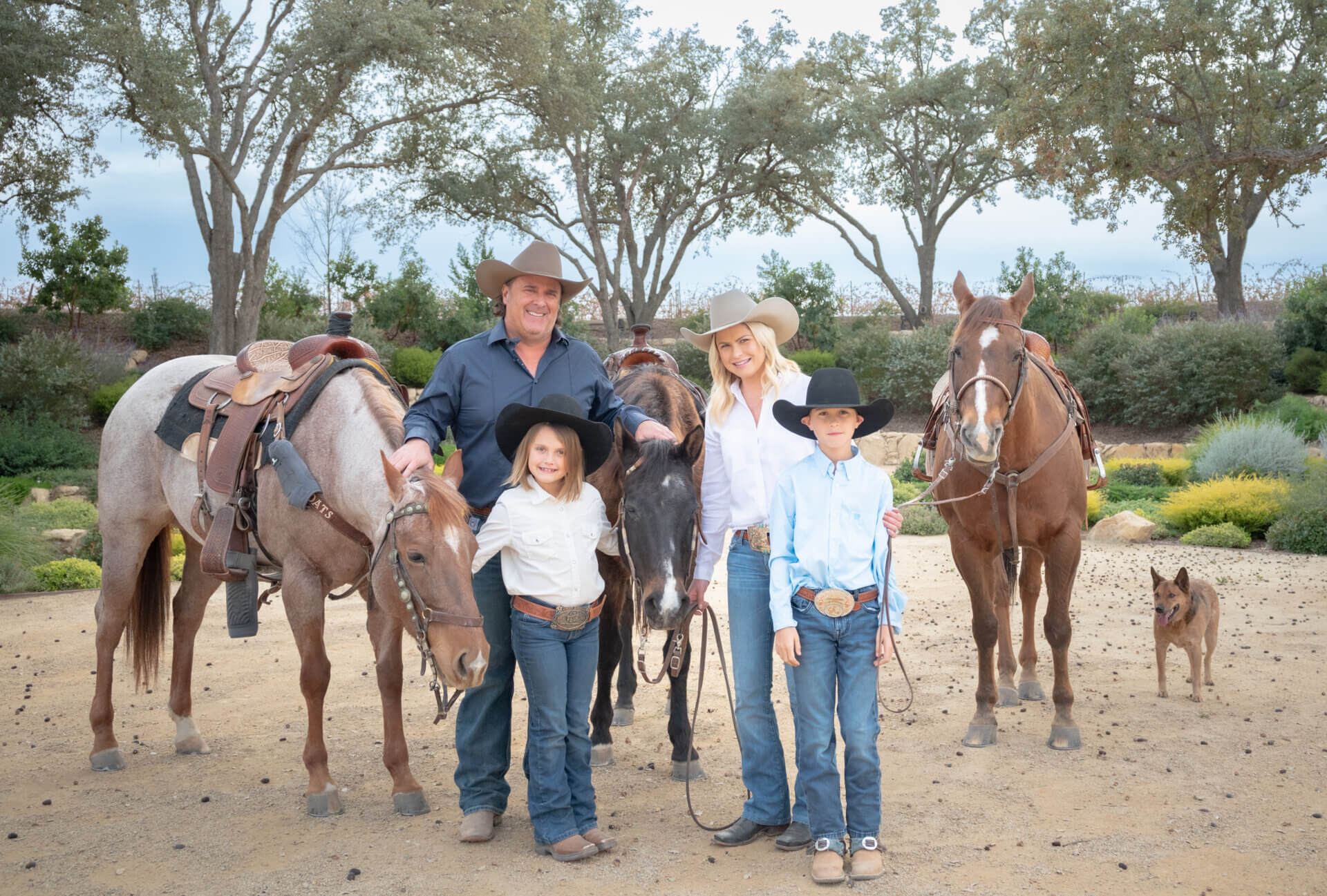
Another family legacy in the making can be found at Rava Wines, with ample room to grow: Third-generation farmer Chad Rava and his wife, Lauren, currently cultivate roughly 25 different varieties, including traditional Bordeaux grapes Cabernet Sauvignon, Merlot, and Petit Verdot, across 1,200 acres both at its main estate in Paso’s El Pomar District and in Monterey County. As they renovated the El Pomar property—formerly an Arabian horse ranch—they realized its potential as a wedding and events venue, and given their access to cool-climate varieties from Monterey, a simple question led them to a new calling, according to Lauren: “What better to pair celebration with than sparkling?” The category now comprises roughly 80% of Rava’s portfolio in the form of nearly 20 mostly small-lot SKUs made in the méthode Champenoise, and the winery leases out its specialized equipment to other brands seeking to make a similar leap. “We’re trying to make sparkling in Paso something serious,” notes Lauren. “It matches the weather and it’s so food-friendly.”
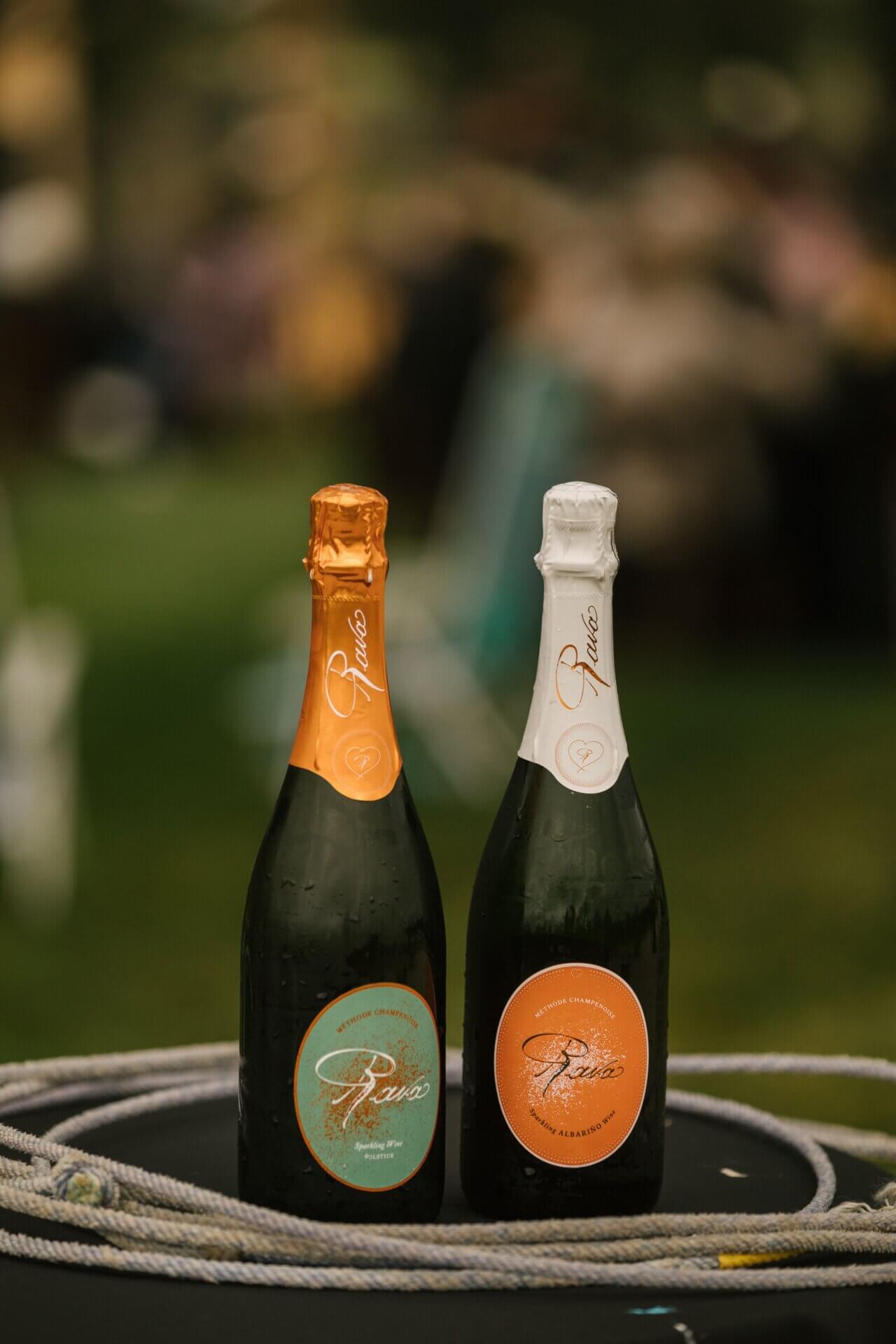
While sparkling winegrowing can be a challenge in Paso’s warm climate, hardy grapes like Negroamaro, Pinot Blanc, and Pinot Meunier are picked early so that they retain the high levels of acid necessary to achieve balance in the wines, according to winemaker Sherrie Holzer. With such a versatile toolkit to draw from and no strict regulations in terms of blending, “we have the luxury to experiment” and be selective about which wines they want to produce in a given year, Holzer adds, noting that Rava’s status as a DTC- and tasting room–driven brand also shields it from the whims of the wholesale market.
As a result, Rava’s wines range from the more recognizable (such as the full-bodied yet crisp Grenache Blanc, the alluringly aromatic Cinsault Rosé, and the softly tannic still Reserve Cabernet Sauvignon) to the more esoteric (like the Lambrusco-style Sparkling Negroamaro), but they’re crowd-pleasers regardless of which camp they fall under. Attracting a clientele as effervescent as their wines has been an added benefit of building a reputation for quality sparkling: Jokes Lauren, “No one’s angry when you’re opening bubbles!”
Cass Winery
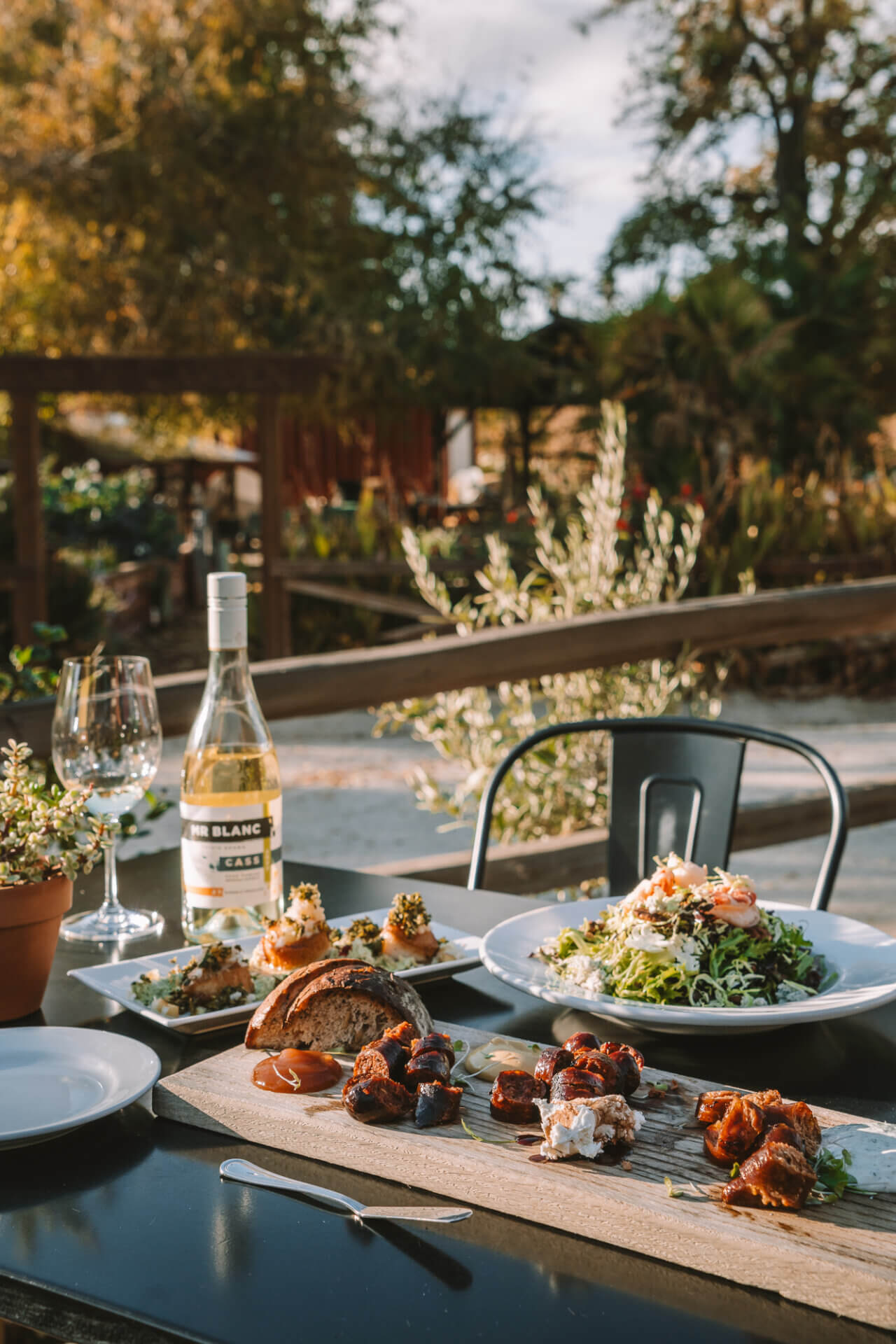
Just north of Rava in the Geneseo District is Cass Winery, which recently celebrated its 20th anniversary and cultivates a dozen Bordeaux and Rhône varieties on its 145-acre estate vineyard, selling roughly two-thirds of its California Certified Sustainable fruit and channeling the rest into its annual production of approximately 12,000 cases. Its winemaker, Sterling Kragten, gained experience in New Zealand and at fellow Paso producer JUSTIN Winery but was drawn to Cass for the “flexibility and freedom,” in his words: Just two years after Kragten joined Cass, it won Winery of the Year at the 2015 Central Coast Wine Competition, which earned him the ultimate endorsement from owners Steve Cass and Ted Plemons. “[They told me], ‘Oh, you can do whatever you want, as long as the wine turns out,’” Kragten says with a smile, adding, “So I’m always experimenting with different ways of making some of the wines. A lot of it is trying to improve, but it’s a little selfish, because . . . if I tried turning out the same thing every year, I’d go crazy.”
Considering Cass has claimed the title twice since Kragten assumed the role of head winemaker, his variable approach has undoubtedly been a success. The recognition has only prompted him to probe even deeper into the fascinating characters that his experiments with such techniques as small-lot blending, barrel toasting with lava rocks, and using unconventional aging vessels like Russian oak and acacia can yield in his wines. The ultimate destination of every adventure, though, is elegance: “I want [the wines] to be approachable to pretty much everyone but [something] that the highest-end somm will appreciate as well,” he says. Among the wines that embody that style are the 2022 Reserve Cabernet Sauvignon—a robust blend of 85% Cabernet Sauvignon, 6% Merlot, 5% Petit Verdot, and 4% Syrah—and Kragten’s personal “go-to,” the Oasis Rosé, a blend of 63% Mourvèdre and 37% Grenache; for the 2024 vintage, Kragten used the stabulation technique often used in Provence for the first time on the Grenache portion, heightening its aromatics while emphasizing the wine’s creamy texture. When he’s not carrying out experiments in the cellar or the vineyard, he has plenty to keep him busy: “I’ll just go hang out behind the bar and pour for people—I think you see that a lot around Paso.”
ALLEGRETTO WINES
A fixture on the local hospitality scene since opening in 2015, Allegretto Vineyard Resort is adorned with hundreds of eye-catching artworks and artifacts gathered by owner Douglas Ayres during his global travels. Yet from the moment guests arrive, the resort—home to not only the tasting room of Allegretto Wines but also one of the producer’s three
biodynamically farmed and California Certified Organic Farmers estate
vineyards—immerses them in the spirit of Paso Robles.
Don Burns, formerly of Saxum Winery and founder of Turtle Rock
Vineyards, recently joined Allegretto as winemaker and now leads the
winery with a focus on continued quality. “We are excited about the future and where Don Burns’ excellence in producing award-winning wines will take us,” says tasting room manager Rory Longley. Having farmed its estate vineyards for over a decade, Allegretto crafts wines rooted in its commitment to biodynamic practices, highlighting a distinctive, terroir driven approach that allows the character of the vineyards to shine through in its small-lot production.
Cabernet Sauvignon will remain a cornerstone of Allegretto’s new vision, and tasting a pair of expressions from the on-site Allegretto Vineyard, located in the Estrella District on the region’s northeast side, and the westside Willow Creek Vineyard is a lesson in how much a difference an 11-mile distance can make. More restrained and “smoother than your traditional Cab,” according to Longley, the 2021 vintage from the latter site hails from dry-farmed calcareous soils and derives flavors of dark plum, black currant, and cardamom from ample sun exposure; the well structured 2021 Delle Vita Cabernet Sauvignon, meanwhile, draws its “bigger and bolder,” Bing cherry–tinged character from vines that struggle in higher temperatures and sandy loam soils that see minimal irrigation.
The region’s dramatic diurnal swings and diverse microsites are what make the Allegretto Rosé, a 100% Malbec from the cooler estate vineyard that’s crafted using the saignée method, such a standout in
the tasting room. “More people are looking for rosés year-round as an alternative to bold red wines. We’re proud to offer an estate rosé as part of our portfolio of single-varietal and blended red and white wines,” says
Longley, reinforcing that Allegretto is nothing if not a gracious host.
Continental Wine Collection
Undergoing a similar transition period is Continental Wine Collection, home to Broken Earth, whose wines range from roughly $20 to $55, and the highly allocated CV Wines,
a luxury label with a trio of offerings—a single-varietal Cabernet Sauvignon and Cabernet Franc and a red blend named Studium—only made in exceptional vintages. Later this year, its tasting room is set to open at its new winery in the Templeton Gap District as the 45 acres of vines on that property join the family-owned company’s total vineyard area of just under 800 acres on its Continental Vineyard home ranch in the Estrella District, originally planted in 1973. “Back in the ’70s, [you had] the big influx of people that were planting fruit in Paso Robles. Our vineyard was the largest-scale commercial vineyard . . . and winemakers throughout California would try all the different varieties [to] see what [the region] was capable of. We’ve continued on in that tradition today,” Continental Wine Collection general manager and vice president Justin Tooley explains. “We have over 25 different varieties, hedging for the future” with not only the new facility but the recent completion of a full replanting of Continental Vineyard.
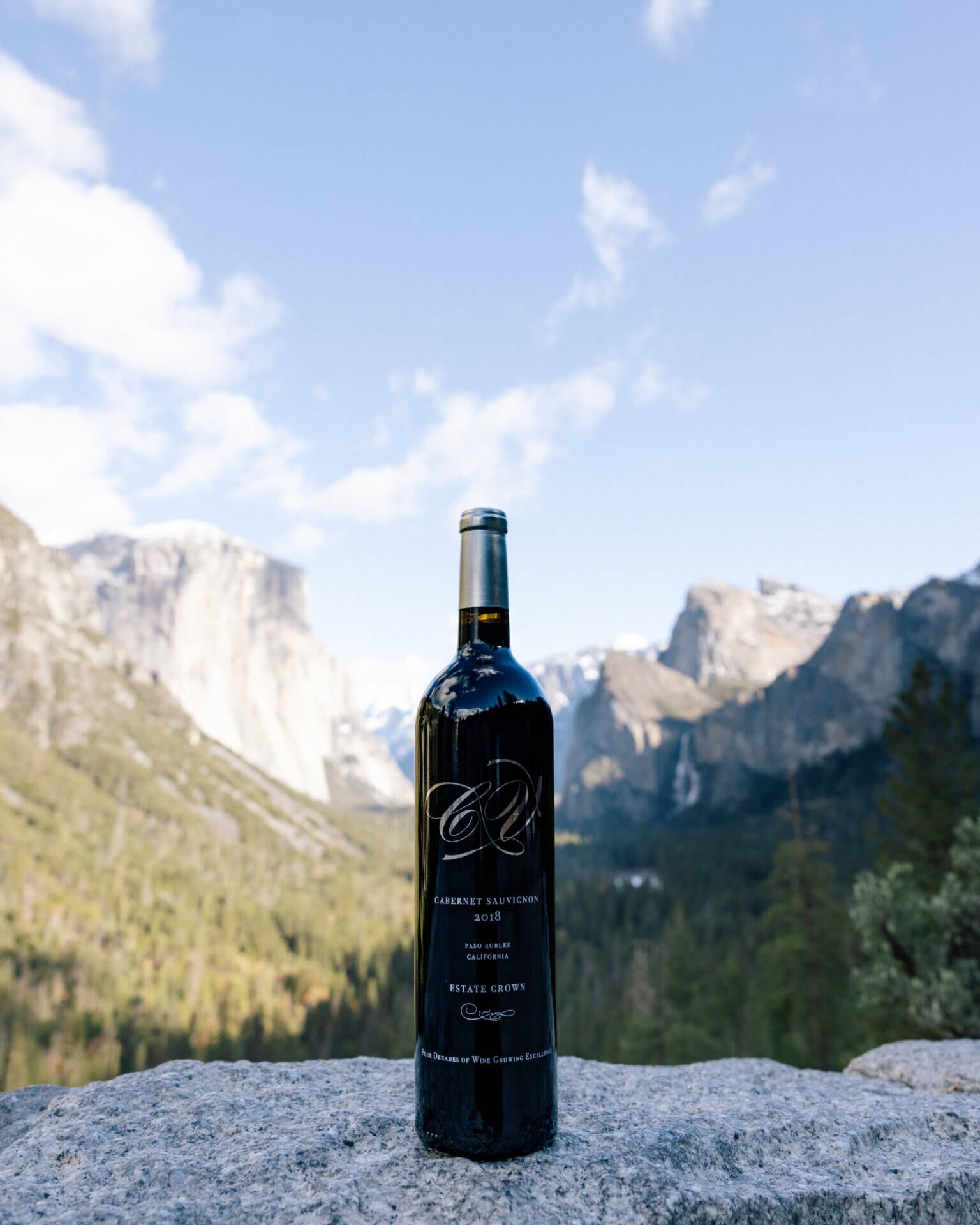
In addition to heat-resistant grapes such as Touriga Nacional and Tempranillo, perhaps the variety that stands to benefit most from that overhaul is Cabernet Franc; in production winemaker Tyler Kollmann’s opinion, the deep, dark-fruited CV Reserve Cabernet Franc “is the best thing we make. . . . Traditionally, Cab Franc has some of those green characters, but Paso Robles is one of those really unique places that can just get anything ripe, so it really thrives here.” Being entirely estate-grown also ensures complete control over the precise harvest windows ideal for each variety: “I can’t even quantify, really, how important that is to our winemaking,” Kollmann says.
As Paso’s wine scene continues to expand, Kollmann is all too aware that “you really have to be on your game to stay competitive,” but he believes the region’s approachability remains its strength: “You [have to] meet people where they’re at, [and] I think that’s encompassing of our entire portfolio of brands,” he says. “There’s something in it for everyone.”