

by David Furer
Amid an increase in interest among trade and consumers as well as a changing climate, the rise of relatively obscure grape varieties is fully emergent in the United States. A case in point is the Central European red-skinned variety known in Austria as Blaufränkisch, in Germany as Lemberger, in the Czech Republic as Frankovka, in Hungary as Kékfrankos, and in Slovenia as Modra Frankinja, to name just some of its monikers.
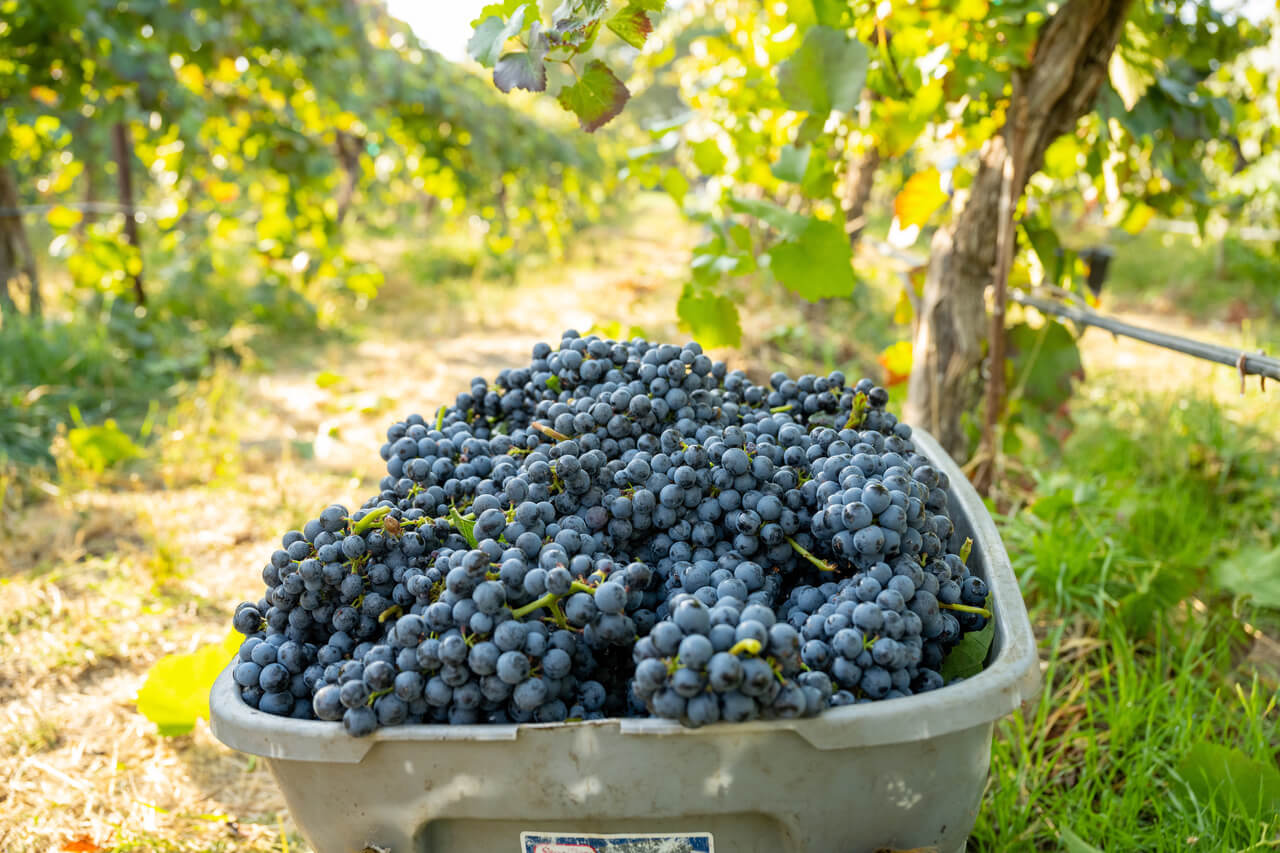
In 1976, the grape arrived in the U.S., specifically Washington’s Yakima Valley, where Kiona Vineyards and Winery co-founder John Williams planted Lemberger on his Red Mountain property as a hedge against the susceptibility to frost experienced by other varieties planted in the region’s early days; he went on to produce the country’s first commercial bottling with the 1980 vintage. Today, Williams’ grandson J.J. oversees Kiona and those original vines. “Lemberger is experiencing a bit of a resurgence because wine salespeople are realizing that a fruit-forward wine not requiring expensive oak élevage, with a built-in SEO that you can release to market at a $20 SRP, is, in 2025, a feature and not a bug for sommeliers wishing to flex their nerd muscles,” says J.J. “Its liquid intrigue is important because there’s a lot of competition out there.” Noting that his family has pushed Kiona’s rock up a hill for 40 years, he claims that these days his phone is ringing off the hook with producers wanting to purchase Lemberger from Kiona as the largest grower of the grape in the U.S.; its 13 acres of plantings represent 4.8% of its 272 acres and 8% of its wine sales.
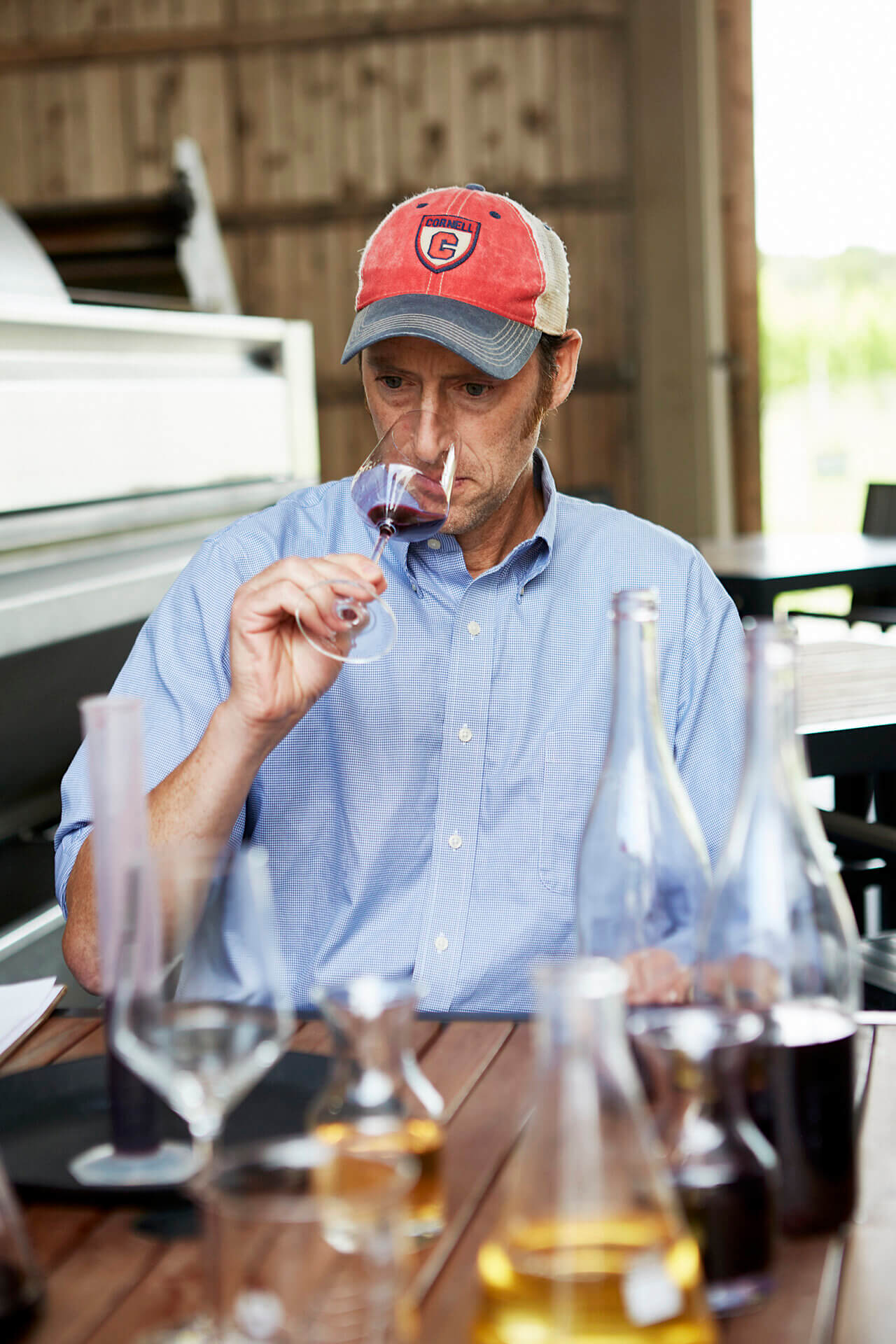
“One of my favorite things about Kiona . . . is [its] history,” says Maren McGowan, owner/general manager of Dovetail Joint Restaurant in Richland, Washington. “We’ve been selling [its Lemberger] for about five years, and it’s such a great way to start a conversation with guests about Red Mountain wine.” McGowan carries many other wines from producers who source grapes from Kiona, but the winery’s own Lemberger “is a staff favorite because of its versatility in pairing with our menu, and I love to have it as a glass pour for that very reason,” she says.
In 1999, Hermann J. Wiemer planted his first Blaufränkisch vines at his namesake estate in the Seneca Lake area of New York’s Finger Lakes region from material that had crossed the border from Ontario, Canada, where it was initially propagated at Cave Spring Vineyard by Hermann Weis of St. Urbans-Hof in Mosel, Germany. Winemaker/partner Fred Merwarth joined Hermann J. Wiemer in 2001; he too praises the grape’s hardiness in cold weather and the ease with which it grows as compared to Pinot Noir, noting that “it rivals Cabernet Franc for durability.” Meanwhile, Merwarth’s partner, Oskar Bynke, holds hope for its future on the marketplace: Though 95% of the winery’s sales are currently DTC, with the 2025 vintage, he plans to direct 50% of its Blaufränkisch production to wholesale channels, thereby making it accessible to the on-premise sector.
Vintner Morgan Beck has worked with Blaufränkisch since joining Johan Vineyards in Oregon’s Willamette Valley in 2015. “There’s always talk in Oregon about Pinot Noir, so every other red wine ends up being compared to it,” she says. “[But] it’s fun to have another variety that our customers can connect to and be comfortable with [and] that expresses another dimension of flavors and, often, [of] structure.” Beck agrees that it requires less attention in the vineyard than does Oregon’s favorite red variety and often expresses itself with greater versatility as well as balanced acidity. “It asks so little of us . . . while providing a wine that shows itself and its place with purity in any type of vintage,” she adds.
“I love introducing guests to new varietals they may not be aware of yet,” enthuses Raffaele Stuparitz, sommelier at Mizuna in Denver, Colorado. “Blaufränkisch’s sophisticated yet friendly darker-fruit profile and pronounced spicy note produce an elegant expression that can be compared more to Pinot Noir . . . and we’ve perfectly paired Johan’s [version] with quail, oyster mushroom, romanesco, and cherry jus.” Also in Colorado, Madison Church, wine director at Breckenridge restaurants Rootstalk and Radicato, finds that the variety’s “balance of floral, dark, plummy fruit with crunchy, herbal tannins makes it super versatile with our whole summer menu, though we specifically like it with a pork belly with plums that’s currently on our tasting menu.”
Kelsey Glasser, owner/sommelier of Arden in Portland, Oregon, is equally charmed. “Austrian varietals thrive in Oregon’s cool climate, and [Johan’s] Blaufränkisch is one of the standouts. [Coming from] the Van Duzer Corridor, where the whipping winds thicken the skins and give it beautiful structure and zipping acidity, [it’s] more black-fruited while still being light and elegant enough [for] when guests want to drink local but also change it up from Pinot,” she says. Glasser likes to pour it alongside Arden’s grilled pork chop with huitlacoche, pickled onions, crema, and corn shoots, asserting that “the earthiness of the huitlacoche really brings out the forest floor in the Blau, with the pickled onions popping its acidity. . . . [But] I also have been using it in my weekly Oregon wine tastings as an example of the creativity and diversity that’s now so prevalent here.”
In Traverse City, Michigan, Trattoria Stella owner Amanda Danielson recently showcased Johan’s Blaufränkisch at a tasting class along with versions from New Jersey’s Beneduce Vineyards and Traverse City’s own Left Foot Charley. In her view, “Blaufränkisch is one of the most versatile reds at the table—bright, spicy, structured, and endlessly food-friendly. . . . It’s just as comfortable with poultry or game as with rich vegetables or braised meats.” The veteran restaurateur regularly carries bottlings from Left Foot Charley and other Michigan producers, including Shady Lane Cellars on the Leelanau Peninsula. The former’s Single Vessel Series, she says, “is excellent, offering three examples from the same vineyard, each fermented in a different vessel: amphora, puncheon, [and] barrique. Guests’ curiosity turns quickly into loyalty. . . . [They] may not know the name at first, but once they taste it, they remember—and order again.”
Left Foot Charley co-owner Bryan Ulbrich first planted Blaufränkisch in 2001. It wound up thriving, “so we planted a lot more of it, leading to it now being one of Northern Michigan’s most-planted red grapes,” the winemaker explains, appreciative of the “opportunity to allow a lesser-known red wine to do all the talking over a ‘grander’ variety from France or elsewhere.”
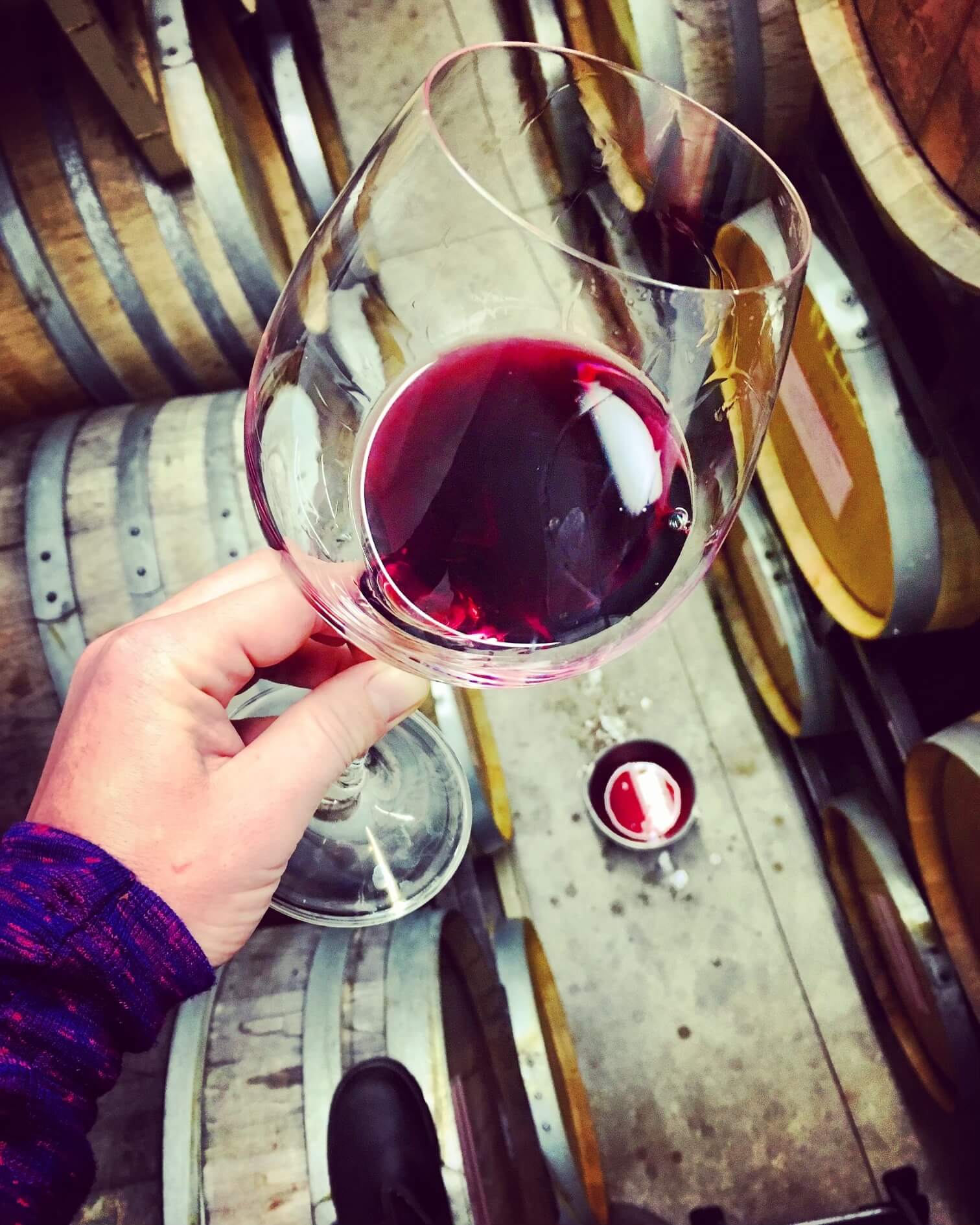
Owner/winemaker Mike Beneduce of the aforementioned Beneduce Vineyards describes his Blaufränkisch wines to newcomers as a “mix between Pinot Noir and Syrah, with a fresh, spicy brambly-fruit character.” Like Ulbrich, the fourth-generation farmer makes three distinct versions: a still dry rosé, a rosé pét-nat, and a classic dry red, all sourced from a 2-acre block where he’s cultured a native yeast to use in his stainless-steel fermentations.
In short, there’s a place for domestic Blaufränkisch/Lemberger on your wine list: Thanks to its cost-effectiveness, food-friendliness, and attraction for open-minded guests, it’s long overdue for its time in the spotlight.