

by Marija Jovanovic
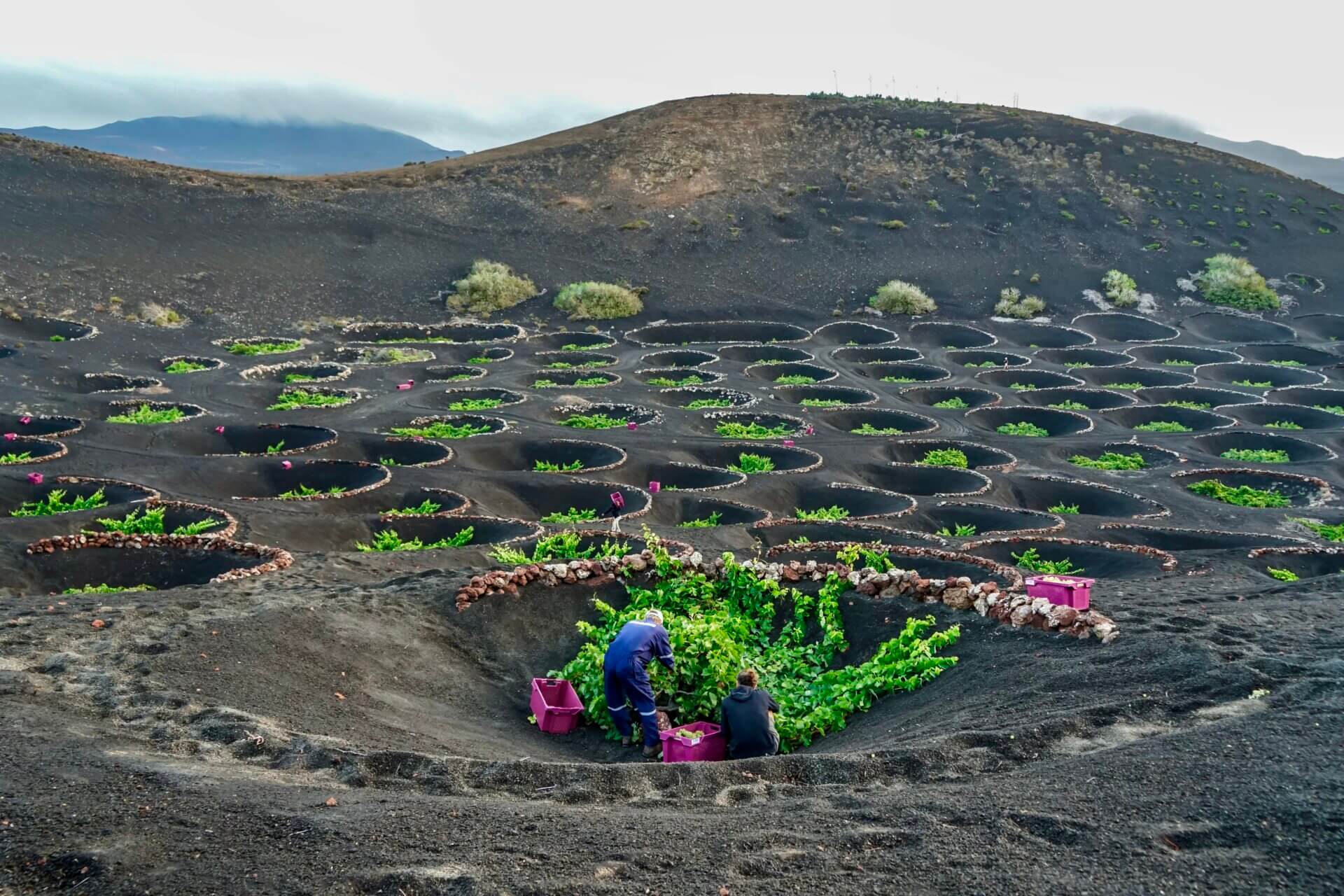
Lanzarote, often called the Island of 1000 Volcanoes, is a place like no other. The remote Spanish territory, which is almost ten times closer to Morocco in North Africa than to mainland Spain, is one of the seven main Canary Islands that, along with the Azores and Madeira, belong to Macaronesia. It is the most southern wine region until you reach South Africa, and the vines here have acclimated to the tropical heat and the winds blowing off the Sahara.
Most of these vines are over 100 years old, and many date back to the 19th century. They struggle against the constant, salt-laden trade winds; negligible rainfall; and vast, barren lava fields covering nearly one-third of the island, in whose pure volcanic soils they grow. Here, each cluster is an act of resilience. All these challenges make Lanzarote wine unique—a spectacular and enchanting expression of place.
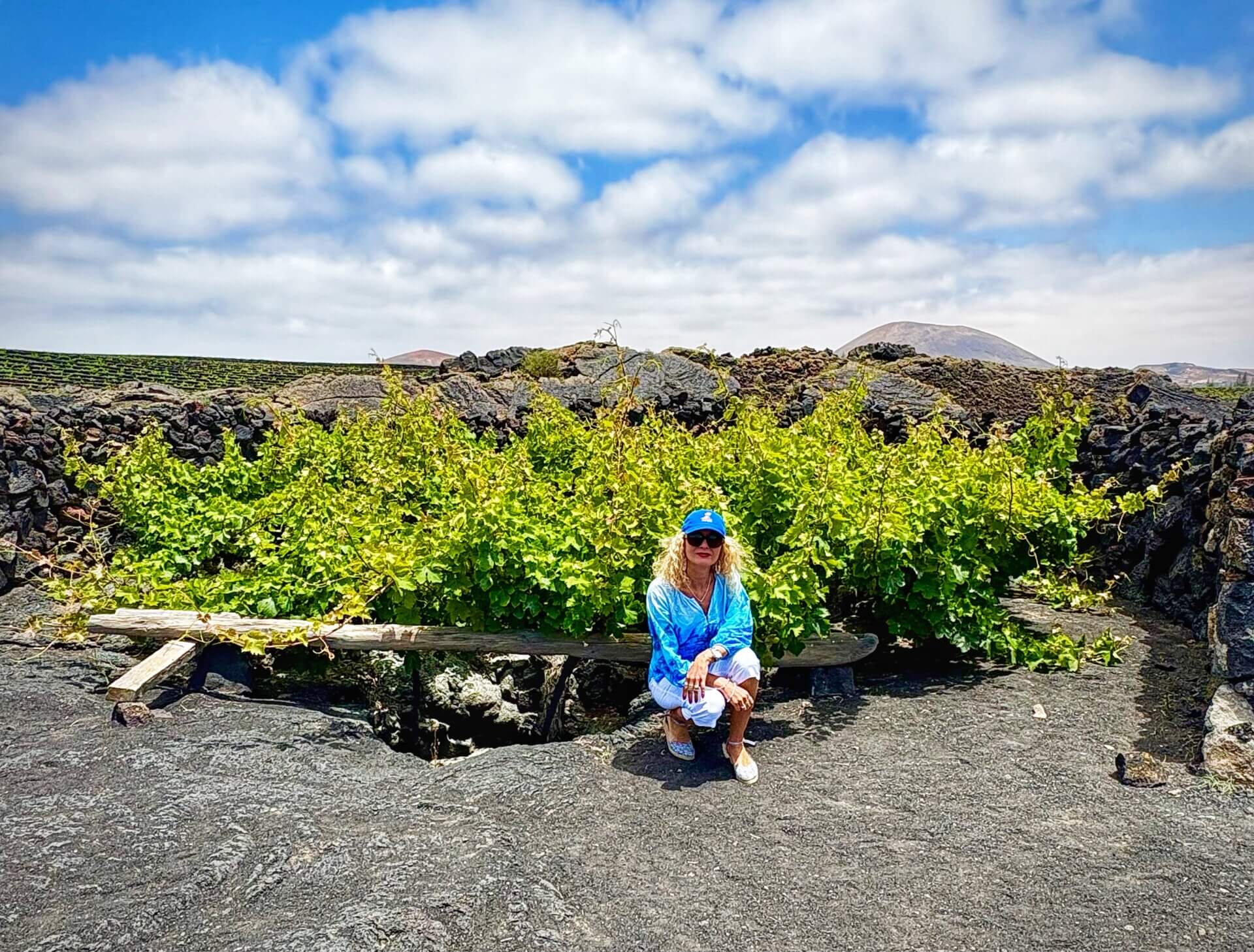
Lanzarote’s lunar-looking landscape and unique method of grape-growing date back to the 1730s, when the island experienced some of the most powerful volcanic eruptions in recorded history, lasting for six years and permanently reshaping its terrain. These eruptions deposited a layer of volcanic gravel-like ash or lapilli (locally known as rofe) across the island, which allows moisture (mostly from dew) to drain into the subsoils and prevents evaporation; without it, farming would not be possible. Vines are planted by digging 3-meter-wide and several-meter-deep pits (hoyos) where the nutrient-rich soil is found beneath the layer of inert volcanic rock. Semicircular walls (zocos) are built around the northeastern side of each vine as protection from the strong winds. This painstaking arrangement provides minimal yields of 100–150 hectoliters per hectare (less than one-quarter of the yield for Burgundy Grand Cru). Wines are made from predominately white varieties, namely Malvasía Volcánica, Listán Blanco (Palomino), Diego, and Moscatel de Alexandria, while the main red grape grown on the island is Listán Negro, supplemented by a few international varieties. The wines from Lanzarote in general show more savory than fruity character along with vibrant freshness and distinctive volcanic minerality.
An excellent way to begin to understand the history and winegrowing philosophy of the island is by visiting El Grifo, the oldest winery in the Canary Islands; founded in 1775, it’s among the oldest in Spain. Its estate vineyard still harbors vines that were planted in the 19th century, including a 175-year-old Moscatel vine. It has adapted these vines via pruning to produce a February harvest, the earliest in Europe, in order to avoid the summer heat waves and preserve freshness and salinity. Its newest offering, El Grifo Vendimia de Invierno, is a monovarietal Malvasía Volcánica born from five different plots; it has exotic aromas of jasmine, orange blossom, and guava as well as notes of fennel and savory volcanic minerality.
Jable de Tao, by contrast, is an exciting newer project on Lanzarote, recognized for producing extraordinary, terroir-reflective wines made by traditional methods exclusively from local varieties. Jable is a reference to the sandy-textured marine subsoils that allow the roots to dig deep for water—the counterpart to the aforementioned rofe, which protects the surface of the vineyard from evaporation. This combination of soils allows the vines to survive and produce minimal amounts of intensely mineral-driven wine. One not to miss is Chupadero, a Listán Blanco made from 100-year-old vines planted inside the caldera of an ancient volcano on weathered lava rich in iron and magnesium.
Casa Althay is another exciting discovery located in the heart of Lanzarote’s best-known wine region, La Geria. This producer is leading the way with wines from single parcels similar to Etna’s contrade. These are organically grown and unfiltered, capturing the true essence of Lanzarote. Parcela Avelina Listán Negro is a single-vineyard wine highlighting the site’s 200-year-old vines. It shows rose hips, hibiscus, and pomegranate along with intensely salty, savory volcanic character. Casa Althay makes a number of styles, including white, red, rosé, orange, and dessert wine.
Bodega Los Bermejos is a relatively large producer whose wines are widely available in the U.S; it makes wines of all styles, but of particular interest is its sparkling Rosado Brut Nature, composed of Listán Negro and Malvasía. Puro Rofe is a certified-organic producer whose Juan Bello label comes from century-old hoyos planted on the slopes of the Volcán de Juan Bello. The wine is naturally fermented, aged in neutral oak, unfined, and unfiltered. Other wineries of note include Bodega Erupción and Titerok-Akaet, but there are many more to discover via a friendly conversation at a local restaurant or wine bar.
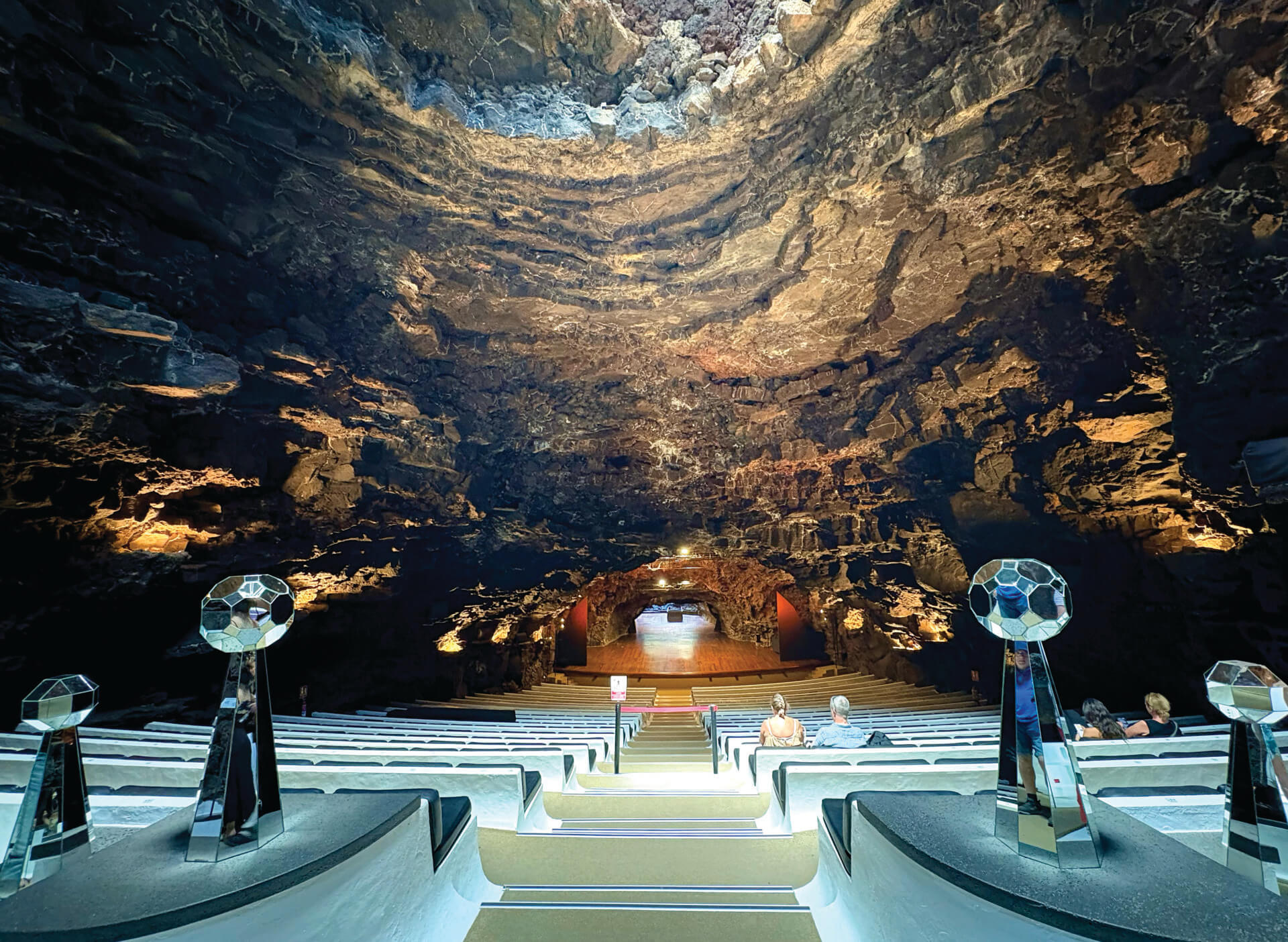
No trip to Lanzarote would be complete without exploration of the work of 20th-century artist César Manrique, whose creations have enhanced the extreme volcanic beauty of the island. He was known for transforming one of the world’s longest lava tubes into Los Jameos del Agua, a center for art, culture, and tourism complete with a swimming pool and a spectacular auditorium. He also built his own Volcano House directly in a lava field, with his studio in a volcanic bubble. His work left such a special mark on Lanzarote that an illustration of his is the official Consejo Regulador seal for the DO. Seen on each bottle, it depicts the always-present sun shining on the volcanic slopes of Lanzarote.
As to be expected, Lanzarote’s wines have evolved to perfectly match the local cuisine, from goat, rabbit, and an impressive range of seafood (including grouper and parrotfish) to goat cheese that’s often smoked and covered in paprika or gofio (toasted corn flour). The MICHELIN-starred restaurant Kamezí is the perfect place to experience the flavors of the island, featuring the best products from both marine and volcanic environments. Its avant-garde menu is created with a respect for traditional recipes, as seen in its trio of tapas (called enyesques on the islands) featuring eel, rabbit, and pork. Another eye-opening experience can be had at the restaurant El Diablo, designed by Manrique and built over a volcanic vent; its dishes are cooked using the natural heat coming from a magma field located 3 kilometers below. Popular traditional dishes include papas arrugadas, small potatoes boiled in saltwater and served with mojo rojo and mojo verde, as well as Canarian sancocho, a flavorful stew with salted fish and sweet potatoes.
Lanzarote is a one-of-a-kind place where sustainability is survival, thanks to practices such as manual farming and the preservation of biodiversity. It is defined by the resilience of the winegrowers who overcame the incredible challenges formed by the island’s extreme conditions to create exceptional wines while maintaining a strong connection to and respect for their surroundings. It doesn’t take much time to realize that one visit is not enough.