

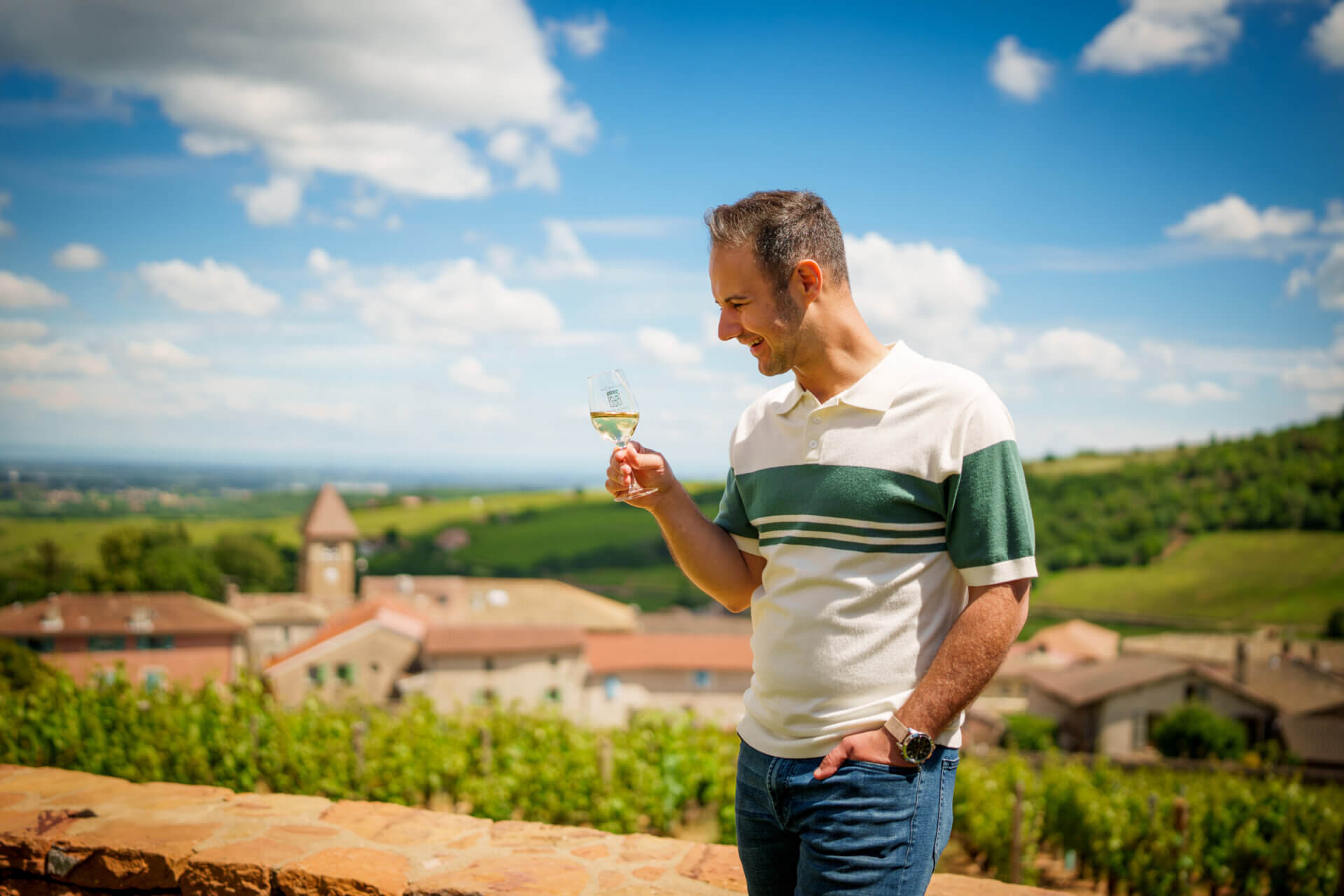
When I announced that my TV show V is for Vino would be filming an episode in Bourgogne, at least a dozen people messaged me to ask if I would be visiting Domaine de la Romanée-Conti (I wouldn’t be) or countless other big-name Côte d’Or domaines. It brought into focus a bit of a problem: Bourgogne is misunderstood by consumers.
The region is seen in the same light as Napa Valley, Bordeaux, or Tuscany in that it’s often defined by its most famous names, collectors, auctions, and perceived inaccessibility, both in price and comprehension. (Those of us in the industry who learned about Bourgogne early on in our wine education can attest to this struggle, forced as we were to memorize Grand Crus, complicated maps, and top producers.) However, my recent visit showed me that viewing Bourgogne through this lens doesn’t do the region justice while reminding me that we could all better explain it to consumers, helping them to fall in love with it the same way we professionals have.
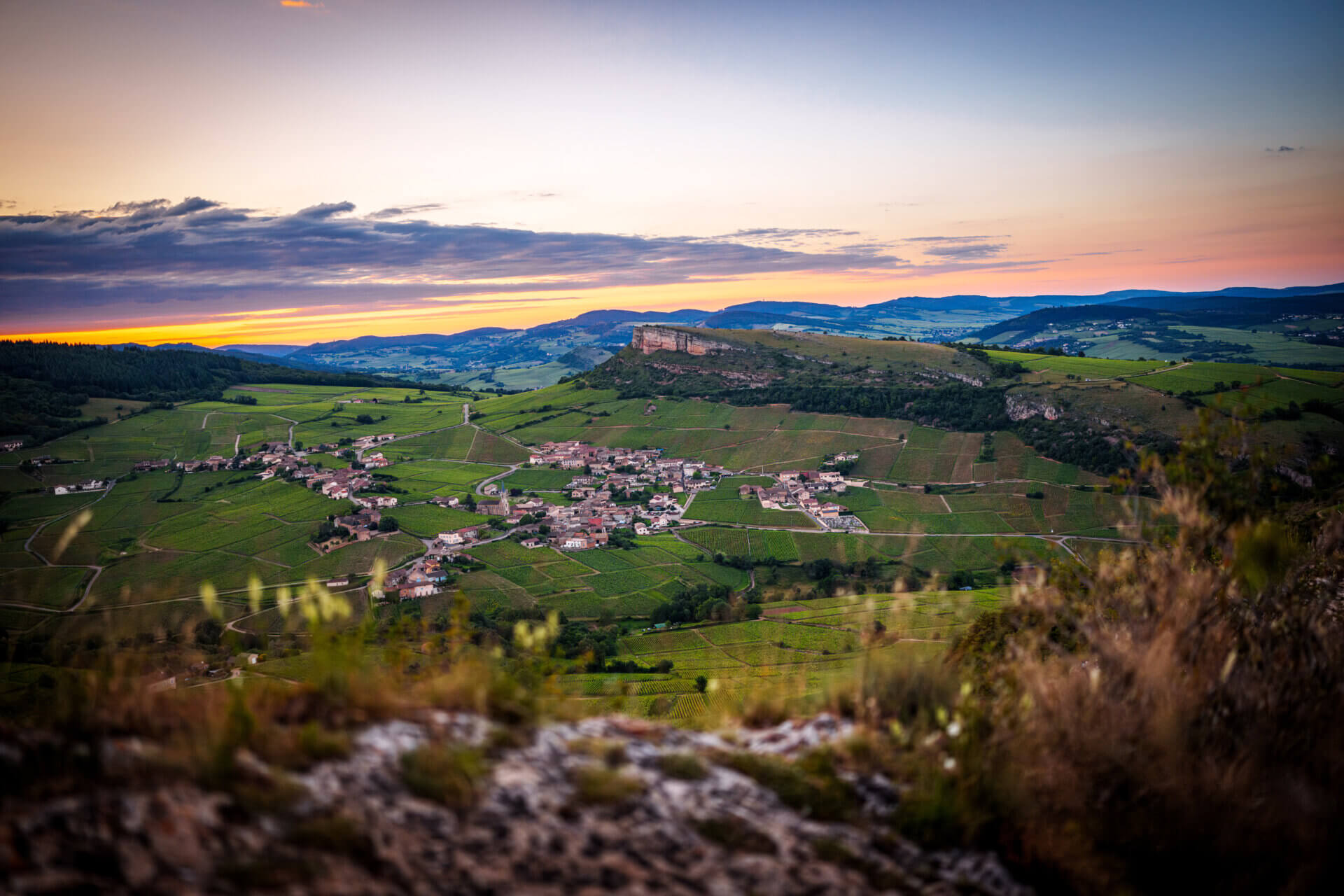
First, let’s start with something we all take for granted: the name. For some reason, Bourgogne is the only French region we change the name of (in this case, from “Bourgogne” to “Burgundy”). You’ll rarely see “Burgundy” on a label; it almost always says “Vin de Bourgogne.” So right off the bat, we’ve already created a disadvantage by confusing consumers regarding Bourgogne’s name. In my episode, I try to refer to the region as “Bourgogne” as much as possible so people begin gaining familiarity with its French name.
Second, for all its intricacies (of which there are many), it’s actually a surprisingly straightforward region to understand, at least at a basic level: two grapes (Pinot Noir and Chardonnay) and five areas (Chablis/Grand Auxerrois, Côte de Beaune, Côte de Nuits, Côte Chalonnaise, and Mâconnais). These wines should be an easy sell to customers, as they feature varieties people already know and love from the most famous place in the world that grows them. But we often muddle the point with technical jargon and huge Bourgogne sections on our lists, so much so that the average consumer doesn’t even know the aforementioned facts. They end up intimidated, and so they flip the page; there are too many options with words they don’t understand and prices that look scary.
So unless your clientele is specifically looking for an extensive Bourgogne selection, let’s not burden them with a ten-page behemoth of offerings. Instead, consider doing the hard work for them; pick a few choice bottles across varied Bourgogne terroirs and make sure your staff can explain what they are and the difference between them. Then, you can perhaps consider having a reserve list for more discerning clients. They’ll feel like VIPs because they have access to an exclusive list, and those who couldn’t care less about Grand Crus and monopoles won’t be discouraged.
The third point is more challenging to convey: Bourgogne is focused on the quality of the wine above all else. Luxury resorts, grand tasting rooms, and even basic tourism infrastructure are harder to come by than in other major wine regions I’ve visited, despite Bourgogne’s international renown. This is a good thing! There’s a sense of authenticity, and the wineries still feel like farms, not marketing arms of large enterprises. So how do we convey this on a menu? By offering smaller producers with stories and heart instead of just the usual suspects.
By simplifying Bourgogne and making decisions easier for customers, we’ll make them more willing to try “that famous region they’ve heard so much about.” And if we do our jobs right, they’ll dive deeper on their own time and learn what we professionals already know: There’s a reason Bourgogne’s bottles grace every wine list. They’re fascinating terroir-driven wines that can pair with almost any dish and capture our love, adoration, and intrigue with their versatility, wealth of styles, and captivating history.
If you’d like to travel through the region with me, catch our much-anticipated Bourgogne episode when it debuts in December.
Until next wine,
Vince
Episodes of V is for Vino and Vino First can be watched for free on YouTube at
@visforvino.